
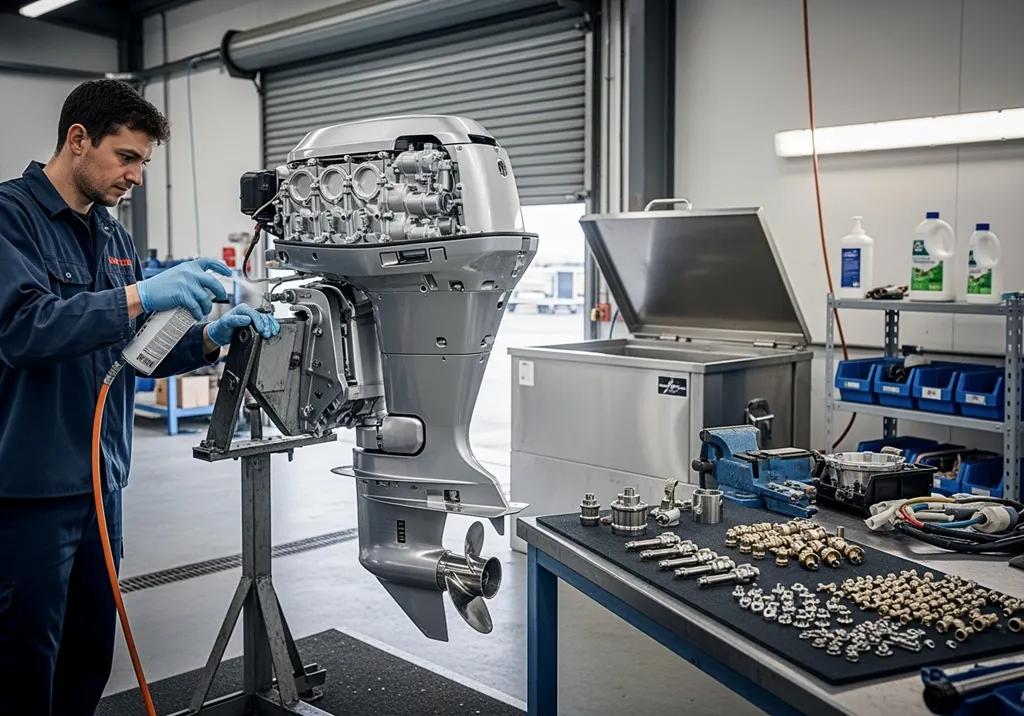
Outboard engines often run perfectly all summer. However, they can emerge from winter storage with major mechanical problems. You might find seized components and blocked internal passages. The actual damage happens during off-season storage, not during use. Coastal air carries microscopic salt particles continuously. These particles settle on every available metal surface. They absorb moisture from the surrounding atmosphere. This maintains a highly corrosive process throughout the entire winter.
This ongoing damage costs workshops and boat owners thousands of dollars. Mechanics see this exact pattern every single year. Customers bring in engines that ran perfectly months ago. They expect them to be ready for the new season. Understanding why this happens is crucial for workshop operations. Proper storage preparation makes a massive difference. It guarantees reliable performance and prevents unexpected repair bills. Dirty components slow your workshop down significantly. Every hour spent dealing with seized bolts is wasted time. That is an hour not spent on profitable maintenance work. This guide explains how to prevent these winter storage failures entirely.
How Salt-Air Corrosion Attacks Outboard Components
Why Salt Air Is More Dangerous Than Saltwater
Saltwater protection is often completely misunderstood by boat owners. Most operators focus only on rinsing engines after use. This addresses direct liquid saltwater exposure quite well. But coastal air carries aerosolised salt particles constantly. These travel for kilometres inland on the sea breeze. They deposit on surfaces whether an engine hits water or not. These microscopic crystals absorb humidity directly from the air. This creates a dilute electrolyte solution on metal surfaces. This solution acts as a constant corrosive agent.
Outboard engines are highly vulnerable to this ongoing process. They combine multiple metal types in very close proximity. Aluminium housings, steel fasteners, and copper connections sit together. They form galvanic cells when salt deposits bridge them. The most vulnerable metals corrode first in this environment. This destructive process continues regardless of engine use.
Temperature cycling makes the situation significantly worse throughout winter. Cool nights create condensation on internal and external surfaces. Salt deposits absorb this moisture very quickly. This restarts the corrosive process after every temperature drop. A standard parts washer provides essential initial surface cleaning. However, thorough pre-storage preparation requires deeper cleaning measures.
Which Components Corrode Fastest
Coastal equipment corrosion control requires understanding vulnerable components. The powerhead contains critical cooling passages and exhaust ports. Salt deposits accumulate heavily here during a season of operation. Left uncleaned, these areas corrode aluminium and steel components. Cooling passages develop pinhole leaks over the winter months. Exhaust ports develop pitting that is difficult and expensive to repair. Water jackets can become completely blocked by hard salt scale.
Electrical connections are among the most troublesome storage failures. Copper terminals and aluminium connectors create ideal galvanic conditions. The connections may look perfectly fine externally. However, they often fail under heavy load at sea. Internal corrosion compromises the critical contact surface over winter. The starter motor and wiring harnesses are especially vulnerable.
Lower unit components and precision parts face similar long-term risks. These include brass jets and aluminium carburettor bodies. The tilt and trim motor housing is also highly susceptible. Salt gathers around the seals and slowly destroys the casing.
Why Pre-Storage Cleaning Is the Most Important Step
The Limits of Freshwater Flushing
Outboard engine storage preparation begins with removing salt contamination. Freshwater flushing removes bulk salt from the main cooling system. But it leaves hard salt trapped in tight spaces. Threaded connections and internal passages retain heavy deposits. Brushes and low water pressure cannot reach these hidden areas. Running a hose addresses visible contamination only. It leaves the microscopic deposits that cause the most damage.
Effective metal preservation starts with a completely clean surface. No protective coating can prevent corrosion underneath it. Salt deposits missed by flushing will draw moisture constantly. They attack metal throughout the entire storage period. This happens regardless of what expensive protective products you apply.
The thermostat often restricts fresh water during a quick flush. If the engine is cold, the thermostat remains closed. This prevents fresh water reaching the upper cylinder head entirely. That trapped salt then sits there for six months. Proper parts cleaning ensures these critical areas are addressed. Thorough parts cleaning is non-negotiable for professional marine workshops.
How a Marine Workshop Parts Washer Removes What Flushing Misses
Hot water combined with biodegradable detergent dissolves salt crystals easily. This lifts deposits from all metal surfaces efficiently. It reaches deep internal passages that manual cleaning simply misses. Using a stainless steel parts washer ensures consistent results every cycle. A dedicated Stainless steel parts washer resists rust in coastal workshops effectively.
This automated process works because hot water increases salt solubility. The detergent breaks down oil films trapping salt against metal. Components emerge completely clean with zero oil residue. This chemically clean surface allows protective coatings to bond properly.
Automated parts washers remove salt far better than basic hoses. They operate at optimal temperatures to dissolve stubborn sea salt. The high-pressure spray reaches into blind holes and tight threads. Workshops using these systems see dramatically fewer corrosion failures. The investment in quality parts washers pays off in reliable engines. Another Stainless steel parts washer benefit is handling harsh marine chemicals safely.
Protective Coatings and Corrosion Inhibitors
Fogging Oil for Internal Protection
Winter storage marine maintenance requires protecting internal engine components carefully. Fogging oil applied while the engine runs is absolutely essential. It distributes evenly throughout the combustion chamber and exhaust passages. This moisture-resistant film prevents salt air reaching sensitive metal surfaces. It coats the cylinder walls, piston rings, and valve stems.
The application method is highly critical for long-term success. Running fogging oil through the intake ensures complete coverage. Spraying oil without running the engine misses exhaust passages entirely. The engine must circulate the oil to every moving surface. You should run the engine until it stalls from the oil. This guarantees the internal components are heavily coated for winter.
Corrosion Inhibitor Sprays for External Surfaces
A heavy duty parts washer cleans external components thoroughly before treatment. A reliable Heavy duty parts washer handles large lower units easily. For outboards in coastal conditions, lanolin-based inhibitors work incredibly well. They create a thick water-resistant barrier on external surfaces. They also allow any trapped moisture to escape safely. Petroleum-based products can sometimes trap moisture against the metal.
Every exposed surface needs comprehensive and careful coverage. Mounting brackets, steel fasteners, and electrical connections require heavy treatment. Salt air finds unprotected areas very reliably over winter. Corrosion starts quickly at the very first gap in coverage. Complete application matters just as much as the product chosen. Your parts washers provide the clean base needed for these sprays.
Fuel System Stabilisation
Modern fuel absorbs moisture heavily during normal atmospheric exchange. Ethanol fuels are particularly notorious for drawing water from the air. This creates severe internal corrosion conditions inside sensitive carburettors. Brass jets and delicate injector nozzles are highly vulnerable. Fuel stabiliser slows this damaging chemical process down significantly. It prevents varnish deposits jamming precision components over winter.
Running stabilised fuel fills carburettor passages and all fuel lines. Draining the fuel system completely risks sensitive rubber seal drying. It also causes rapid corrosion in exposed steel fuel lines. The primary goal is coating every passage with treated fuel. This displaces oxygen and prevents internal rusting entirely.
Environmental Control During Storage
Indoor vs Outdoor Storage Decisions
Where an outboard spends winter determines protection success heavily. Hotwash Australia recommends climate-controlled indoor storage for all marine engines. It completely eliminates condensation cycles that reactivate salt corrosion. Outboards stored indoors experience much less daily temperature variation. This means better long-term preservation of your protective coatings.
Covered outdoor storage is a practical alternative for many owners. The key is allowing air to circulate freely around the engine. Tight plastic covers seal humidity directly against the cold metal. Every evening temperature drop produces condensation that simply cannot escape. This creates a greenhouse effect that accelerates galvanic corrosion massively. Breathable canvas covers offer much better protection for outdoor storage.
Managing Humidity and Temperature Cycling
Coastal equipment corrosion control involves actively managing the storage environment. Salt deposits maintain corrosive activity in anything above 60% humidity. Storage locations with good cross-ventilation perform noticeably better. They prevent moisture accumulation effectively and safely over winter.
Temperature cycling is unavoidable in most outdoor storage situations. However, its damaging physical effects can be reduced easily. Shaded storage experiences far less daily temperature variation than direct sun. A stable temperature prevents the engine block from sweating. Fewer condensation cycles mean fewer opportunities for the corrosion process. Keeping the engine under a carport is better than an open yard.
Inspection and Maintenance Schedule
Monthly Visual Checks During Storage
Outboard engine protection is definitely not a set-and-forget process. Monthly visual inspection catches small problems very early. Rust staining on steel fasteners is a clear early indicator. White powdery deposits on aluminium surfaces also show protection failure. Green oxidation on copper wires means moisture has penetrated.
Protective coatings degrade gradually during the long storage period. Corrosion inhibitor sprays wash off in heavy winter rain. UV exposure breaks down protective chemical barriers over time. You must reapply coatings where they have disappeared completely. A ten-minute check each month saves thousands in repair bills.
Mid-Storage Service for Long Storage Periods
Winter storage longer than three months needs mid-winter checks. Electrical connections developing early corrosion should be cleaned thoroughly. Treat them with fresh dielectric grease before complete failure occurs. This prevents the nightmare of non-starting engines when the season begins. Check the battery voltage and apply a trickle charger periodically.
A manual parts washer is perfect for mid-season component checks. It helps workshops quickly process brackets and small auxiliary components. Addressing early surface corrosion is much faster and less expensive. You can pull a corroded bracket and clean it instantly. This stops the corrosion spreading to the main engine block.
Pre-Season Recommissioning
Before returning an outboard to service, closely inspect all components. Change the engine oil and filter before the first start. Condensation can contaminate engine oil even with proper winter preparation. Water in the oil destroys engine bearings very quickly. Flush the cooling system to remove residual inhibitors and dust.
Always pressure test the fuel system before launching the boat. Corroded components often fail under heavy load at sea. Finding issues at the marina is far preferable to breaking down. Use a wet abrasive blaster machine for surface rust on external parts. A quality wet abrasive blaster machine easily removes stubborn scale. Many marine mechanics rely on a wet abrasive blaster machine for fast surface prep.
Common Storage Mistakes That Accelerate Corrosion
Storing Without Proper Cleaning First
Putting equipment away without removing salt is a massive mistake. Salt deposits from summer continue working aggressively throughout winter. No protective coating prevents corrosion developing underneath it. Efficient parts cleaning removes this dangerous contamination before storage begins. Skipping this step guarantees damage to your expensive outboard. Proper parts cleaning is the foundation of marine maintenance.
Using an automated parts washer ensures perfectly clean metal. The right parts washer saves hours of tedious manual labour. This is the solid foundation of every protective measure. Coatings and fogging oil assume clean metal as a starting point. Reliable parts washers improve your overall workshop efficiency dramatically. Investing in a robust parts washer saves money long-term. You cannot protect a dirty engine from salt air.
Using the Wrong Cover and Storage Position
Completely sealed plastic covers trap humid air against the engine. They create terrible conditions producing condensation that cannot escape. Some workshops use hot tanks to clean large cowlings before storage. A Stainless steel parts washer is also great for cleaning mounting brackets. This ensures covers do not carry salt contamination into storage. A dirty cover will drop salt directly onto the clean engine.
Engines stored on trailers in puddles accumulate heavy ground moisture. Elevating stored equipment above ground level is absolutely essential. Ensuring drainage prevents water accumulation around vulnerable lower units. A high-capacity Heavy duty parts washer cleans lower units before storage. Marine facilities with multiple parts washers handle pre-storage volume efficiently. Using a Heavy duty parts washer speeds up your winterisation workflow significantly.
Conclusion
Salt-air corrosion during winter storage damages vital outboard components heavily. This expensive damage is completely preventable with the right approach. Prevention requires proper and thorough cleaning before storage actually begins. Do not just blindly apply protective coatings over contaminated surfaces. Clean the metal first to ensure the protection actually bonds.
For marine workshops, systematic storage preparation is an essential investment. Engines that start reliably create confident and very happy customers. The time invested in proper maintenance prevents major problems later. Workshops that skip steps end up managing angry customers in spring. Doing it right the first time protects your business reputation.
For expert advice on marine cleaning systems, contact our parts washer specialists or email us at sales@hotwash.com.au.

Leave A Comment