
Parts washers run hard in Australian workshops. They clean engine blocks, mining components, and fabrication parts day after day. Without a structured maintenance programme, these machines break down when you need them most.
The difference between a machine that lasts 15 years and one that fails after five comes down to maintenance. Regular servicing catches small issues before they become expensive problems. It is the same principle that applies to any critical workshop equipment – look after it properly, and it looks after you.
A solid preventative maintenance schedule is not complicated. It is a set of quick daily checks, weekly tasks, and deeper monthly and quarterly servicing – each one preventing a specific category of failure.
Why a Preventative Maintenance Schedule Matters
The Cost of Reactive vs Preventive Maintenance
A pump replacement costs $800 to $1,500 and takes your washer offline for days. A scheduled service – checking seals, cleaning filters, monitoring pump performance – costs $200 to $300 and takes two hours. One prevented breakdown pays for years of scheduled maintenance.
Downtime hits harder than repair costs. When your heavy duty parts washers stop working, your mechanics return to manual scrubbing. That is four hours of labour for work the machine does in 15 minutes. Production slows, repair times extend, and labour costs spike.
A proper preventative maintenance schedule eliminates most of these scenarios. Scheduled attention to filters, seals, and pumps keeps components within safe operating ranges. It prevents the sudden failures that cost workshops thousands.
How Industrial Parts Washer Upkeep Protects Your Investment
A maintained machine lasts 15 to 20 years. One that receives no industrial parts washer upkeep fails at 5 to 7 years. That difference represents one full replacement cycle – a capital cost of $15,000 to $50,000 depending on machine size.
Consistent industrial parts washer upkeep also maintains cleaning performance. Worn nozzles, clogged filters, and scaled heating elements reduce cleaning effectiveness gradually. Workshop managers often compensate by extending cycle times – not realising component wear is the root cause.
Maintenance records also protect your warranty coverage. Manufacturers require documented servicing to honour claims. Missing maintenance logs provide grounds for claim denial on components that cost thousands to replace.
Daily and Weekly Maintenance Tasks
Parts Washer Daily Maintenance Tasks
Parts washer daily maintenance tasks take five minutes but prevent the most common failures. These quick checks catch problems early – before they cause breakdowns.
Water level: Verify the tank sits within the marked range. Low water levels cause pump cavitation and heating element burnout. If the tank loses water faster than normal, check for leaks around door seals and pump connections.
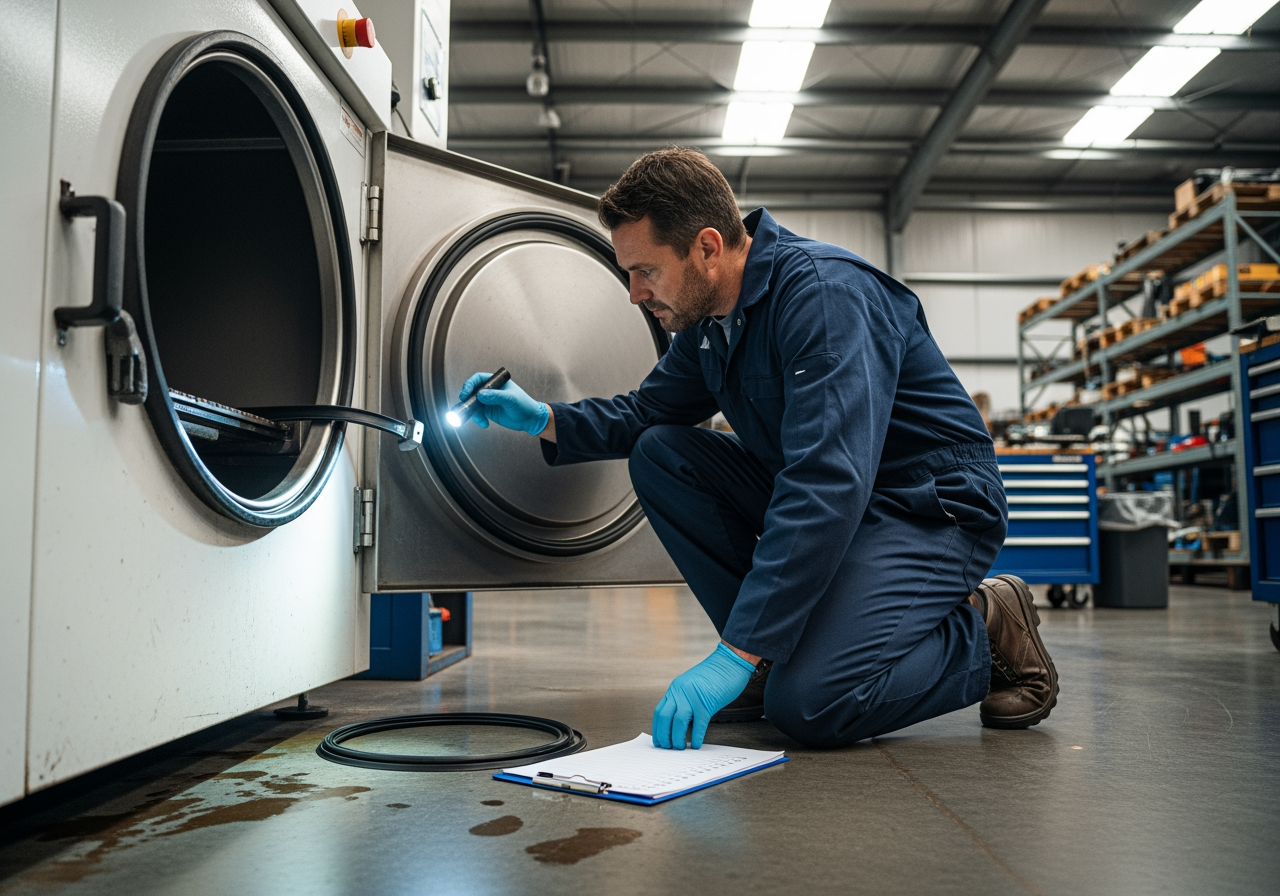
Door seals: Run your hand along the door gasket and check for cracks, hardening, or gaps. Damaged seals let water spray out during operation and reduce cleaning effectiveness. Replace worn seals immediately – they are inexpensive but critical.
Debris removal: Check the tank bottom for large metal shavings, bolts, or solid debris. These items damage pumps and clog spray nozzles. Remove them before starting the wash cycle.
Spray pattern: Run a quick cycle and observe the spray arms through the viewing window. All nozzles should produce strong, even patterns. Weak or missing spray indicates a clogged nozzle or failing pump.
Detergent level: Verify the reservoir has sufficient supply for the day. Running without detergent reduces cleaning effectiveness and makes the pump work harder.
Parts washer daily maintenance tasks are the single highest-return maintenance activity available. They cost five minutes and prevent hours of unplanned downtime.
Weekly Maintenance for Spray Systems and Filters
Weekly maintenance addresses components that accumulate contamination during normal operation. These tasks prevent gradual performance loss.
Remove and soak spray arms in hot water with concentrated detergent. Use a small wire brush to clear any nozzle deposits. Clogged nozzles reduce water pressure and create uneven cleaning patterns.
Inspect the pump strainer basket. The strainer catches debris before it reaches the impeller. Clean it thoroughly and check the mesh for damage. A damaged strainer lets debris through, causing accelerated pump wear.
Monitor heating performance by timing how long the washer takes to reach operating temperature. Slower heating indicates scale buildup on the element. Track this weekly and you will spot deterioration early.
Wipe down interior tank surfaces to remove oil residue and sediment. Pay attention to corners and seams where debris accumulates. This simple step prevents buildup that can break free and clog spray systems.
Monthly Maintenance and Parts Washer Filter Replacement Schedule
Monthly Inspection and Filter Replacement
Monthly maintenance addresses deeper system components and confirms sustained performance. These tasks ensure long-term reliability and form the backbone of any equipment servicing intervals plan.
The parts washer filter replacement schedule sits at the core of monthly maintenance. Stainless steel parts washers and powder-coated models alike use replaceable cartridge filters that trap fine particles. Clogged filters reduce water flow and force the pump to work harder. Change filters on schedule regardless of appearance – they are cheap insurance against pump damage.
Check pump pressure with a gauge and compare to the machine’s rated specifications. Declining pressure indicates worn impellers or internal pump wear. A consistent parts washer filter replacement schedule, combined with monthly pressure monitoring, gives you early warning before pump failure.
Inspect all electrical connections for corrosion, looseness, or damage. Tighten loose terminals and check the power cable for wear. Electrical failures cause downtime and safety hazards. This check is especially important in humid coastal environments.
Test all safety interlocks. The door should lock during operation and the heating element should shut off when water level drops. Safety systems protect operators and prevent equipment damage – never bypass them.
Parts Washer Pump Service Checks and Performance Monitoring
Parts washer pump service checks are one of the most valuable monthly activities for high-volume operations. Pump pressure trending reveals developing wear long before audible symptoms appear.
Install a pressure gauge on the pump discharge outlet if your machine does not already have one. Record readings monthly. When pressure drops 15% below your established baseline, schedule pump service within 500 operating hours.
Parts washer pump service checks should also include current draw monitoring. Measure motor current monthly using a clamp meter. Increasing current above the nameplate rating indicates bearing wear or impeller damage. A 10% rise signals replacement within 200 to 400 hours.
Listen for changes in operating noise and vibration. Bearing wear produces audible changes before it causes failure. When noise becomes noticeably louder or vibration increases, bearing failure is imminent. Parts washer pump service checks that catch this early avoid the cascade of damage that follows a pump seizure.
Hotwash Australia recommends keeping a simple logbook at the machine. Record pressure readings, temperature recovery times, and any changes in noise or performance after every monthly service.
Quarterly and Annual Equipment Servicing Intervals
Quarterly Deep Servicing Tasks
Quarterly maintenance involves more extensive servicing. These tasks are best performed during scheduled workshop downtime and form a critical tier in any structured maintenance plan.
Descaling the heating system: Hard water deposits reduce heating efficiency and cause element failure. Use a commercial descaling solution rated for your tank material. Run the solution through a complete cycle, then flush thoroughly. This single task extends heating element life significantly.
Deep tank clean: Drain the tank completely and remove accumulated sludge from the bottom. Flush all plumbing lines to clear sediment. This prevents gradual performance degradation and maintains cleaning effectiveness.
Spray arm bearings: Remove spray arms and check bearing assemblies for wear. Replace worn bearings before they seize. Seized bearings stop spray arm rotation and create uneven cleaning patterns across the chamber.
Pump seal inspection: Check for water leakage around the pump shaft seal. Minor seepage is normal. Steady dripping indicates seal wear – replace before catastrophic failure damages the pump motor.
Your equipment servicing intervals for quarterly tasks should scale with operational intensity. A machine running 12 hours daily needs quarterly servicing every six weeks. A machine running four hours daily can stretch to the full three-month interval.
For operations using hot tanks alongside spray washers, the same quarterly descaling and seal inspection tasks apply. Immersion cleaning systems accumulate scale and contamination at a similar rate to spray-based machines under equivalent operating hours.
Annual Professional Service Requirements
Annual maintenance represents comprehensive servicing of all major components. Most workshops schedule this during holiday shutdowns or planned facility maintenance periods.
Have a qualified technician perform a complete system inspection. Professional annual servicing covers components you may miss and identifies problems before they cause failures. Annual equipment servicing intervals completed by qualified technicians also maintain warranty coverage.
Replace pump seals, gaskets, and other wear items regardless of apparent condition. The cost of these components is minimal compared to breakdown repairs. Have a licensed electrician test all electrical components, verify earth connections, and check insulation resistance.
Run test cycles with known contaminated parts and verify cleaning meets your standards. Document results for future comparison. Cleaning performance that meets specifications at annual service provides a baseline for diagnosing any decline during the following year.
Review the year’s maintenance history and identify any recurring issues. This analysis predicts future maintenance needs and identifies components approaching end of service life.
Building Your Maintenance Schedule and Avoiding Common Mistakes
How to Create a Schedule for Your Operation
Every workshop operates differently. A mining operation running super heavy duty parts washers around the clock needs more frequent maintenance than a small automotive workshop using the machine twice daily.
Track machine hours. Base maintenance intervals on operating hours rather than calendar time alone. A machine running 12 hours daily needs monthly maintenance every two weeks.
Keep detailed maintenance records including dates, tasks completed, parts replaced, and any issues found. This history identifies patterns and predicts future needs. It also provides critical documentation for warranty claims.
Stock commonly replaced items – filters, seals, spray nozzles, and detergent. Waiting for parts extends downtime unnecessarily. Train multiple staff members on daily and weekly tasks so maintenance continues during holidays or staff changes.
The right preventative maintenance schedule depends on your environment as well as your hours:
Mining operations in dusty environments need more frequent filter changes and spray nozzle cleaning. Daily debris removal is non-negotiable.
Manual parts washers in food processing facilities require more frequent cleaning and sanitation. Use food-grade lubricants and document all maintenance for compliance.
Coastal workshops should increase inspection frequency for electrical connections and apply corrosion protection to exposed surfaces. Salt air accelerates deterioration on components that appear fine in inland locations.
Remote sites with limited service support should stock additional spare parts and train local staff on more advanced repairs. A well-structured industrial parts washer upkeep programme is even more valuable when technician callouts are expensive or slow.
Common Maintenance Mistakes to Avoid
Skipping daily checks: Five minutes daily prevents hours of downtime. Skipping these checks lets minor issues become major failures.
Using wrong detergents: Only use chemicals specified for your parts washers. Household cleaners, solvents, and incompatible chemicals damage seals, corrode components, and void warranties.
Ignoring warning signs: Unusual noises, declining performance, or minor leaks signal developing problems. Address these immediately. They will not resolve themselves – they will get worse and more expensive.
Delaying the parts washer filter replacement schedule: Filters are inexpensive. Pumps are not. Change filters on schedule regardless of appearance. Clogged filters damage pumps and reduce cleaning effectiveness.
Neglecting water quality: Hard water accelerates scale buildup. Contaminated water introduces abrasives that wear pump components. Monitor water quality and address issues promptly.
For wet abrasive blasters and hot tanks, the same maintenance principles apply. Abrasive blasting equipment needs consistent attention to nozzle wear, media condition, and seal integrity alongside the standard filter and pump checks.
Conclusion
A preventative maintenance schedule transforms your parts washers from equipment that occasionally fails into reliable production assets. Parts washer daily maintenance tasks catch problems early. Weekly and monthly tasks prevent gradual degradation. Quarterly and annual equipment servicing intervals address major components before they fail.
The cost comparison is straightforward. Scheduled maintenance runs $500 to $800 annually including parts and labour. A single major breakdown costs $2,000 to $4,000 in repairs plus lost productivity. Consistent industrial parts washer upkeep pays for itself many times over.
Browse the full parts washer range to find machines suited to your workshop volume and application. For expert guidance on building a preventative maintenance schedule for your specific equipment, contact our parts washer service team or email us at sales@hotwash.com.au.

Leave A Comment