
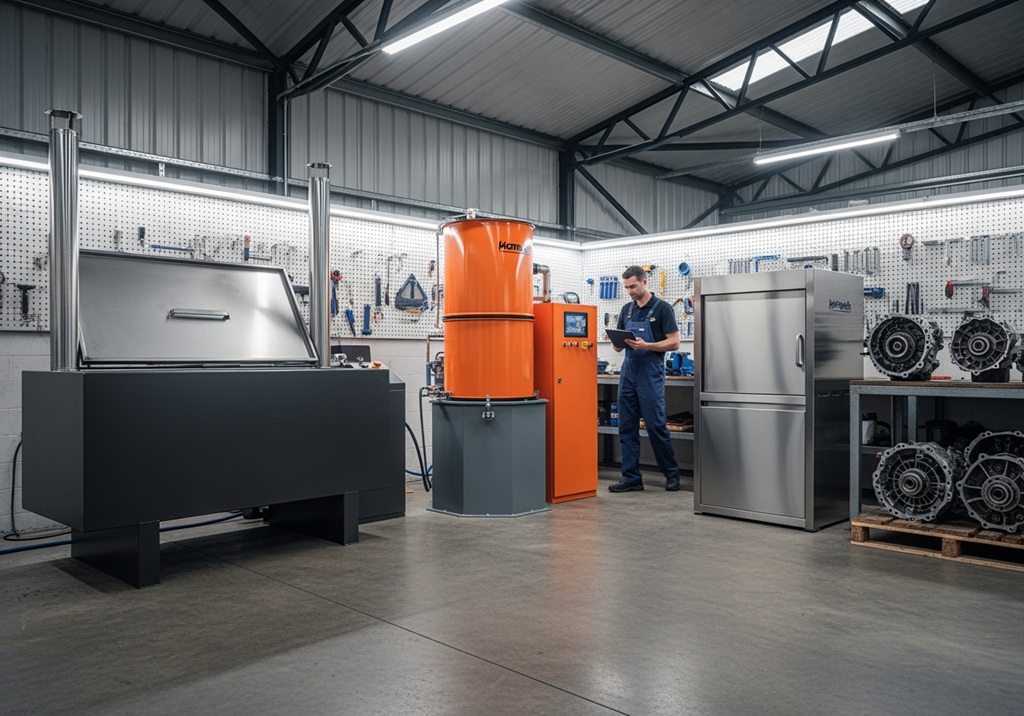
Workshops across Australia run on very different cleaning requirements. A diesel engine rebuilder needs something completely different from a food processing facility. A mining maintenance crew cleaning excavator components has different demands than a small automotive workshop cleaning brake parts.
The range of parts washer types Australia-wide reflects this diversity. Choosing the right system type is the first and most important decision you will make – before comparing brands, prices, or chamber sizes. This guide explains how each type works, what it handles well, and which applications it suits.
Understanding Parts Washer Types in Australia
Why Choosing the Right Type Matters
Selecting the wrong parts washer type creates problems that better specifications cannot fix. A manual washer cannot keep pace with a high-volume workshop no matter how well it is maintained. A spray washer designed for surface cleaning will not adequately clean engine blocks with blocked internal galleries. Matching system type to cleaning requirement is the foundation of a good equipment decision.
Parts washer types Australia-wide cover a broad spectrum of cleaning methods, capacities, and applications. The good news is that each type has a clearly defined role. Once you understand what each one does, the right choice for your workshop becomes considerably clearer.
The Core Distinction: Aqueous vs Solvent-Based Cleaning
Modern professional parts washing has moved decisively toward aqueous systems. An aqueous parts washer uses water-based detergent chemistry rather than petroleum-based solvents as the cleaning agent. This shift matters for three practical reasons: worker safety, environmental compliance, and cleaning performance.
Aqueous parts washer technology uses biodegradable, water-based detergents that clean effectively without the solvent vapour hazards associated with older cleaning methods. Hotwash Australia supplies aqueous cleaning systems across its full range, from manual washers through to super heavy duty automatic systems. The chemistry varies between product types, but the water-based foundation remains consistent throughout.
Older solvent tanks used petroleum-based chemicals that created ongoing vapour exposure risks and complex disposal requirements. The aqueous parts washer approach solves both problems whilst delivering cleaning performance that meets or exceeds what solvent systems achieved. For Australian workshops operating under increasing workplace health and safety requirements, the move to aqueous chemistry is also a compliance improvement.
Automatic Spray Washer Cleaning Systems
How Automatic Spray Washers Work
An automatic spray washer cleaning system uses heated water and biodegradable detergent delivered through rotating spray arms inside an enclosed chamber. Components sit on a turntable or basket, and the spray arms rotate around them during the cleaning cycle. This rotating action ensures coverage across all external surfaces without requiring manual repositioning.
The parts washer cleaning cycle is straightforward: load the component, close the door, and start the cycle. The spray washer cleaning system handles the work whilst your technician moves on to other tasks. Hotwash states on their website that their automatic machines can complete what takes a tradesperson or apprentice four hours by hand in just 15 minutes.
Hot water is central to how the system performs. Elevated temperature accelerates the chemical action of the detergent, dissolving grease and oil from metal surfaces. The combination of heat, detergent, and spray pressure removes contamination that cold or manual methods struggle to shift.
The enclosed chamber design keeps the cleaning process contained. Spray, vapour, and wash water remain inside the machine during the cycle. This containment keeps the workshop floor dry, reduces chemical vapour exposure, and makes the cleaning process safer for the operator compared to open manual cleaning methods.
Heavy Duty to Super Heavy Duty: Matching Scale to Application
The automatic parts washer comparison across Hotwash’s range covers four capacity tiers for automatic systems. Each tier is designed for a different scale of operation and component size.
Heavy duty parts washers suit workshops with consistent, high-volume cleaning demands. They handle engine blocks, transmissions, and larger fabricated components. These systems suit automotive workshops, diesel repair facilities, and light industrial operations running regular cleaning volumes.
Extra heavy duty parts washers step up for operations cleaning larger components more frequently. Mining maintenance workshops and earthmoving repair facilities typically fall into this category. The larger chamber accommodates the bigger components these industries produce.
Super heavy duty parts washers represent maximum capacity for major mining operations, oil and gas facilities, and other large-scale industrial cleaning applications. These systems handle the largest components and the heaviest contamination loads that aqueous parts washer technology is called upon to manage.
Stainless Steel Spray Washers for Specialist Applications
Stainless steel parts washers address applications where corrosion resistance is a construction requirement, not just a preference. Food processing facilities, marine workshops, coastal industrial operations, and applications handling corrosive materials benefit from stainless steel chamber construction.
The automatic parts washer comparison between mild steel and stainless steel construction is straightforward: stainless steel costs more but lasts longer in environments where moisture, salt, or cleaning chemistry would accelerate corrosion in standard steel. For the right application, the material choice is not optional.
Hot Tank Immersion Cleaning
How Hot Tank Immersion Cleaning Works
Hot tank immersion cleaning uses a different principle from spray washing. Rather than directing water at a component, a hot tank submerges the component fully in heated cleaning solution. The part soaks in this solution for a set period whilst the chemistry works from all directions simultaneously.
Hot tanks use alkaline cleaning solution heated to operating temperature. The combination of sustained chemical contact and heat breaks down grease, dissolves carbon deposits, and clears contamination from internal passages that spray jets cannot reach. The soak period does what brief spray contact cannot: it gives chemistry time to penetrate deep contamination and work on deposits inside complex geometries.
Hot tanks complement spray washing systems in the workshop environment. Some workshops use a hot tank as the primary cleaning method for engine components and a spray washer for general parts cleaning. Others use the hot tank as a first stage for heavily contaminated components, then follow with a spray wash for final cleaning and rinsing. The two methods address different aspects of the parts washer types Australia cleaning requirement rather than competing with each other.
When Hot Tanks Outperform Spray Washers
Hot tank immersion cleaning has a clear advantage for engine components with internal passages. Cylinder heads have coolant passages and oil return channels that spray arms cannot access adequately. Engine blocks have oil galleries running through the casting. Crankshafts have cross-drilled lubrication passages.
Spray washing cleans the surfaces spray reaches. Immersion cleaning cleans everywhere the solution flows – including every internal passage and recess. For engine rebuild workshops where internal passage cleanliness directly affects rebuilt engine performance, hot tank immersion cleaning is an essential capability, not an optional upgrade.
Hot tanks also suit heavily contaminated ferrous components where extended chemical exposure is needed to dissolve baked-on carbon. The sustained soak achieves what brief spray contact cannot on these materials. Understanding this distinction – spray for surface contamination, immersion for internal passages and heavy carbon – is the key to matching the right system type to each cleaning task.
Manual Parts Washer Options
What Manual Parts Washers Are
Manual parts washer options from Hotwash cover both cold solvent and hot manual washer variants. These are professional-grade systems designed for workshop use, not domestic applications. The Hotwash range includes cold solvent models such as the SW1000-HD series and hot manual washers including the SS1200 and SS850.
The operating principle differs from automatic systems. A manual parts washer uses a pump to circulate cleaning solution from the tank through a hand-operated brush or nozzle. The operator directs solution onto the component whilst scrubbing. A perforated work surface allows dirty solution to drain back into the tank for recirculation.
Field unit variants in the manual range are designed for site use – portable enough to be taken to where the work is rather than requiring components to be brought to a fixed installation. This makes manual parts washer options suitable for maintenance operations spread across a site, or for workshops that need a mobile cleaning solution alongside a fixed automatic system.
Who Manual Washers Suit
Manual parts washer options suit workshops where cleaning volume does not justify automated equipment, or where the variety of components makes a fixed automated cycle impractical. A business that cleans a small number of varied parts each week may find a professional manual washer more cost-effective than investing in automation it rarely needs.
Manual systems also suit applications where operator-directed cleaning is more appropriate than automated cycles – for example, cleaning a single specific area of a component rather than the whole piece, or working around sensitive surfaces that require careful handling. The professional design of the Hotwash manual range means these systems deliver reliable results in workshop conditions, not just occasional light use.
Specialist Cleaning Equipment
Hot Blasters for Targeted Cabinet Blasting
Hot blasters provide a targeted cleaning method distinct from both spray washing and immersion. Cabinet blasting directs a stream of heated abrasive media at a component surface, removing contamination, scale, and residue through abrasive action within an enclosed cabinet.
This method suits applications where a specific surface finish is needed, or where contamination resists both chemical spray and immersion approaches. Hot blasters handle targeted component cleaning tasks that general spray washer cleaning systems are not designed for.
Wet Abrasive Blasters for Surface Preparation
Wet abrasive blasters address the gap between cleaning and surface preparation. Rust removal, paint stripping, corrosion removal, and surface preparation before coating all fall outside what spray washers and hot tanks handle effectively. Wet abrasive blasting uses abrasive media suspended in water to strip surfaces without the dust associated with dry blasting.
For workshops that need to prepare surfaces for recoating or repair – not just clean them – wet abrasive blasters complete the surface preparation step that other parts washer types cannot.
Automatic Parts Washer Comparison: Which Type for Which Application
Matching Contamination Type to Cleaning Method
The automatic parts washer comparison across system types comes down to contamination type and component geometry. Standard oil, grease, and loose contamination on external surfaces suits a spray washer cleaning system. Heavy carbon buildup in internal passages suits hot tank immersion cleaning. Rust, paint, and surface coatings suit wet abrasive blasting.
Most workshops do not face a single contamination type across all their cleaning work. Understanding which method handles which contamination helps you route components to the right equipment rather than expecting one system to handle everything.
Matching Volume and Workflow to System Type
Parts washer types Australia-wide must also match workshop workflow. High-volume operations running continuous cleaning cycles benefit from automatic spray systems where a cycle starts and finishes without operator involvement. Lower-volume operations or those cleaning varied components may manage with manual washer options or a smaller automatic system.
Multi-shift mining and industrial operations need automatic systems with the durability and capacity to run continuously. Smaller automotive and mechanical workshops can often achieve their cleaning requirements with a mid-range automatic system or a professional manual washer matched to their actual daily volume.
Choosing the Right Parts Washer Type for Your Workshop
Key Questions Before You Buy
The right starting point for any parts washer selection is understanding your actual cleaning requirements. What are the largest components you regularly clean? What is the contamination type – oil, grease, carbon, rust, or a combination? How many cleaning cycles do you need each day? How much floor space is available?
Answering these questions honestly places you in the right section of the parts washer types Australia range. An operation cleaning heavily contaminated large components multiple times per shift has different needs from one cleaning small parts occasionally. Both have a right answer – they are just different answers.
Getting Specialist Advice
Hotwash supplies the full range of parts washer types across Australia, from manual washers for professional low-volume use through to super heavy duty automatic systems for major industrial operations. With over 40 years of experience and more than 1,200 automatic parts washers deployed nationally, the team understands which system suits which application.
For advice on the right parts washer type for your workshop, contact our parts washer specialists or email us at sales@hotwash.com.au.

Leave A Comment