
Calendar reminders are useful, but they do not show how long a washer has actually been running. A machine used heavily can reach a service point sooner than one that operates only occasionally.
A pump hour run meter gives the workshop an operating-time reference. On Hotwash’s Super Heavy Duty range, that reference is specifically linked to waste water servicing intervals.
What The Meter Actually Tells You
Run Time Is A Usage Signal
Hotwash lists a pump hour run meter as standard on the Super Heavy Duty range. The product page says it indicates waste water servicing intervals.
A pump hour run meter records pump operating time. That makes it useful when the workshop wants to relate servicing activity to actual machine use.
It is different from a calendar date. The meter reflects operation, not simply the number of days since the last service.
It Is Not A Complete Maintenance Controller
The meter should not be presented as an automatic maintenance management system. Hotwash links it to waste water servicing, not every maintenance task on the washer.
Equipment scheduled maintenance can also include filters, tank condition, pump inspection, spray hardware, electrical checks, and general housekeeping. Those tasks still need the correct service guidance.
This limitation makes the meter more useful, not less. It provides one clear input without pretending to replace the full maintenance plan.
Turning Run Hours Into A Repeatable Workshop Routine
Record The Meter At Each Waste Water Service
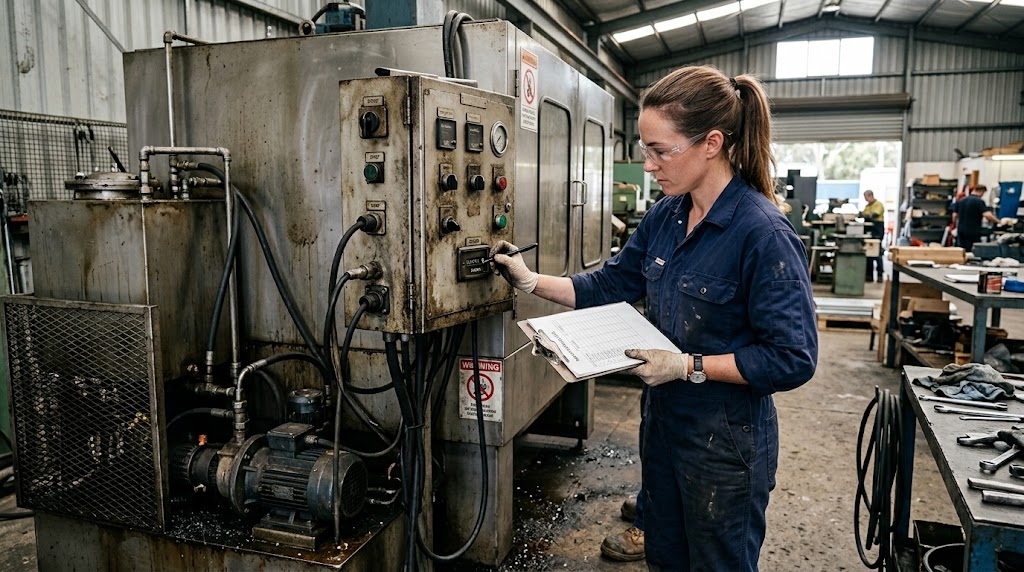
A simple log can connect pump hours with the date of each waste water service. The entry can also note tank condition and any unusual contamination.
Over time, this helps the workshop see how its own usage pattern affects servicing. The record remains site-specific rather than relying on an invented universal interval.
A run-hour meter can therefore support consistent decisions without requiring complicated software.
Pair The Meter With Visual Checks
Operating hours do not reveal everything. A sudden contamination event can load the tank or filters before a usual service point is reached.
Equipment scheduled maintenance should still include visual inspection. Staff can check the wash solution, filters, accessible pump area, and spray behaviour.
Hotwash’s FAQ says customers can service machines themselves with instructions and video support. That makes a clear internal log useful for teams carrying out routine work.
Why Waste Water Servicing Needs Its Own Trigger
Dirty Solution Changes The Cleaning Environment
Used wash solution collects oil, grease, dirt, and other material removed from parts. Eventually, the solution and tank need servicing according to the machine’s requirements.
The Super Heavy Duty range combines the hour meter with other service-oriented features. These include the forward-positioned tank, quick-drain floor, primary filters, and pump access platform.
These features are designed for different parts of the service process. The meter indicates usage. The tank and pump features support physical access and clean-out.
A Run Meter Helps Separate Use From Assumption
Without a usage reference, teams may rely on memory or a fixed calendar. That can be too early for a lightly used machine or too late for a heavily used one.
A run-hour meter provides a common reference for the workshop. The service interval itself should still come from the machine’s guidance and observed operating conditions.
The broader parts washer range includes different equipment types, so not every model should be assumed to use the same indicator.
Making The Log Useful For More Than One Shift
Keep The Entry Short And Consistent
A useful record can include the meter reading, service date, action completed, and any issue found. That is enough to create continuity between technicians.
Long forms often get ignored. A short record is easier to keep current and easier to review during equipment scheduled maintenance.
Use The Log To Spot Changes
If filters need attention more often, or the tank collects more material than usual, the log can help identify when that change began.
That does not diagnose the cause by itself. It simply gives maintenance staff a better history when they investigate.
FAQs
What Is A run-hour meter?
It is a meter that records pump operating time. Hotwash lists one on the Super Heavy Duty range to indicate waste water servicing intervals.
Does The Meter Tell Me Exactly When Every Service Is Due?
No. Hotwash connects the feature to waste water servicing. Other maintenance tasks still need their own inspection and service requirements.
Is Run Time Better Than A Calendar Schedule?
They serve different purposes. Run time reflects machine use, whilst a calendar supports time-based planning. Many workshops can use both together.
Should The Meter Reading Be Written Down?
Recording readings can make the maintenance history easier to follow across shifts. It also provides context when service frequency changes.
Is The Meter Standard On Every Hotwash Model?
The current Super Heavy Duty page lists it as standard for that range. Other models should be checked individually before making the same claim.
Use Operating Time As A Maintenance Reference
A run-hour meter gives workshop teams a practical usage marker for waste water servicing. It works best alongside inspection, records, and model-specific maintenance instructions.
For help matching servicing indicators to a particular washer, review your maintenance needs with Hotwash or email sales@hotwash.com.au.

Leave A Comment