
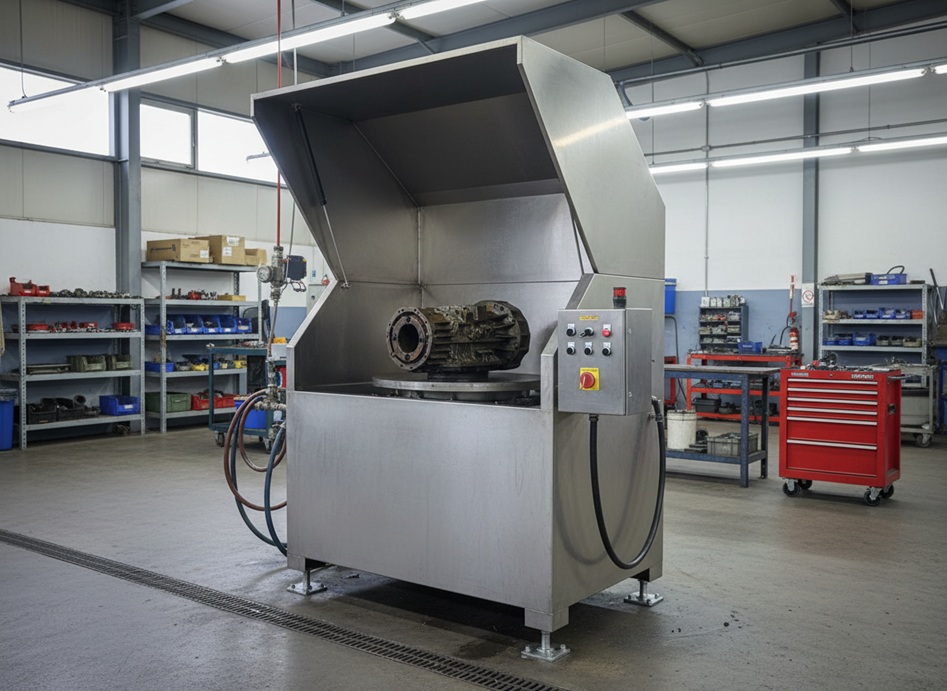
A workshop wash bay combines machinery, water, heat, chemicals, electricity, and heavy components. Each element can create hazards when controls are missing or poorly maintained.
Meeting AS4024 safety standards starts with understanding the machine and its operating environment. This guide explains practical checks for safer equipment selection, installation, use, and maintenance.
Understanding the Safety Framework
What AS4024 Covers
AS 4024 is a machinery safety standards series used in Australia. It supports risk assessment, safer design, guarding, control systems, and maintenance planning.
The series is not a single checklist for every machine. Relevant requirements depend on the equipment, hazards, controls, and intended use.
It considers safety across the machinery lifecycle. That includes design, installation, operation, maintenance, modification, and eventual removal from service.
The process begins by identifying hazards. Risks are then reduced through suitable design measures, safeguards, and supporting information.
A parts washer range can include automatic, manual, and specialised machines. Each design creates different access, movement, heat, and chemical considerations.
Applying AS4024 safety standards therefore requires a machine-specific review. The review should consider normal operation, cleaning, servicing, foreseeable misuse, and unexpected start-up.
Why Equipment Compliance Is Only One Part
A machine may include safety-focused design features. However, those features do not complete the entire workplace risk process.
Full wash bay compliance also depends on installation, electrical conditions, drainage, chemical controls, training, supervision, and maintenance. Site procedures must reflect how people actually use the equipment.
The person managing the workplace should identify hazards and select effective controls. Workers should also be consulted because they understand daily loading, cleaning, and servicing tasks.
Risk controls should follow the accepted hierarchy. Elimination is preferred, followed by substitution, isolation, engineering controls, procedures, and personal protective equipment.
Machine design usually sits high in that hierarchy. Guarding, interlocks, enclosed cleaning, and controlled access can reduce reliance on operator behaviour alone.
A supplier statement should form part of the review. It should not replace site-specific verification or competent technical advice.
Applying Machine Safety Principles to Parts Washers
Guarding and Access Control
Moving turntables, pumps, doors, and spray systems may create mechanical hazards. Guarding should prevent access while dangerous movement or pressure remains.
The safeguard must suit the machine’s operation. A fixed barrier may suit one hazard, whilst an interlocked door may suit another.
Guard selection should consider every task. Loading, unloading, filter access, tank cleaning, and fault clearing may expose different parts of the machine.
A guard must also remain practical. Operators may bypass a poorly designed safeguard that prevents normal work or makes servicing unnecessarily difficult.
Hotwash states that its super heavy duty washers include mine-spec safety and AS4024 compliance. The published range also lists a gear-driven safety turntable as standard.
Some safety extras on that range are optional. These include status lights, a padlockable electrical cabinet, an interlocked door, and knee-operated shutdown buttons.
Workshop managers should confirm the selected model’s exact configuration in writing. Optional equipment should never be assumed to be fitted.
Controls, Stops, and Unexpected Start-Up
Operators need controls that are clear, accessible, and protected against accidental operation. Start, stop, and reset functions should behave predictably.
Emergency stops provide a backup when normal controls cannot manage an immediate danger. They do not replace guarding, isolation, or safe operating procedures.
A released emergency stop should not automatically restart the machine. Normal start-up should require a separate and deliberate action.
Energy isolation is also important during maintenance, blockage removal, cleaning, or repair. The isolation method should address every relevant energy source.
Electrical supply is one source. Stored heat, pressure, gravity, moving doors, rotating baskets, and pump energy may also require control.
Isolation points should be clearly identified and accessible. Site procedures should define who may isolate, test, and return equipment to service.
These principles support AS4024 safety standards by reducing access to hazards and preventing unexpected movement. The required control design depends on the risk assessment.
Building a Safer Workshop Wash Bay
Electrical and Environmental Conditions
Wash bays can expose equipment to moisture, splash, residue, and cleaning chemicals. Electrical selection and installation must suit those conditions.
Hotwash describes its extra heavy duty washers as dual-skin machines with automatic pump-out capability. Those published features may support practical servicing and wastewater handling.
They do not remove the need for safe electrical installation. Cabling, outlets, isolation points, and switchboards should be assessed for the actual environment.
Electrical inspection and testing must be completed by a competent person where workplace requirements apply. Unsafe electrical equipment should remain disconnected until repaired and confirmed safe.
Drainage also affects wash bay compliance. Floors should not allow pooled water, detergent, or oily residue to create avoidable slip and electrical risks.
Machine position should protect electrical controls from likely spray paths. The layout should also keep hoses and leads away from walkways.
Temporary electrical arrangements can become permanent through habit. Commissioning should confirm that the final installation suits normal wash bay conditions.
Chemicals, Heat, and Fluid Handling
Parts washing may involve heated water, detergent, solvents, or caustic solutions. The selected process determines the required controls.
Hotwash offers hot tank systems for immersion cleaning. Its published information identifies temperature control and automated opening and closing as safety features.
A hot tank still requires process-specific procedures. These should address chemical compatibility, loading, unloading, splash, heat, ventilation, storage, and emergency response.
Safety data sheets should be accessible for products used in the wash bay. Workers need instruction on handling, dilution, exposure controls, and spill response.
Detergent choice must also suit the component and machine materials. Mixing incompatible products can create equipment damage or unexpected exposure risks.
Temperature settings should follow the machine and chemical instructions. Higher heat should not be treated as an automatic route to better cleaning.
Where an automatic process can reduce direct contact, it may support safer work. The remaining risks must still be identified and controlled.
Selecting, Installing, and Commissioning Equipment
Match the Machine to the Cleaning Task
Safety begins with choosing equipment suited to the parts, contamination, and daily workload. Oversized or awkward components can create unsafe loading practices.
Hotwash positions stainless steel washers for mechanical workshops. The published range includes gear-driven turntables and multiple spray bars.
Its heavy duty washers are built from coated mild steel for demanding workshop conditions. Published models include automatic lid operation.
Different construction and access arrangements affect the risk review. Consider component weight, loading height, door travel, turntable access, and lifting equipment.
The largest component often drives machine selection. However, frequent smaller loads may affect basket layout, handling, and operator reach.
Cleaning method also matters. Spray washing, immersion cleaning, and manual washing create different exposure and access conditions.
Hotwash Australia provides automatic and specialised parts washing equipment for Australian workshops. Product selection should remain based on the actual cleaning task and site conditions.
Confirm Standard and Optional Safety Features
Do not rely on a category name alone. Ask for model-specific information covering fitted safeguards, operating controls, isolation, access, and maintenance.
Confirm which features are standard. Confirm which require selection as optional equipment. This distinction matters before procurement, installation, and commissioning.
Request operating instructions and available technical documentation. Check whether the machine’s stated conformity applies to the exact supplied configuration.
Ask how each safety function works. Useful questions cover door opening, cycle interruption, restart prevention, emergency stopping, and maintenance isolation.
Where options affect safety, include them in the purchase specification. Do not leave critical site requirements for discussion after delivery.
Where a site has its own engineering or mine specifications, compare them with the proposed equipment. Additional controls may be required by the site.
A written review creates a clearer basis for purchasing decisions. It also supports future training, maintenance, and change control.
Complete a Site-Specific Risk Review
Machine placement affects safe access, loading, maintenance, and emergency response. Leave enough space for normal work without creating pinch points or blocked routes.
Consider how parts reach the machine. Lifting aids, trolleys, cranes, or forklifts can introduce separate movement and load-handling hazards.
The installation review should also address drainage, ventilation, chemical storage, electrical isolation, lighting, and nearby vehicle movement.
Good wash bay compliance includes consultation with operators and maintenance staff. Their input can identify access problems that drawings may not reveal.
Commissioning should confirm that controls, guards, stops, indicators, and isolation operate as intended. Any fault should be corrected before routine use.
Before sign-off, walk through the complete work sequence with operators. Observe where hands, tools, hoses, and lifting aids enter the work area.
Check that operators can see indicators from normal positions. Confirm that emergency controls remain reachable during loading and cycle operation.
Review access for filter cleaning, tank servicing, and waste removal. These tasks often differ from normal production and may need additional controls.
Finally, confirm that the surrounding bay supports safe movement. Clear routes, suitable lighting, stable loading surfaces, and managed drainage all matter.
The acceptance process should use realistic tasks. Test loading, unloading, cycle start, normal stop, emergency response, and safe access for servicing.
Operators should receive instruction before production use. Training should cover permitted tasks, prohibited actions, fault reporting, and emergency procedures.
Maintain Controls After Commissioning
Safety controls can deteriorate through wear, contamination, damage, or unauthorised changes. Routine checks should reflect the manufacturer’s instructions and site risk profile.
Guards and interlocks should remain functional. Emergency controls should stay accessible and clearly identified.
Maintenance must use suitable isolation procedures. Guards should be restored before the equipment returns to normal operation.
Records can include inspections, faults, repairs, training, and modifications. Clear records help teams identify recurring problems and incomplete actions.
Review wash bay compliance after changes to equipment, chemicals, layout, workload, or work methods. An incident or near miss should also trigger review.
Unauthorised modifications can weaken safeguards. Changes to controls, doors, wiring, pumps, or loading arrangements should pass a formal review.
Maintenance planning should include safety functions, not only cleaning performance. A machine that still washes parts may still have a failed safeguard.
Supervisors should make fault reporting simple and immediate. Operators need a clear way to remove unsafe equipment from service.
Replacement parts and repairs should preserve the intended safety function. A convenient substitute may change control behaviour, guarding strength, or environmental protection.
After repair, test the affected safeguard before normal use resumes. Record the result and any follow-up action required.
Frequently Asked Questions
AS4024 and Equipment Selection
What Are AS4024 Safety Standards?
AS4024 safety standards form an Australian machinery safety series. They cover areas such as risk reduction, guarding, controls, and prevention of unexpected start-up.
The relevant requirements depend on the machine and its hazards. A competent review is needed for the actual equipment and installation.
Does an AS4024 Statement Make the Whole Wash Bay Compliant?
No. A machine statement relates to the equipment or specified configuration. Workplace compliance also involves installation, procedures, chemicals, electrical safety, training, and maintenance.
Which Hotwash Range States AS4024 Compliance?
Hotwash’s published Super Heavy Duty page states that the range complies with AS4024 machine safety standards. Buyers should confirm the exact supplied model and fitted options.
Are All Listed Safety Features Standard?
No. The Super Heavy Duty page separates standard features from optional safety extras. Confirm the final specification before purchase.
Ongoing Wash Bay Safety
What Should Be Checked Before First Use?
Check installation, guarding, controls, stops, isolation, drainage, electrical safety, chemical controls, and operator access. Confirm that instructions and training are available.
How Often Should the Wash Bay Be Reviewed?
Review timing should follow legal duties, manufacturer instructions, risk level, and site procedures. Reviews are also needed after changes, faults, or incidents.
Who Should Confirm Electrical Safety?
A competent person should complete electrical inspection and testing where required. State or territory rules may define additional licensing requirements.
Can Training Replace Physical Safety Controls?
No. Training supports safe work but does not replace suitable guarding, isolation, or engineering controls. Controls should follow the hierarchy of risk control.
Conclusion
Meeting machinery safety expectations requires more than selecting equipment with published safeguards. The full wash bay must support safe installation, operation, cleaning, and maintenance.
A model-specific review helps separate standard features from optional controls. It also supports informed commissioning and ongoing wash bay compliance.
For model-specific information, speak with our equipment specialists or email sales@hotwash.com.au.

Leave A Comment