
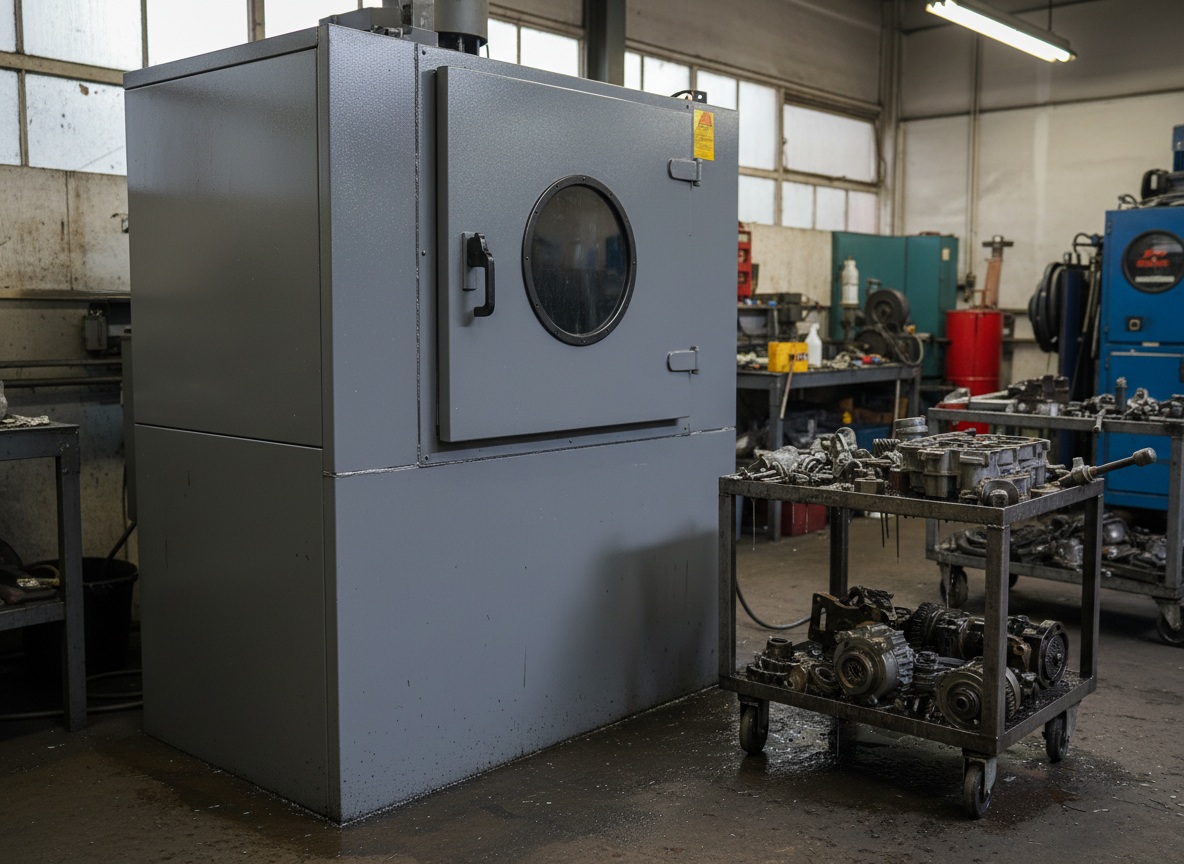
Industrial cleaning machines operate in wet, dirty, active environments. Their outer surfaces can face splashes, grime, moving parts, tools, and repeated handling. Surface protection therefore matters as much as the underlying material.
Powder-coated mild steel combines a structural steel base with a protective surface finish. Hotwash specifically describes its Extra Heavy Duty spray washers as tough mild-steel units that are sand blasted and powder coated. This article explains that verified construction and the maintenance thinking around it, without claiming a fixed service life.
Why Surface Preparation and Coating Matter
Mild Steel Needs Surface Protection
Mild steel is widely used in industrial fabrication because it can form strong, rigid structures. In wet service, however, exposed mild steel needs protection from moisture and contaminants.
A coating separates the steel surface from the surrounding environment. Its effectiveness depends on preparation, coverage, condition, and how the equipment is treated in service.
Hotwash identifies extra heavy duty washers as using powder-coated mild steel after sand blasting. The company presents that construction as part of a range intended for demanding industrial use.
That is a product-specific statement. It should not be expanded into a claim that all Hotwash equipment uses the same material or finish.
For workshop equipment durability, the coating should be viewed as part of a system. The base metal provides structure, whilst the finish protects exposed surfaces.
Sand Blasting Before Powder Coating
Sand blasting is a surface-preparation process. It removes loose material and creates a prepared surface before a protective coating is applied.
Good preparation helps a coating make consistent contact with the substrate. It also removes contaminants that could interfere with the finish.
The Hotwash page does not publish a coating thickness, blast profile, or laboratory corrosion result for the Extra Heavy Duty range. Those values should not be invented or implied.
This matters when evaluating powder-coated mild steel. A published construction description can confirm the process used, but it does not support unsupported lifespan figures.
What Harsh Workshop Wear Looks Like
Moisture, Cleaning Residue, and Handling
Parts washers operate near water, detergent, grease, and dirty mechanical components. External surfaces may also be touched by gloves, tools, baskets, trolleys, and parts.
Coated steel is most useful when the finish remains continuous. Scratches or chips can expose the underlying steel and should be inspected rather than ignored.
Hotwash also supplies heavy duty washers for industrial cleaning. The category is separate from the Extra Heavy Duty range, so workshop teams should check the exact construction listed for each machine.
A durable-looking cabinet does not remove the need for care. Workshop equipment durability still depends on suitable loading, cleaning, inspection, and maintenance.
Keep heavy parts from striking cabinet edges where possible. Use the machine’s intended loading arrangement instead of resting components on unprotected surfaces.
Edges, Corners, and Impact Areas
Edges and corners often see concentrated handling. Door openings, tank access points, lower panels, and areas beside loading paths can also receive repeated contact.
These locations deserve routine visual checks. Look for chipped coating, deep scratches, deformation, or signs of moisture collecting around damaged areas.
The client does not publish a universal inspection interval for coating condition. Workshops should therefore follow the model documentation and their own maintenance procedures.
For larger cleaning tasks, super heavy duty washers have a separate published feature set. The page lists several service-access and construction details, reinforcing the need to review the correct range before making comparisons.
A simple visual inspection can help find damage early. It should not be presented as proof of hidden structural condition.
How Hotwash Uses This Construction
Extra Heavy Duty Spray Washers
Hotwash describes the Extra Heavy Duty spray washer range as using tough mild steel that is sand blasted and powder coated. It also lists a dual skin on that range.
The construction supports the company’s positioning of the range for demanding industrial applications. However, claims about exact service life, corrosion hours, or maintenance savings are not stated here.
At this point in a purchase review, Hotwash Australia can be evaluated by product family rather than by a single material claim. Its current range includes several automatic and specialised cleaning categories.
That broader view is useful because workshop equipment durability depends on more than the cabinet material. Pump design, access, turntable arrangement, drainage, seals, and maintenance can also matter.
A buyer should ask what is standard on the exact machine. Features can differ between Heavy Duty, Extra Heavy Duty, Super Heavy Duty, and stainless steel models.
How It Differs From Stainless Steel
Hotwash separately offers stainless steel washers. Stainless steel uses corrosion-resistant material rather than a powder coating as the primary outer material description.
That does not make one approach universally superior. The correct choice depends on the cleaning task, environment, chemistry, handling, and required machine configuration.
Powder-coated mild steel needs its coating kept in good condition. Stainless steel still needs cleaning, inspection, and compatible chemical use.
When comparing industrial machines, focus on suitability. Avoid turning a material difference into an unsupported claim about guaranteed lifespan.
Maintaining Coated Equipment
Inspect the Finish
Routine visual inspection is straightforward. Keep surfaces clean enough to see chips, scratches, dents, and areas where coating has lifted or been damaged.
Pay attention to loading zones and frequently touched edges. Record recurring damage if it appears in the same location.
The Hotwash parts washer range includes machines with different construction and cleaning methods. Maintenance should follow the requirements of the chosen model.
Do not assume that a coating repair method suitable for general fabrication is automatically approved for wash equipment. Check with the supplier before applying repair products.
Workshop equipment durability improves when damage is managed before it becomes a larger maintenance issue. That is a maintenance principle, not a guarantee of service life.
Match Cleaning Chemistry and Handling
Use cleaning products compatible with the equipment and the cleaning task. Chemical compatibility affects coatings, seals, hoses, pumps, and other wetted components.
Avoid using unknown solvents or aggressive cleaners simply because they remove contamination quickly. The wrong chemistry can create equipment and safety problems.
Handle parts so they do not repeatedly strike coated surfaces. Review the loading method if the same area keeps being damaged.
Keep drainage and accessible tank areas clean according to the machine guidance. Standing contamination can make inspection more difficult.
FAQs
Does Powder Coating Make Mild Steel Rust-Proof?
No. Powder coating provides a protective barrier, but damage can expose the mild steel underneath. Coating condition should be inspected during routine maintenance.
Why Is Sand Blasting Used Before Coating?
Sand blasting prepares the metal surface before coating. Hotwash specifically states that its Extra Heavy Duty mild-steel spray washers are sand blasted and powder coated.
Does Hotwash Use Powder-Coated Mild Steel on Every Machine?
No. The verified statement applies to the Extra Heavy Duty spray washer range. Hotwash also supplies stainless steel equipment and other product categories.
When Should Coating Damage Be Inspected?
Inspect damage when it is noticed and during normal equipment checks. Follow the machine’s maintenance guidance for any repair or service action.
Conclusion
Powder-coated mild steel combines a structural steel base with a protective finish. Hotwash verifies sand-blasted, powder-coated mild-steel construction on its Extra Heavy Duty spray washer range.
Workshop equipment durability still depends on correct use, suitable chemistry, careful loading, cleaning, and inspection. No coating should be treated as maintenance-free.
For help matching construction to your cleaning application, speak with an equipment specialist or email sales@hotwash.com.au.

Leave A Comment