
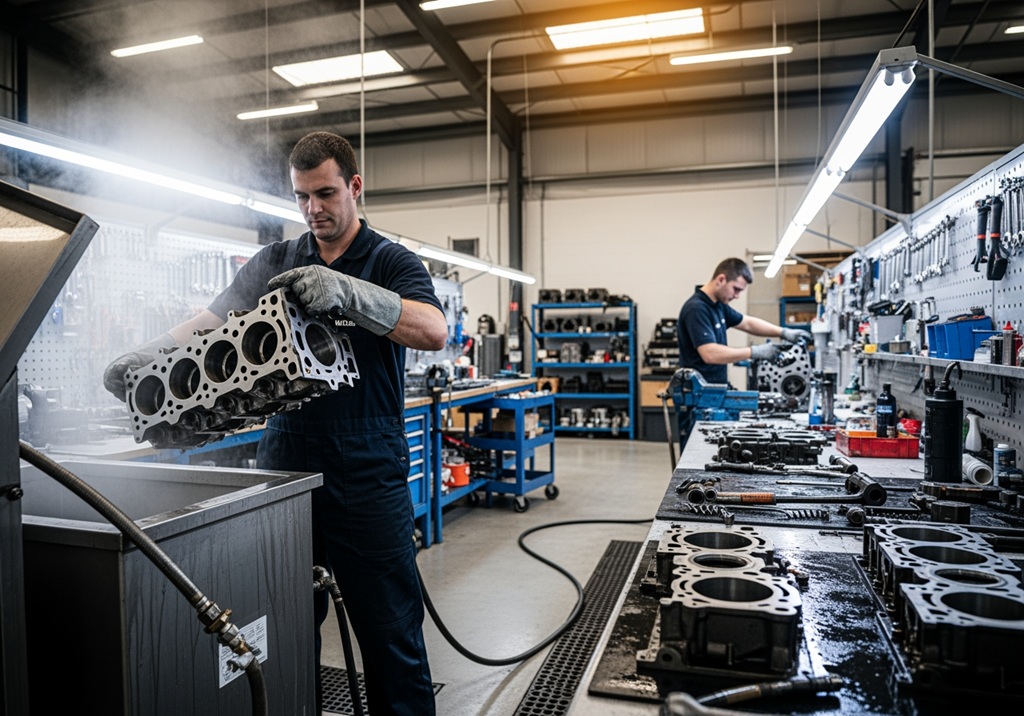
Engine components covered in thick grease and baked-on carbon are a familiar sight in any busy workshop. Manual scrubbing takes time your team doesn’t have. Spray washing handles surface contamination well, but it struggles with deposits that have hardened deep into metal surfaces and internal passages.
A hot tank parts cleaner offers a different approach entirely. Instead of blasting contamination away, it dissolves it. This guide explains how that process works, what it removes, and why engine degreasing workshops across Australia rely on heated immersion cleaning for their toughest jobs.
What a Hot Tank Parts Cleaner Does
Immersion Cleaning vs Surface Cleaning
A hot tank parts cleaner works by submerging components fully in a heated cleaning solution. The part sits in the solution for a set period whilst the chemistry does the work. There are no spray jets, no rotating arms, and no need for a technician to manually scrub the surface.
This is the core difference between immersion and surface cleaning methods. Spray washers clean what the water hits. Hot tanks clean everything the solution touches – including internal oil galleries, coolant passages, threaded bores, and recessed surfaces that spray jets cannot reach.
For engine components with complex internal geometry, that distinction matters. A spray washer may leave the exterior of a cylinder head looking clean whilst leaving contamination in the passages beneath the surface. That remaining contamination does not disappear – it stays in the component and affects performance after reassembly.
Manual cleaning faces the same limitations as spray washing when it comes to internal passages. A wire brush cleans what the bristles reach. A scraper removes surface deposits but cannot access the inside of an oil gallery or the coolant passages inside a casting. When thoroughness matters, immersion is the method that delivers it.
Grease and Carbon Removal Through Chemistry
Grease and carbon removal works differently depending on the contaminant. Grease and oil are organic compounds that emulsify readily in heated alkaline solution. Carbon deposits are harder – they form when oil and fuel residue bake onto metal at high operating temperatures, bonding chemically with the surface over time.
Manual scrubbing can remove surface carbon, but deposits that have penetrated into pores, ring grooves, and threaded surfaces resist mechanical force. Chemical action is more effective. The alkaline cleaning solution attacks the molecular bonds holding carbon to the metal, breaking the contamination down rather than simply displacing it.
The longer carbon has been building up, the more resistant it becomes to surface cleaning methods. Engine components from high-hour mining or earthmoving engines accumulate deposits over extended operating periods without rebuild. These components carry contamination that has had time to harden and bond deeply with the metal surface. For this level of contamination, the sustained chemical immersion a hot tank parts cleaner provides is the most effective approach available.
Why Hot Tanks Suit Engine Workshop Applications
Engine degreasing workshops deal with a specific category of cleaning challenge. The components they clean – cylinder heads, engine blocks, pistons, crankshafts – have internal features that are critical to engine function. Oil must flow freely through galleries. Coolant must circulate through passages. Any restriction caused by remaining contamination affects the rebuilt engine from the moment it starts running.
This is why engine degreasing workshops treat cleaning as a quality step, not just a preparation step. The thoroughness of the clean directly influences the quality and longevity of the finished rebuild. A hot tank parts cleaner provides that thoroughness in a way that spray washing and manual methods cannot reliably replicate for these specific components.
How the Immersion Cleaning Process Works
Heat and Chemistry Working Together
The immersion cleaning process relies on two elements working together: heat and alkaline chemistry. Neither works as effectively alone.
Heat accelerates chemical reactions. At higher temperatures, the alkaline cleaning solution becomes more active and penetrates contamination faster. It also reduces the viscosity of the solution, helping it flow into tight spaces and deep into surface pores. Hot tanks are designed to maintain consistent operating temperature throughout the cleaning cycle, ensuring the chemistry stays effective from the first minute to the last.
The alkaline solution does the chemical work. It breaks down the hydrocarbon chains in grease and oil, converting them into forms that lift away from the metal and disperse into the solution. For carbon deposits, the same alkaline attack softens and dissolves the material over time.
Temperature stability during the soak is important. If the solution cools significantly during a cleaning cycle, the chemical reaction slows. A tank that loses temperature when a large, cold component is loaded will take longer to clean and may deliver inconsistent results. Quality systems include adequate heating capacity to recover and maintain working temperature under load.
What Happens During a Soak
When a component is submerged, the heated solution surrounds it on all sides. Oil galleries fill with solution. Coolant passages flood. Threaded holes and recessed surfaces are exposed to the same cleaning chemistry as the exterior.
As the soak continues, grease emulsifies and lifts from the surface. Carbon deposits soften and begin to break down. Deposits inside passages dissolve and disperse into the solution. By the end of the cycle, contamination that would have taken hours of manual effort has been removed through sustained chemical contact.
The immersion cleaning process does not require technician involvement once the component is loaded. This is a practical advantage for engine degreasing workshops where technician time is better spent on diagnostic and rebuild work. Loading the hot tank at the start of a session and returning to clean components at the end of the soak is a workflow that fits naturally around other tasks.
Rinsing After Immersion
After lifting components from the tank, rinsing is a necessary step before inspection or further work. The alkaline cleaning solution leaves a residue on metal surfaces. If this is not rinsed away, it can interfere with machining, affect sealing surfaces, or react with fresh lubricants applied during assembly.
A thorough rinse with clean water removes alkaline residue and any dissolved contamination still clinging to the surface. Some workshops follow this with a spray washer cycle as the final cleaning step, which removes residue efficiently and prepares the component for immediate inspection. This combined approach – hot tank soak followed by spray wash rinse – delivers the most thorough result for heavily contaminated engine components.
How the Hot Tank Cleaning Cycle Works
Loading, Soaking, and Unloading
The hot tank cleaning cycle follows a straightforward sequence. Components are placed into a basket or lowered into the tank using a crane or hoist, depending on size. The basket sits fully submerged in the heated solution for the required soak period.
Once the cycle is complete, the basket is lifted clear. The component is then rinsed with water to remove alkaline residue before drying. For an engine degreasing workshop handling large or heavy components, this process requires attention to safe handling procedures throughout.
Hotwash Australia supplies hot tank systems built for Australian workshop conditions, with robust construction and reliable temperature control as standard.
Basket design affects how components are positioned during the soak. Good basket design ensures components are fully submerged and allows solution to circulate freely around all surfaces. Components positioned to trap air pockets may not clean as thoroughly in those areas. Loading components at an angle or separating them to allow full solution access helps the hot tank cleaning cycle deliver consistent results across the whole component.
Maintaining the Solution
Solution maintenance is a routine part of running a hot tank parts cleaner. As parts are cleaned, oil and grease accumulate in the solution. Skimming floating contamination from the surface regularly helps maintain cleaning performance.
Over time, the alkaline cleaning solution weakens as it reacts with contaminants. Concentration should be checked periodically and adjusted as needed. When contamination builds up beyond a manageable level, the solution is drained, the tank is cleaned, and a fresh mix is prepared.
The frequency of full solution changes depends on cleaning volume and contamination levels. A workshop cleaning heavily soiled components regularly will need to change solution more often than one processing lightly contaminated parts. Keeping a basic maintenance log helps track when concentration was last adjusted and when the last full change occurred. This prevents gradual performance decline that can be difficult to notice on a day-to-day basis.
Safe Operation of a Hot Tank
Hot tanks operate at elevated temperatures and contain alkaline cleaning solution. Both present hazards that require straightforward safety practices during operation. Appropriate personal protective equipment includes chemical-resistant gloves and eye protection as a minimum when handling components near or in the tank.
Proper ventilation is recommended for any space where a hot tank operates. Heated alkaline solutions produce vapour. Normal workshop airflow is sufficient for biodegradable detergent systems. An eyewash station within reach of the tank is a practical requirement for any installation.
What Hot Tanks Remove – and What They Don’t
Contamination Hot Tanks Handle Well
Hot tanks are well suited to organic contamination: engine oil, gear oil, grease, carbon deposits, and mineral scale from coolant. These materials respond to the combination of heat and alkaline chemistry. Grease and carbon removal is where hot tanks consistently outperform other cleaning methods, particularly for components with internal passages where spray washing falls short.
Baked-on oil residue on external surfaces, carbon in combustion chambers, and scale in coolant passages all respond to sustained immersion in heated alkaline cleaning solution. The same chemistry that dissolves surface contamination also works inside cavities and passages, provided the solution can flow into and surround those areas during the soak.
Where Hot Tanks Have Limitations
Hot tanks do not remove rust or corrosion. These are part of the metal itself and require abrasive methods. Wet abrasive blasters are a better choice for rust removal and surface preparation work.
Paint and coatings may soften in alkaline solution but removal is not reliable. For paint stripping, dedicated chemical or abrasive methods are more effective. Hot tanks are also not suitable for components made from non-ferrous metals sensitive to alkaline chemistry, such as aluminium, unless the solution is specifically formulated for multi-metal use.
Understanding these limitations helps workshops route components to the right cleaning method. Sending a rusty component to the hot tank removes the grease and oil covering the rust, but the corrosion remains. Knowing which method handles which contamination type allows your cleaning process to be both efficient and effective.
Why Engine Degreasing Workshops Choose Hot Tanks
Internal Passages and Complex Geometry
The main reason engine degreasing workshops use hot tanks is the geometry of engine components. Cylinder heads, engine blocks, crankshafts, and turbocharger housings all have internal passages that spray washing cannot reach adequately.
Oil galleries distribute oil throughout an engine. Coolant passages run through cylinder heads in complex paths. If contamination remains in these areas after cleaning, it affects the function of a rebuilt component. Hot tank immersion cleaning reaches everywhere the solution flows, making it the most thorough cleaning method available for these parts.
Heavy duty parts washers handle high-volume spray cleaning tasks well. But for components where internal passage cleanliness is critical, the hot tank cleaning cycle provides a level of thoroughness spray methods cannot match.
Productivity and Workflow Benefits
Automated immersion cleaning reduces the time your team spends on cleaning tasks. A component placed in the tank soaks with no technician involvement during the cycle. Your team can move on to other jobs whilst the hot tank works.
This workflow benefit is recognised across automotive workshops, diesel repair facilities, and mining maintenance operations. For high-volume operations cleaning large numbers of components, extra heavy duty parts washers may handle the broader parts cleaning load, with hot tanks reserved for the components that specifically need immersion.
The combination of spray washer and hot tank in the same workshop covers nearly every cleaning requirement an engine degreasing workshop encounters. Routine parts go to the spray washer. Engine components with internal passages and heavy carbon go to the hot tank. Each system handles what it does best, and your team spends less time on cleaning overall.
Choosing the Right Hot Tank System for Your Workshop
Matching Tank Size to Component Volume
Choosing the right hot tank starts with understanding your cleaning requirements. The largest component you need to clean determines the minimum chamber size. The number of components you clean each day determines how much throughput capacity you need.
For workshops cleaning smaller engine components regularly, a compact system handles the workload efficiently. Operations cleaning large mining or earthmoving components need significantly more capacity. Super heavy duty parts washers suit the heaviest industrial cleaning demands, and the right hot tank system sits alongside them to handle immersion cleaning requirements.
Think beyond your current workload when selecting a system. Workshop cleaning volume tends to grow as hot tank capability becomes part of your standard rebuild process. A tank sized only for today’s volume may create constraints within a couple of years. Building in reasonable headroom above your current peak demand is a practical approach for most workshops making this investment.
Getting the Right Advice
Every workshop has different cleaning volumes, component types, and space constraints. Selecting the right system is easier with guidance from people who understand industrial cleaning equipment. Workshops handling a mix of ferrous and aluminium components may also benefit from stainless steel parts washers for corrosion-resistant cleaning applications alongside their hot tank system.
The right advice covers more than just tank size. Solution selection, installation requirements, operating practices, and maintenance schedules all affect how well a hot tank performs over its service life. Speaking with specialists who work with Australian workshops daily means the advice you receive reflects the actual conditions your equipment will operate in.
For advice on the right hot tank parts cleaner for your workshop, contact our industrial cleaning equipment specialists or email us at sales@hotwash.com.au.

Leave A Comment