
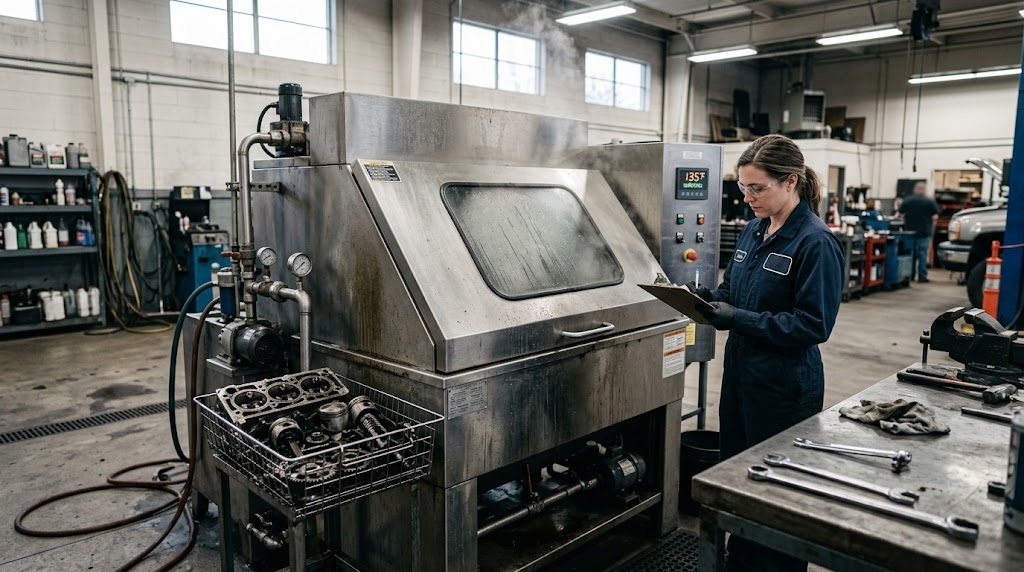
A cold washer can delay the first cleaning job of the day. The practical question is not simply how hot the water becomes, but how the machine fits into the workshop’s morning preparation routine.
Hotwash lists 15kW heaters as a rapid-heating feature on several stainless steel models. The website does not publish one universal warm-up time, so preparation should be planned around the actual machine and operating conditions.
Where 15kW Heating Appears In The Range
Stainless Steel Models With Confirmed 15kW Heating
The SS1100-T and SS1100-HP product page lists 15kW heaters and describes them as rapid heating. The same wording appears on the SS1350-T and SS1350-HP.
Hotwash also lists 15kW heaters on the SS1600 sliding-door washer. That makes 15kW rapid heating a verified feature on these specific stainless steel machines.
It should not be described as standard across every Hotwash washer. Smaller models can use different heater capacities.
Heater Capacity Is Only One Part Of Readiness
Wash bay preparation also depends on tank volume, starting water temperature, thermostat setting, insulation, and whether the machine has been left ready from the previous shift.
That is why a fixed claim such as “ready in a certain number of minutes” should be avoided unless it comes from the exact model documentation.
The useful message is simpler. Higher installed heating capacity is intended to support faster heating on the machines that use it.
Building Heating Into The Morning Workflow
Check The Washer Before The First Load Arrives
A smooth start begins with basic checks. Confirm the water level, detergent condition, tank cleanliness, and that the machine is ready for operation.
The 15kW rapid heating system can then do its job without another issue delaying the first wash cycle.
If the tank needs servicing, heating it first only wastes time. Preparation should therefore begin with machine condition, not the heater switch.
Use Temperature Indication Rather Than Guesswork
The SS1100 and SS1350 pages list a digital temperature display and push-button temperature adjustment. These features help the operator see when the water has reached the selected setting.
This is useful for wash bay preparation because it replaces guesswork with a visible operating reference.
The wider stainless steel washer range contains different sizes and configurations. The chosen model should match the workshop’s load and cleaning requirements, not heater capacity alone.
Why Rapid Heating Matters Operationally
First-Cycle Delays Can Affect The Whole Bay
If parts cleaning sits early in a repair or rebuilding process, a delayed first cycle can hold up later tasks. A washer that reaches operating temperature efficiently helps the cleaning stage begin sooner.
That does not guarantee a particular productivity outcome. It simply reduces one possible source of waiting when the washer is cold.
Using 15kW rapid heating effectively is therefore about workflow coordination as much as heater output.
Heating And Spray Performance Work Together
Hot water helps the cleaning chemistry work on grease and oil. The pump and spray system then deliver that solution across the loaded components.
A strong heater without a healthy spray system will not solve blocked jets or poor loading. Likewise, good spray coverage cannot compensate for a machine that has not reached its intended operating condition.
The parts washer range should be viewed as a complete cleaning system rather than a collection of isolated specifications.
Getting More From The Morning Start-Up
Finish The Previous Shift With The Next Start In Mind
Simple housekeeping at the end of a shift can make the next morning easier. Check whether the tank needs servicing and remove obvious debris before leaving the machine.
That allows the next operator to focus on start-up rather than correcting yesterday’s unfinished maintenance.
Match Preparation To Workload
A workshop expecting immediate morning cleaning can schedule washer preparation earlier in its opening routine. A site that cleans parts later may not need the same start-up priority.
Wash bay preparation should follow actual workflow. The heater is there to support the process, not dictate it.
FAQs
Which Hotwash Models List 15kW Heaters?
The current website lists 15kW heaters on the SS1100-T and SS1100-HP, SS1350-T and SS1350-HP, and SS1600 sliding-door washer pages.
Does A 15kW Heater Guarantee A Fixed Warm-Up Time?
No. Hotwash describes rapid heating but does not publish one universal warm-up time for every situation. Starting conditions and machine configuration affect heating time.
Is 15kW Heating Standard On Every Stainless Steel Washer?
No. Different models list different heater capacities. Always check the exact product specification.
Should The Washer Be Heated Before Checking The Tank?
It is more practical to confirm water level, tank condition, and general readiness first. That avoids heating a machine that still needs servicing.
Does Rapid Heating Replace Good Spray System Maintenance?
No. Heating, pumping, spray delivery, filtration, and loading all contribute to the cleaning process.
Prepare The Wash Bay Around The Real Workload
The main advantage of rapid-heating system is faster heat input on the models that use it. Morning preparation works best when heating is combined with inspection and sensible scheduling.
To compare stainless steel models for your start-up routine, review your wash-bay requirements with Hotwash or email sales@hotwash.com.au.

Leave A Comment