
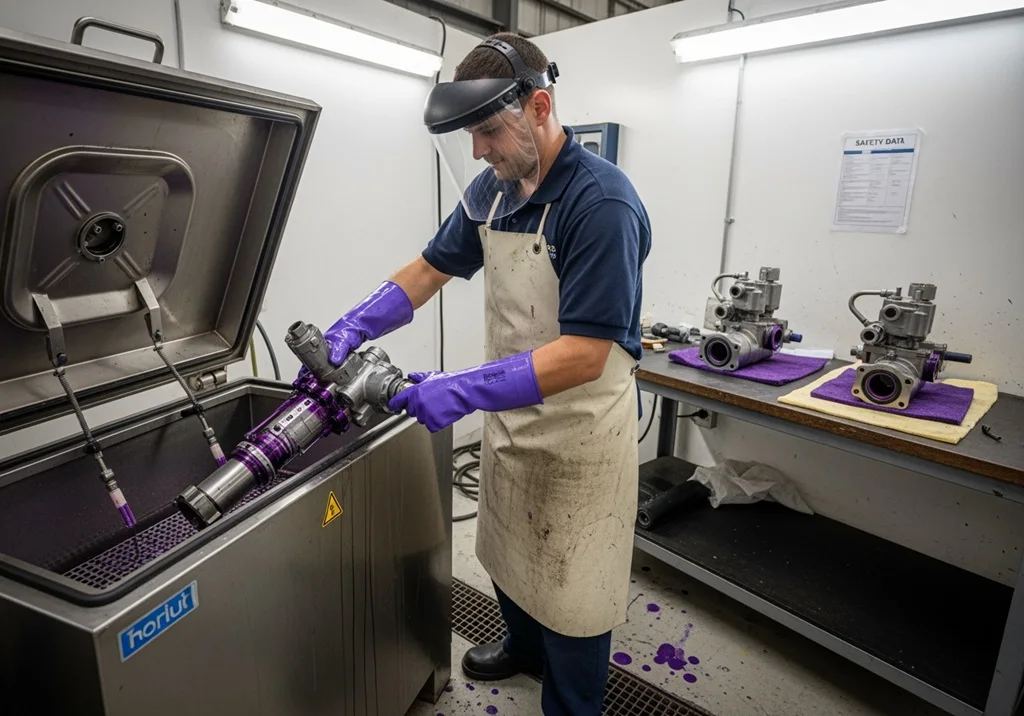
Aviation maintenance teams across Australia deal with a hydraulic fluid cleaning challenge that standard workshop equipment is not designed to handle. Skydrol – the phosphate ester-based hydraulic fluid used in commercial and military aircraft – creates sticky, persistent residue that bonds to component surfaces, irritates exposed skin, and requires specific cleaning conditions to remove completely.
This article covers why Skydrol demands specialised cleaning protocols, the health risks of manual removal methods, and how automated parts washing delivers safer, faster, and more consistent results for aviation maintenance facilities.
Why Skydrol Demands Specialised Cleaning Equipment
What Makes Skydrol Different From Petroleum-Based Hydraulic Fluids
Skydrol is a phosphate ester-based hydraulic fluid chosen for commercial and military aircraft because it resists fire and performs reliably at extreme altitudes and temperatures. These same properties make it notoriously difficult to remove from aircraft components after service or repair.
Unlike petroleum-based oils that can be lifted with standard alkaline degreasers and warm water, Skydrol bonds to metal surfaces through different chemical mechanisms. Cold water washing and standard solvent-based degreasers do not break down phosphate ester chemistry effectively. Residue that appears removed from the surface under casual inspection can remain in threaded connections, seal grooves, and internal passages where it will contaminate hydraulic systems on reassembly.
Aircraft hydraulic components must be spotlessly clean before reassembly. Even trace Skydrol contamination can compromise seals, create hydraulic system failures, or produce hazardous conditions for personnel working near aircraft hydraulic systems. Skydrol removal to a verified standard requires phosphate ester cleaning equipment – not general industrial parts washing.
The Chemistry Behind Effective Skydrol Removal
Effective Skydrol removal requires three elements working together: temperature, appropriate detergent chemistry, and mechanical pressure. Hot water between 60 and 85°C breaks down phosphate ester molecular bonds more effectively than cold washing. Alkaline-based detergents specifically formulated for phosphate ester removal cut through Skydrol without damaging aluminium aircraft components or leaving residue that could contaminate hydraulic systems.
High-pressure spray jets reach internal passages, threaded connections, and complex geometries where Skydrol accumulates during service. Manual brushing and rag wiping cannot sustain the pressure and coverage angle needed to flush contamination from these areas reliably. Phosphate ester cleaning equipment combines all three variables in a controlled, repeatable process that manual methods cannot replicate.
Health Risks of Manual Skydrol Cleaning
Documented Health Effects on Aviation Technicians
Manual Skydrol cleaning creates documented health risks that accumulate with repeated exposure. Prolonged skin contact causes chemical burns, rashes, and chronic dermatitis. Eye exposure leads to irritation and potential corneal damage. Aviation technicians who manually clean Skydrol-contaminated components regularly are at risk of developing long-term skin sensitivity that can prevent them from working with hydraulic fluids entirely.
Skydrol penetrates protective gloves over time. Workers scrubbing components for extended periods experience chemical breakthrough exposure even with appropriate PPE in place. The purple staining visible on hands and arms after a manual cleaning shift indicates direct skin contact that represents a real hydraulic fluid safety concern – not a cosmetic issue.
Skydrol worker exposure prevention requires more than better glove selection. Eliminating manual contact through automated cleaning is the most reliable engineering control available, and it is the approach that best satisfies both WHS obligations and the long-term health interests of maintenance personnel.
Australian Workplace Health and Safety Obligations
Australian workplace health and safety regulations require employers to minimise chemical exposure through engineering controls. Personal protective equipment is considered a control of last resort, not a primary protection strategy. For chemical hazards like Skydrol that penetrate standard gloves and cause documented health effects, the hierarchy of controls points clearly toward eliminating manual handling through automation.
Automated parts washing eliminates the need for workers to manually handle Skydrol-contaminated components. The cleaning process occurs inside a closed chamber where the operator loads and unloads components without contact with the hydraulic fluid or the cleaning solution. This approach meets WHS engineering control requirements whilst also improving hydraulic fluid safety for the entire maintenance team.
Automated Cleaning Protocols for Skydrol Removal
Pre-Wash Preparation and Loading Procedures
Effective aviation parts washer protocols for Skydrol begin before the machine starts. Remove excess hydraulic fluid from components using absorbent materials before loading into the parts washer. This reduces contamination load, extends detergent service life, and improves cleaning efficiency for heavily contaminated components.
Position components on racks to ensure spray access to all surfaces. Actuators and cylinders should be positioned to allow spray penetration through ports and drain holes. Valves and fittings with multiple ports should be orientated so cleaning solution can drain freely during and after the wash cycle rather than pooling inside internal cavities.
Cleaning Cycle Parameters for Phosphate Ester Fluids
Set water temperature to 75 to 85°C for optimal Skydrol removal. Programme wash cycles based on the contamination level of the components being cleaned. Standard contamination levels suit cycle durations in the 15 to 20 minute range. Heavy buildup on actuators or valve bodies – particularly components that have not been cleaned for an extended service period – may require extended cycles or a pre-soak stage before the main wash cycle begins.
Use aviation-approved alkaline detergent at manufacturer-recommended concentrations. Automated hydraulic component cleaning that uses aviation-specific detergent formulations removes phosphate ester fluids without leaving residue that could contaminate hydraulic systems after reassembly. Aviation parts washer protocols should specify the detergent product, concentration range, and the testing method used to verify concentration before each production run.
Rinse and Dry Stages
Hot rinse cycles remove detergent and dissolved Skydrol from component surfaces after the main wash phase. The rinse must be thorough – detergent residue left on components can affect hydraulic system chemistry after reassembly.
Heated drying stages prevent water spotting on aluminium parts and speed component turnaround between cleaning and inspection. Automated hydraulic component cleaning systems that include a dedicated drying phase allow cleaned components to move directly to inspection without waiting for air drying, reducing total processing time per batch.
Component-Specific Cleaning Considerations
Actuators and Hydraulic Cylinders
Hydraulic actuators contain internal passages where Skydrol accumulates during service. Position these components vertically in the washer to allow spray penetration through ports and drain holes. Extended wash cycles ensure complete Skydrol removal from internal surfaces that standard cycle times may not reach adequately.
For large actuator bodies on commercial aircraft systems, extra heavy duty parts washers provide the chamber size and spray pressure required to clean these components thoroughly without disassembly into subcomponents. Cleaning at assembly level rather than component level reduces handling time and the risk of contamination during reassembly.
Valves, Fittings, and Small Components
Small hydraulic valves and fittings clean effectively in basket configurations. Use fine mesh baskets to prevent parts from shifting during the wash cycle whilst allowing full spray coverage. Standard cycle parameters at 75°C suit routine hydraulic component service for most small valve and fitting types.
Skydrol worker exposure prevention for small component cleaning is straightforward with basket loading – technicians handle clean baskets, not contaminated components. The parts never need to be touched individually until they emerge from the wash cycle clean and dry.
Large Hydraulic Pumps and Motors
Large hydraulic power units and motors require parts washers with chambers sized to accommodate bulky components without compromising spray coverage. Rotating spray arms must reach all external surfaces and port openings where Skydrol residue collects during service. Super heavy duty parts washers provide the load capacity and chamber dimensions required for hydraulic power units from large commercial aircraft.
Ground Support Equipment and Service Tools
Hydraulic service carts, jacks, and tools used in aircraft maintenance accumulate Skydrol contamination that spreads across the facility if not addressed regularly. Cross-contamination from dirty ground support equipment is a common source of Skydrol exposure for technicians who handle tools without realising they carry residue.
Regular cleaning in automated washers prevents this contamination pathway and extends the service life of ground support equipment. Manual parts washers provide a practical cleaning solution for smaller tools and support equipment that do not require the full automated cycle of a production washer.
Detergent Selection for Aviation Applications
Aviation-Approved Formulations and Compatibility
Not all industrial detergents safely clean aircraft components. Aviation maintenance requires formulations that remove Skydrol completely whilst remaining compatible with aluminium alloys, titanium, and composite materials. Phosphate ester cleaning equipment must be paired with detergents specifically formulated for aviation applications to deliver results that meet aviation safety requirements.
Aviation-approved alkaline detergents meet aerospace industry specifications for cleaning aircraft components. These water-based, biodegradable formulations effectively remove phosphate ester fluids without causing corrosion or leaving residue. The compatibility with aluminium alloys is particularly important – aggressive alkaline chemistry that cleans Skydrol effectively from steel components can etch and damage aluminium hydraulic housings if concentration or temperature is not controlled within specification.
Stainless steel parts washers provide the material compatibility and chemical resistance needed to run aviation-approved detergent chemistry consistently without equipment degradation affecting cleaning results or introducing contamination.
Concentration Management and Testing
Maintain detergent concentration within manufacturer specifications throughout the production shift. Concentration that is too low results in incomplete Skydrol removal. Concentration that is too high risks component damage or excessive foam that reduces spray effectiveness by cushioning impact pressure.
Test concentration weekly using titration kits or refractometers. Document test results as part of your aviation parts washer protocols. CASA auditors reviewing cleaning documentation expect to see evidence of concentration monitoring as part of a controlled cleaning process.
Waste Management and Environmental Compliance
Filtration and Oil-Water Separation
Skydrol-contaminated wash water requires proper handling before disposal. Install oil-water separators to remove hydraulic fluid from wash water before it enters drainage systems. These systems capture Skydrol and other contaminants, allowing treated water to discharge to sewer systems where permitted by local environmental regulations.
Hotwash Australia integrates filtration systems into their aviation cleaning equipment to address this requirement, reducing the volume of contaminated waste requiring specialist disposal.
Water Recycling and Consumption Reduction
Some stainless steel parts washers include water recycling systems that filter and reuse wash water across multiple cleaning cycles. These systems reduce water consumption and waste disposal costs whilst maintaining cleaning effectiveness through continuous filtration. Recycling wash water also reduces the volume of Skydrol-contaminated liquid requiring specialist disposal, lowering both cost and environmental impact compared to single-use wash water systems.
Implementing Automated Cleaning in Aviation Facilities
System Sizing and Installation Requirements
Match parts washer capacity to the typical component sizes and daily cleaning volumes in your facility. Aviation parts washer protocols should be developed around the specific component mix your facility services – not based on a generic industrial configuration.
Installation requires hot water supply, drainage, electrical power, and adequate floor space for loading and unloading. Plan installation near component disassembly areas to minimise transport of Skydrol-contaminated parts through the facility. This reduces the risk of surface contamination on walkways and work areas during the transfer of components to the cleaning station.
Training Protocols and Standard Operating Procedures
Build facility-specific standard operating procedures for each component type your team cleans. Document the load configuration, cycle selection, concentration check procedure, and post-wash inspection criteria for each category. These SOPs form part of your quality documentation and support hydraulic fluid safety compliance under Australian WHS regulations.
Train maintenance technicians on proper loading techniques, cycle selection, and routine maintenance. Automated hydraulic component cleaning is straightforward to operate, but the documentation and concentration monitoring requirements need clear protocols that all operators follow consistently.
Cost Justification for Aviation Maintenance Managers
Labour and Injury Cost Comparison
Automated Skydrol cleaning delivers measurable returns through labour savings, improved safety, and faster component turnaround. A technician spending time manually cleaning hydraulic components costs substantially more per batch than the same work completed by an automated system using detergent and utilities.
For facilities cleaning multiple component batches each week, annual labour savings alone create a compelling return on investment. These savings are compounded by the reduction in workers’ compensation exposure from eliminating manual Skydrol handling. Hydraulic fluid safety incidents involving chemical burns or chronic dermatitis carry costs well beyond the immediate medical expense – lost productivity, retraining requirements, and elevated insurance premiums all follow repeated incidents.
Turnaround Time and Facility Capacity
Automated cleaning allows technicians to load components and return to productive maintenance work whilst the machine runs. This parallel processing speeds aircraft maintenance windows and increases facility capacity without adding staff. Skydrol worker exposure prevention through automation also means your most experienced technicians spend their time on high-value inspection and assembly work rather than chemical cleaning tasks.
For specialist advice on phosphate ester cleaning equipment and aviation parts washer protocols suited to your facility’s component mix, discuss your cleaning requirements with our team or email us at sales@hotwash.com.au.

Leave A Comment