
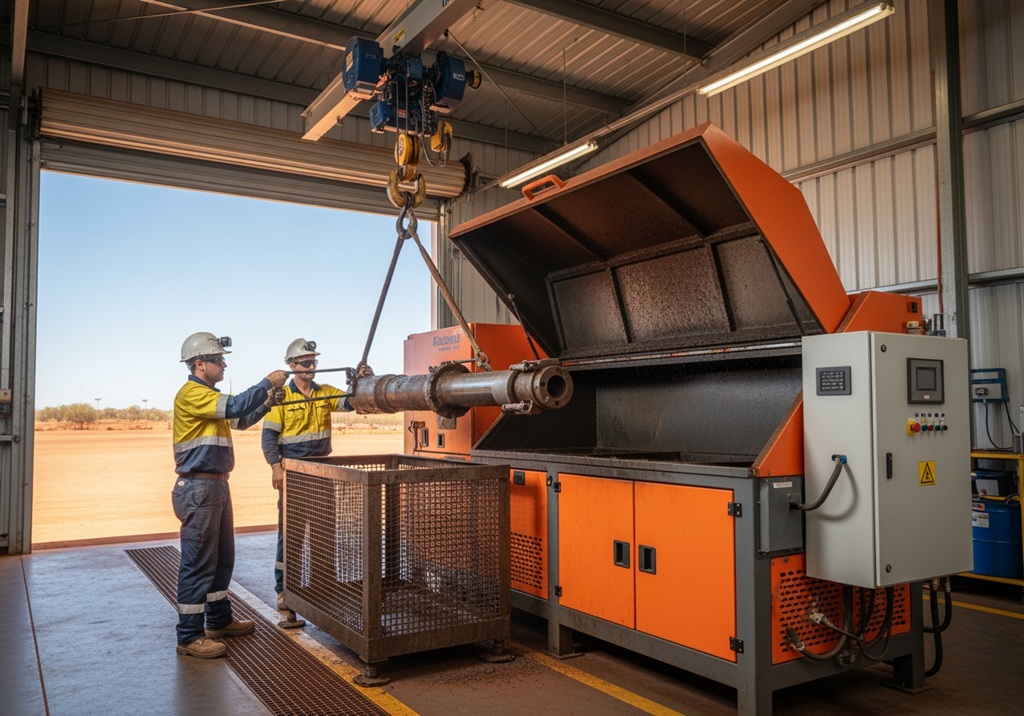
A standard workshop parts washer performs well in the conditions it was designed for: a controlled indoor environment, moderate contamination, a few hours of daily operation, and a service technician a phone call away. Ask that same machine to run continuous shifts cleaning heavily contaminated mine site components in a remote location, and it will fail – not because it is a poor product, but because it was engineered for different demands.
The extra heavy duty and mine spec spray washer categories exist because those different demands require different engineering responses. This guide explains what those differences are, in practical terms, and how to match the right rating to your actual operational requirements.
The Gap Between Workshop and Mine Site Cleaning Requirements
What Standard Workshop Machines Are Built For
Standard heavy duty workshop spray washers are engineered for the conditions that most automotive and light industrial workshops present. They handle substantial contamination, accommodate significant component weights, and deliver reliable cleaning through a working day of moderate use. They are appropriate for the applications they are designed to serve.
The engineering parameters that define them – duty cycle, pump specification, filtration capacity, electrical protection – reflect the environment of a metropolitan or regional workshop where the machine runs for a portion of the day, contamination levels are predictable, and service support is accessible. These are reasonable assumptions for the majority of workshop applications.
When Mine Site Conditions Exceed Workshop Machine Limits
Mine site conditions differ from workshop conditions in ways that matter to equipment engineering. A mine site parts washer may run continuously across an entire maintenance shift. The contamination it handles – iron ore, drilling mud, mineral dust mixed with heavy grease – is more abrasive and more varied than typical automotive shop contamination. When the machine fails, the nearest service technician may be hundreds of kilometres away and the nearest replacement parts may arrive by freight truck days later.
These conditions require engineering responses that standard workshop machines do not incorporate. Heavier construction to handle continuous loading of massive components. Higher-specification pumps designed for sustained operation rather than intermittent use. Multi-stage filtration that handles abrasive mineral contamination without rapid degradation. Electrical systems rated for dusty, high-temperature mine site environments. These are measurable differences, not marketing language.
What “Extra Heavy Duty” Actually Means in Engineering Terms
Construction Standards: Steel, Welds, and Reinforcement
An extra heavy duty spray washer uses heavier gauge steel construction than standard workshop machines. This is not simply a larger version of the same design – it is construction calibrated for the higher loads, more frequent impact, and more demanding operational schedule that extra heavy duty applications impose.
Reinforcement at weld points and structural stress areas reflects the engineering requirement for a machine that handles components weighing several hundred kilograms loaded by forklift or crane multiple times per shift. The chamber floor, door mechanism, and basket mounting points all experience loads that standard construction handles only with adequate reserve or not at all.
Full-penetration welding at all structural joints is essential in extra heavy duty construction. The cyclic loads from continuous operation, combined with the impact forces of heavy component loading, test weld quality over time in ways that intermittent workshop use does not.
Pump Systems and Heating Capacity
The pump system is where the distinction between workshop and mine spec spray washer design becomes most apparent. A standard workshop machine uses a pump rated for the intermittent duty that workshop operation involves. An extra heavy duty system uses a pump designed for sustained continuous operation, with appropriate motor ratings, thermal protection, and impeller materials that resist the abrasive contamination present in mining applications.
Heating capacity must maintain operating temperature through continuous operation with high thermal loads from repeated large component loading. Standard workshop machines size their heating elements for the duty cycle they will encounter. Extra heavy duty systems require heating capacity that recovers quickly between batches and maintains consistent temperature without cycling on and off constantly during peak demand periods.
The Industrial Spray Washer Rating Framework
The industrial spray washer rating framework – workshop, heavy duty, extra heavy duty, super heavy duty – reflects genuine engineering differences rather than arbitrary categories. Each tier involves higher-specification components, heavier construction, and design choices appropriate to more demanding operating conditions.
Hotwash Australia structures its range across these tiers, with each level matched to the applications it genuinely serves. Heavy duty parts washers suit standard industrial workshop applications. Extra heavy duty parts washers address the requirements of earthmoving maintenance, heavy vehicle workshops, and mid-scale mining operations. Super heavy duty parts washers serve major mining operations with maximum capacity and engineering for the most demanding continuous duty applications.
Mine Spec Spray Washer Design Features
What Mine Spec Actually Means for Component Design
A mine spec spray washer incorporates design features that reflect the practical reality of remote mine site maintenance. Components are standardised to match industrial specifications available through mining and industrial supply channels, not proprietary parts that require manufacturer-specific supply. Access panels and service points are positioned for field maintenance with tools that maintenance crews have available, not workshop-specific tooling.
This serviceability in remote conditions is a design specification, not an afterthought. When replacement of a pump seal or heating element must happen in a workshop 600 kilometres from the nearest city, the machine’s design determines whether that replacement takes two hours or two days.
Continuous Duty Parts Washer Requirements
A continuous duty parts washer rating means the machine is engineered to run for an extended operational period – a full maintenance shift, for example – without requiring cool-down periods or component protection that intermittent-duty machines need. This capability comes from thermal management throughout the machine: oversized motor ratings with appropriate thermal protection, cooling for electrical components that would otherwise overheat under sustained load, and heating elements sized to maintain temperature without constant cycling.
The consequence of running an intermittent-duty machine in continuous duty operation is accelerated wear and premature failure. The machine may operate initially but the components designed for intermittent use degrade faster under continuous load. A continuous duty parts washer is not simply a machine running longer – it is a machine engineered for continuous operation from the start.
Filtration Systems for High Contamination
Mine site contamination includes fine mineral particles, drilling fluids, and abrasive rock dust mixed with lubricants. This contamination type is significantly more demanding on filtration systems than the oil and carbon deposits that standard workshop contamination involves.
A mine site parts washer filtration system uses multiple stages to capture different particle sizes and prevent abrasive contamination from reaching pump seals and spray nozzles. Filter housing design for mine site applications accommodates the volume of contamination captured per cycle, with access for maintenance that reflects how frequently mine site conditions require filter service. Sludge management – removing the settled contamination from the tank base during normal operation – is a specific mine site requirement that workshop applications rarely encounter at the same scale.
Chamber Size and Load Capacity for Mining Components
Heavy Duty Mining Equipment Component Dimensions
Heavy duty mining equipment generates components for cleaning that range well beyond standard automotive scale. Excavator hydraulic cylinders, haul truck differential housings, loader arm pin assemblies, and drill rig components all present dimension and weight requirements that standard workshop machines cannot accommodate.
The extra heavy duty chamber size range addresses these requirements. Where standard machines provide adequate chamber dimensions for automotive and light industrial components, extra heavy duty systems accommodate the larger components that mining maintenance regularly produces. The distinction is not simply about having a bigger machine – it is about having a chamber that fits the actual components the operation needs to clean.
Mine Site Parts Washer Load Ratings
Load ratings for mine site parts washer systems reflect the component weights that mining maintenance handles. A haul truck differential housing is a different proposition from a passenger car differential. The basket system, chamber floor, and turntable or rack design must accommodate these weights without deflection that affects spray coverage quality or creates structural stress.
Weight and dimensional requirements must both be specified when selecting a mine site system. A machine that nominally has adequate load capacity but insufficient chamber dimensions forces awkward component positioning that compromises cleaning effectiveness. Both parameters matter independently.
Remote Site Considerations
Serviceability When Parts Arrive by Freight
The most significant operational difference between metropolitan workshop and remote mine site equipment use is the consequence of failure. In a metropolitan workshop, a machine failure results in a service call and a same-day or next-day resolution. At a remote mine site, the same failure may involve freight delivery of parts and waiting periods that create extended cleaning downtime.
Mine spec spray washer design addresses this reality through standardised components from industrial supply channels, logical component layout that enables field replacement with available tools, and where appropriate, redundancy that allows continued operation at reduced capacity while replacement parts are sourced. These design choices are more valuable the further the operation is from service support infrastructure.
Environmental Resistance: Dust, Heat, and Vibration
Australian mine sites present environmental challenges beyond the cleaning task itself. Electrical components in equipment operating in dusty environments require sealed enclosures with appropriate ratings. Temperature extremes across summer periods in inland and northern Australian locations affect equipment that is not designed for high ambient temperatures. Vibration from nearby blasting operations, heavy machinery, and the machine’s own operation requires robust plumbing connections and vibration-resistant electrical conduit.
Mine site parts washer equipment specification should include appropriate IP ratings for electrical enclosures, temperature ratings for motors and controls, and robust plumbing design that handles the vibration environment of an active mine site workshop. Stainless steel parts washers may be appropriate for specific mine site applications where hygiene or corrosion resistance requirements apply alongside the capacity and duty cycle demands.
Matching the Right Rating to Your Application
When an Extra Heavy Duty Spray Washer Is the Right Choice
An extra heavy duty spray washer is the right choice when your operation consistently involves large or heavy components, extended daily operating periods, high contamination levels with abrasive content, and a location where service support is not immediately accessible. Mining maintenance facilities, major earthmoving workshops, and heavy industrial operations in regional or remote locations typically meet these criteria.
The application assessment should be honest. Over-specifying wastes capital on engineering for conditions the operation does not actually impose. A regional earthmoving workshop running the machine for a few hours daily with moderate contamination may find standard heavy duty specification adequate. The extra heavy duty rating is warranted when the application genuinely demands what that specification delivers.
When Standard Heavy Duty Systems Are Adequate
Standard heavy duty parts washers suit the majority of industrial workshop applications that do not involve continuous operation, extreme contamination, or the remote location factors that drive mine site specification. Metropolitan and regional workshops, earthmoving maintenance operations with moderate cleaning volumes, and applications where service support is accessible generally find standard heavy duty specification appropriate.
The distinction between ratings is useful when it matches genuine engineering differences to genuine application requirements. Applying mine site specification to a metropolitan workshop adds cost without adding benefit. Applying workshop specification to a mine site operation creates reliability problems that cost more than the specification difference. For the smallest operations or mobile applications, manual parts washers provide professional cleaning capability at the lower end of the volume spectrum.
Getting the Right Specification for Your Operation
Selecting the appropriate specification requires honest assessment of operating hours, contamination type, component dimensions, and support infrastructure. Hotwash Australia supplies the full range from standard heavy duty through to super heavy duty and can provide specific guidance based on your operational parameters. With over 40 years of experience in Australian industrial cleaning equipment, the team understands the difference between workshop and mine site requirements from practical experience.
Specialist systems including hot tanks for immersion cleaning and wet abrasive blasters for surface preparation complement spray washing systems in full-featured mine site maintenance workshops.
For advice on the right extra heavy duty spray washer specification for your operation, contact our industrial cleaning equipment specialists or email us at sales@hotwash.com.au.

Leave A Comment