
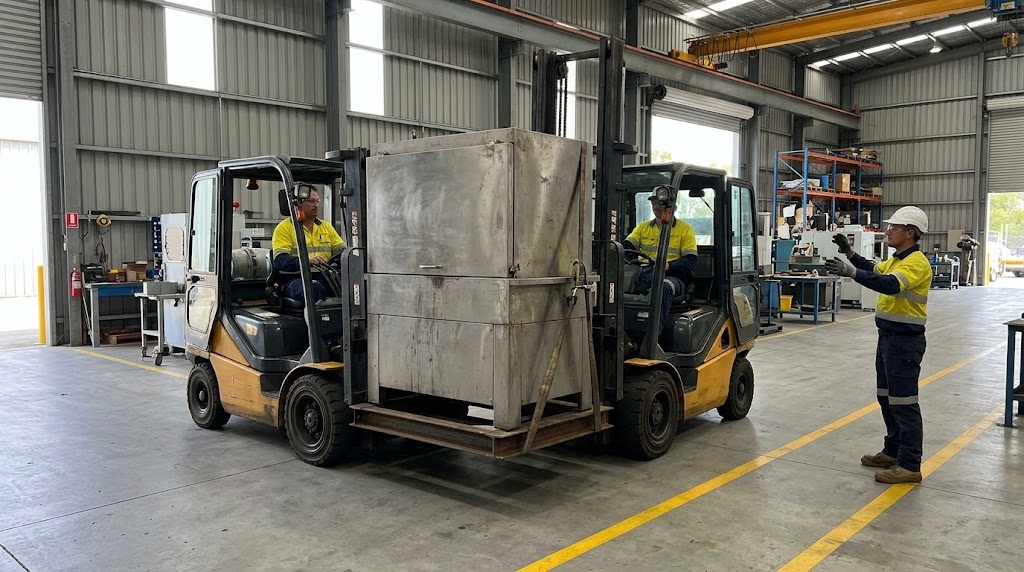
Moving a large workshop machine creates different risks from operating it. The lift needs a defined pick-up point, enough clearance, and a forklift suited to the equipment being moved.
Built-in forklift stirrups can make the intended lifting position easier to identify. They do not remove the need for a planned lift, a competent operator, or site-specific relocation controls.
What Forklift Stirrups Are Designed To Do
A Defined Fork Interface For The Machine
Hotwash lists forklift stirrups as standard on its Super Heavy Duty range. The page describes them as supporting safe and easy forklift relocation.
The stirrups provide a built-in location for the forks to engage the machine. That is preferable to guessing where forks should be placed beneath structural panels or service components.
For safe equipment relocation, this feature gives the lifting team a clear machine interface. The move still has to follow the machine’s instructions and the site’s lifting requirements.
Stirrups Do Not Increase Forklift Capacity
A built-in lifting point does not make an undersized forklift suitable. The selected forklift still needs appropriate capacity and stability for the actual machine and site conditions.
The travel path also matters. Door widths, floor condition, overhead clearances, slopes, and nearby equipment should be checked before the machine is lifted.
A relocation feature helps with engagement. It does not make every route or every lift safe.
Planning The Move Before The Forks Go In
Prepare The Washer For Relocation
The washer should be taken out of service and prepared according to its instructions before it is moved. Loose items, hoses, covers, or accessories should be secured as required.
If the machine contains service liquid, the correct preparation should be confirmed before lifting. Moving a machine without considering its operating fluids can create avoidable handling problems.
Safe equipment relocation begins with preparation, not with the forklift engine starting.
Inspect The Route And Destination
The new position should provide enough room for normal operation and servicing. Access to electrical supply, wastewater servicing, filters, pumps, and doors can all affect the final placement.
The broader parts washer range includes machines with different access needs. Placement should therefore be based on the selected model rather than a generic floor plan.
A simple route walk-through can also identify obstacles before the load is raised.
built-in lifting points Versus Mobile Castors
Different Mobility Features Suit Different Machines
Not every parts washer uses the same relocation method. Some stainless steel models, including the SS550 spray washer, are listed with wheel castors for workshop manoeuvrability.
Super Heavy Duty equipment instead lists built-in lifting points. These features reflect different machine sizes and handling approaches.
They should not be treated as interchangeable. Castors support movement at floor level, whilst built-in lifting points provide a controlled lifting interface for a forklift move.
Choose Mobility Around Real Workshop Needs
A machine that rarely moves may only need a well-planned installation position. A site that reconfigures bays more often may place greater value on built-in relocation features.
built-in lifting points can support safe equipment relocation when the correct machine, forklift, route, and operator are brought together.
After The Machine Reaches Its New Position
Recheck Service Access
A machine can fit physically but still be difficult to maintain. Check that the new position leaves appropriate access to the tank, pump, control area, and service panels.
Avoid creating a layout that makes routine maintenance more difficult than before the move.
Confirm The Machine Is Ready Before Returning It To Service
After relocation, the machine should be reconnected and checked according to the relevant instructions. The workshop should confirm that no hose, fitting, guard, or service component was disturbed during transport.
This final check closes the relocation process. It prevents a successful lift from becoming a poor restart.
FAQs
What Are Built-In built-in lifting points?
They are dedicated forklift engagement points built into the machine. Hotwash lists them on the Super Heavy Duty range for safe and easy forklift relocation.
Do built-in lifting points Make Any Forklift Suitable?
No. The forklift still needs to suit the load and site conditions. Built-in stirrups provide an intended pick-up point, not extra forklift capacity.
Are built-in lifting points Fitted To Every Hotwash Parts Washer?
The current website specifically lists them on the Super Heavy Duty range. Other machines may use different mobility features, such as castors.
Should The Washer Be Drained Before Moving?
The machine should be prepared according to its specific relocation and service instructions. The correct treatment of fluids should be confirmed for the model being moved.
What Should Be Checked After Relocation?
Confirm machine stability, service clearances, connections, guards, hoses, and any components that could have moved during handling.
Plan The Move Around The Machine
Built-in built-in lifting points provide a clear interface for lifting Super Heavy Duty equipment. Their value is strongest when the relocation is planned from preparation through recommissioning.
For help planning machine placement before purchase or relocation, discuss your workshop layout with Hotwash or email sales@hotwash.com.au.

Leave A Comment