
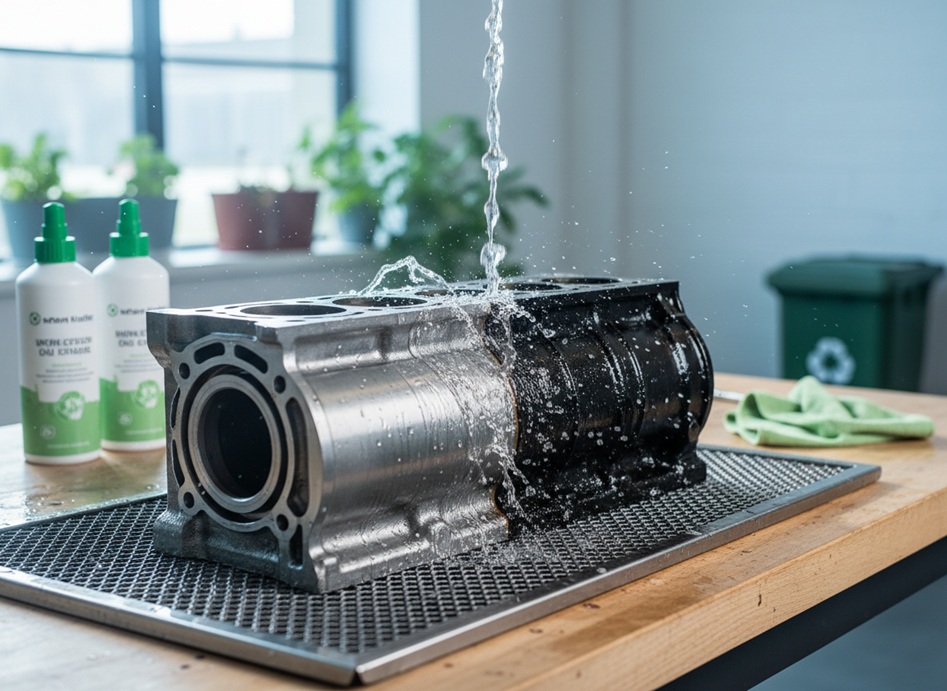
The performance argument that once kept petroleum-based solvents dominant in workshop cleaning has narrowed substantially. Modern biodegradable water-based degreaser formulations match traditional hydrocarbon cleaners on the contamination types that workshops encounter most often – while eliminating the fire risk, vapour exposure, and hazardous waste disposal burden that hydrocarbon solvents carry.
Eco tough degreaser represents this class of product: a biodegradable workshop degreaser designed for industrial use that delivers the cleaning performance workshops need without the safety and environmental complications of petroleum-based alternatives.
Why Australian Workshops Are Moving Away From Hydrocarbon Solvents
The Real Costs of Hydrocarbon-Based Cleaning
Petroleum-based solvent degreasers deliver fast oil and grease removal, but they carry costs that accumulate steadily. Inhalation of solvent vapours creates ongoing respiratory exposure for workshop staff. Skin contact with petroleum solvents causes irritation and, with repeated exposure, more serious skin conditions. Open cleaning tanks allow vapour to accumulate in enclosed workshop spaces, creating both health hazards and fire risk.
Disposal of hydrocarbon-contaminated waste adds to the burden. Petroleum-contaminated fluids require collection by licensed waste contractors, creating an ongoing cost. Storage of flammable solvents requires compliant cabinets, containment, and ventilation. Insurance premiums for workshops storing significant quantities of flammable chemicals reflect the risk.
These costs do not always appear in a simple product price comparison, but they represent real ongoing expenditure that workshops absorb as part of using hydrocarbon-based cleaning chemistry.
When Biodegradable Chemistry Became a Genuine Alternative
Biodegradable workshop degreaser formulations have improved significantly. Early water-based products struggled with heavy grease and baked-on contamination that petroleum solvents removed readily. Modern formulations close this gap through more sophisticated surfactant chemistry, and the remaining performance difference in extreme contamination cases can be addressed through temperature and concentration adjustment rather than chemistry type.
The result is that most Australian workshops can meet their cleaning requirements with biodegradable chemistry while gaining meaningful safety and compliance advantages. Hotwash Australia sells a range of cleaning chemicals including biodegradable formulations designed for use in its automatic parts washing systems.
How Water-Based Biodegradable Chemistry Works
How Surfactant Chemistry Lifts Contamination
A water-based parts cleaner works through surfactants – compounds that reduce surface tension between water and oil, allowing them to mix temporarily. Surfactant molecules have a water-attracting end and an oil-attracting end. They position themselves at the interface between oil contamination and the water-based cleaning solution, surrounding oil droplets and lifting them away from the metal surface into suspension in the wash water.
This mechanism differs fundamentally from how hydrocarbon solvents clean. Solvents dissolve oil by chemical similarity – “like dissolves like.” Surfactant chemistry lifts and suspends oil without requiring chemical compatibility between the cleaner and the contamination. This makes water-based chemistry more versatile across different oil and grease types and more compatible with a wider range of metal surfaces.
How Heat Improves Biodegradable Degreaser Performance
Heat is the performance multiplier for biodegradable degreaser chemistry. At ambient temperatures, surfactant chemistry works slowly on heavy contamination. At the elevated temperatures that automatic parts washers operate, the same chemistry works substantially faster and more thoroughly.
This is why eco tough degreaser and similar biodegradable products deliver their best performance in automated hot water cleaning systems rather than cold-water manual application. Heavy duty parts washers maintain consistent elevated temperature throughout the cleaning cycle, keeping the biodegradable chemistry at peak effectiveness from start to finish.
Cold-water manual application of biodegradable degreaser works but produces noticeably slower results than the same chemistry in a heated automated system. For workshops evaluating whether biodegradable products can match their current solvent performance, testing in a heated automated system rather than cold-water manual application is the fair comparison.
What Biodegradable Actually Means for Australian Workshops
Biodegradable refers to the capacity of a substance to break down through natural biological processes. The surfactants in biodegradable degreaser formulations decompose through microbial action into harmless compounds within a defined timeframe. Hydrocarbon solvents persist in the environment for much longer periods and can accumulate in soil and groundwater.
For biodegradable degreaser Australia applications, this matters for waste disposal, spill management, and environmental compliance. Wastewater containing biodegradable surfactants – after oil separation – is more readily handled by standard wastewater treatment than hydrocarbon-contaminated waste. Soil spills of biodegradable products do not require the same remediation as petroleum solvent spills. These practical differences reduce compliance complexity and environmental liability for workshops that make the switch.
Performance Comparison: Biodegradable vs Hydrocarbon Cleaning
Matching Biodegradable Chemistry to Contamination Types
A hydrocarbon alternative degreaser based on water-based chemistry handles the oil and grease contamination that represents the majority of automotive and industrial workshop cleaning. Engine oil, gear oil, hydraulic fluid, general grease, and road grime all respond well to heated biodegradable chemistry. For the typical workshop cleaning load, the performance difference from the most capable solvent products is negligible when proper temperature and concentration are applied.
Heavier contamination – baked-on carbon deposits, extreme grease accumulation from mining or earthmoving equipment, mineral dust embedded in lubricants – may require higher concentration, longer soak times, or the addition of a hot tank immersion step rather than spray washing alone. These approaches are adjustment strategies rather than limitations unique to biodegradable chemistry.
Concentration and Temperature as Performance Variables
The two variables that most affect biodegradable degreaser performance are concentration and temperature. Higher concentration provides more surfactant activity for heavier contamination. Higher temperature accelerates all chemical reactions. Both can be adjusted within the biodegradable chemistry approach rather than requiring a change to solvent-based products.
This flexibility makes a hydrocarbon alternative degreaser practical across the contamination spectrum that Australian workshops encounter. Light maintenance cleaning of recently serviced components needs modest concentration at normal operating temperature. Heavily contaminated mining or earthmoving components need higher concentration, maximum operating temperature, and potentially extended cycle time. The same biodegradable chemistry handles both ends of this spectrum with appropriate adjustment.
Where Biodegradable Chemistry Has Genuine Advantages
For workshops where metal compatibility matters – particularly those cleaning components with aluminium, brass, copper, or other non-ferrous materials alongside ferrous parts – biodegradable water-based chemistry is often the safer choice. Some hydrocarbon solvents and high-caustic alkaline products attack these materials. Modern biodegradable formulations designed for multi-metal compatibility clean ferrous and non-ferrous surfaces without differential damage.
Stainless steel parts washers used in food processing applications require chemistry that is compatible with food safety standards. Biodegradable formulations designed for food industry use meet these requirements in a way that petroleum solvents cannot.
Practical Safety Benefits for Workshop Teams
Reduced Chemical Exposure for Workshop Teams
Automated parts washing systems contain cleaning chemistry inside the machine during the cleaning cycle. The operator loads components, starts the cycle, and returns when cleaning is complete – minimal contact with cleaning solution during normal operation. This containment applies regardless of the chemistry used, but biodegradable water-based products add the further advantage of producing no volatile organic compound vapours.
Petroleum solvent vapours accumulate in enclosed workshops even with standard ventilation. Water-based products do not release these vapours. The difference in workshop air quality is practical and immediate – no solvent smell, no headache-causing vapour buildup in confined cleaning areas, and no need for specialised ventilation to manage solvent air concentrations.
Fire Risk Reduction
Petroleum solvents have flash points that create fire risk when vapours contact ignition sources. Workshop environments with electrical equipment, hot surfaces, and grinding sparks present realistic ignition risks for solvent vapours. Water-based biodegradable degreaser has no flash point – it will not ignite. This eliminates the fire risk associated with solvent storage and use, with practical consequences for insurance requirements, safety system specifications, and regulatory compliance.
Storage of non-flammable chemistry does not require the flammable liquid cabinets, containment, and ventilation specifications that petroleum solvent storage does. This simplifies workshop layout, reduces equipment costs, and reduces the regulatory paperwork associated with managing flammable goods.
Day-to-Day Handling of Biodegradable Products
Workshop chemical safety during handling of biodegradable degreaser requires basic precautions rather than the more extensive protection that petroleum solvents need. This workshop chemical safety improvement is immediate and practical rather than the more extensive protection that petroleum solvents need. Eye protection prevents splashes from contacting eyes. Chemical-resistant gloves protect against skin contact with concentrated product or hot solution. This is straightforward standard workshop PPE rather than the heavy-duty chemical protection required for concentrated petroleum solvents or caustic alkaline products.
The simpler safety requirements mean that compliance with appropriate PPE is more consistent in practice. Complex requirements are harder to follow reliably. Basic, clearly appropriate protective equipment gets used correctly because the barrier to compliance is low.
Environmental Compliance With Biodegradable Chemistry
Waste Disposal Differences
The waste stream from biodegradable water-based parts cleaning differs significantly from hydrocarbon solvent waste. Used biodegradable solution containing separated oil can often be managed through standard industrial wastewater treatment after appropriate oil separation, subject to local regulation. Hydrocarbon-contaminated waste typically requires collection and disposal by licensed hazardous waste contractors at ongoing cost.
Australian workshops in different states and local government areas face specific wastewater discharge requirements. Biodegradable degreaser Australia applications should confirm local trade waste requirements with the relevant authority, but the compliance pathway is generally more straightforward than for hydrocarbon-contaminated waste.
Soil and Groundwater Risk
Spills of petroleum solvent can create persistent soil contamination requiring professional remediation. The cost of remediation for even small solvent spills can be substantial, and the liability extends to property owners. Biodegradable surfactants break down through natural processes and do not create the same persistent contamination risk.
For workshops on leased properties or in environmentally sensitive locations, the reduced spill liability of biodegradable chemistry is a genuine risk management consideration alongside the safety and compliance advantages.
Integration With Automated Parts Washers
Why Automated Systems Maximise Biodegradable Degreaser Performance
Eco tough degreaser and similar biodegradable workshop degreaser products reach their performance potential in automated hot water parts washing systems. The elevated temperature maintained throughout the automated cycle keeps surfactant chemistry at peak effectiveness. The rotating spray arms deliver chemistry to all external surfaces with mechanical force that supplements the chemical action. The recirculating system processes contamination through filtration, extending solution life.
Manual cold-water application of the same chemistry delivers a fraction of this performance. The automated system – not just the chemistry – is what makes biodegradable degreaser a genuine replacement for hydrocarbon solvents in demanding industrial cleaning applications.
Biodegradable Chemistry in Different Machine Types
Different automated parts washer types create different operating conditions for cleaning chemistry. Spray washers deliver chemistry through rotating high-pressure jets in cycles measured in minutes. Hot tanks expose components to chemistry through extended immersion. Each requires chemistry formulated for those conditions.
Extra heavy duty parts washers and super heavy duty parts washers handling mining and heavy industrial contamination need biodegradable chemistry that remains effective at higher contamination loading and across more intensive cleaning cycles than standard workshop machines impose.
Solution Management in Recirculating Systems
Recirculating automated systems maintain cleaning solution across many cycles before replacement. A water-based parts cleaner in a recirculating system requires monitoring of concentration and contamination loading – through pH testing and visual assessment of solution condition – keeps biodegradable chemistry effective throughout its service life. Topping up concentration as it depletes and replacing solution when contamination loading exceeds what filtration can manage are the routine maintenance tasks. The parts washer range from Hotwash pairs with appropriate cleaning chemistry for each system type.
Wet abrasive blasters and other specialist cleaning systems may use different chemistry appropriate to their specific cleaning mechanism. Getting the right chemistry for each system type is part of what Hotwash provides alongside its equipment.
Choosing the Right Biodegradable Degreaser for Your Application
Matching the Product to Your Contamination and Machine
Not all biodegradable degreaser formulations suit all applications. A product designed for light automotive maintenance cleaning will underperform on mining equipment contamination. A formulation for spray washer application may not be appropriate for hot tank immersion chemistry. Matching the product to the machine type, operating temperature, and contamination level is as important as the decision to use biodegradable chemistry in the first place.
Hotwash provides specialist advice on cleaning chemistry matched to its equipment and the applications its customers operate in. This avoids the guesswork of selecting from a product catalogue without understanding how formulation, machine type, and contamination interact to produce cleaning results.
Getting Expert Advice on Biodegradable Cleaning Chemistry
Hotwash sells a large range of cleaning chemicals and can advise on biodegradable degreaser options suited to your specific machine type, contamination levels, and compliance requirements.
For advice on eco tough degreaser and biodegradable workshop degreaser options for your operation, contact our cleaning chemistry specialists or email us at sales@hotwash.com.au.

Leave A Comment