
Marine diesel engines burn more fuel than they should when injectors are fouled with carbon deposits and varnish. Each trip costs more than it needs to. Performance falls below what the engine was designed to deliver. When this happens across an entire season of commercial or recreational use, the cost in excess fuel adds up to a real figure that proper maintenance could have prevented.
The good news is that injector fouling is a solved problem. Marine fuel system maintenance before the season begins restores spray patterns, improves combustion, and brings fuel consumption back to where it should be. This guide explains what causes injectors to foul in marine conditions, why the timing of cleaning matters, and how to approach injector service for maximum return.
Why Marine Diesel Injectors Foul Before Peak Season
Carbon Build-Up from Seasonal Load Variation
Marine engines operate at varying loads throughout a typical trip – full throttle during transit, then low idle while anchored or working a particular area. This constant variation in load creates conditions for incomplete combustion. Unburned fuel residue forms carbon deposits on injector nozzles, and these deposits restrict fuel flow and distort spray patterns progressively through the season.
Carbon deposits that accumulate through active use then harden during the off-season as the engine sits idle. What might have been manageable mid-season becomes baked-on residue by the time the engine is fired up for the following year. Diesel injector carbon removal at season end or before the season opens prevents this hardening cycle from making each year’s cleaning task harder than the last.
Varnish Deposits from Stored Fuel
Diesel fuel left in tanks between seasons undergoes oxidation. The products of this oxidation form varnish-like deposits that coat injector internals, restrict needle movement, and block spray holes. The result is rough idle, difficulty starting, and higher fuel consumption from the very first trip of the season. Modern fuel with ethanol content absorbs moisture during storage, creating additional conditions for internal corrosion on top of the varnish problem.
A vessel stored for months between seasons gives these deposits time to harden and bond to precision surfaces. Marine fuel system maintenance that addresses the fuel system comprehensively before the season – not just the injectors – removes these contamination sources before they affect performance.
Water Contamination in Marine Fuel Systems
Marine environments introduce moisture into fuel tanks through condensation and deck wash runoff. Moisture promotes bacterial growth in fuel that produces slime deposits and accelerates corrosion inside injectors. Precision-machined components corroded from moisture exposure are expensive to replace – far more expensive than the preventive maintenance that would have kept them in working condition.
Hot tank immersion cleaning used for fuel pump housings, carburettor bodies, and other fuel system components removes both the organic deposits and the salt contamination that contribute to marine corrosion during storage.
How Fouled Injectors Affect Fuel Economy
The Fuel Consumption Penalty
Clean injectors atomise diesel into a fine mist that mixes thoroughly with air and burns completely. Fouled injectors produce larger fuel droplets and uneven spray patterns. Incomplete combustion means some of the fuel you are paying for passes through the engine without contributing to power or propulsion. The fuel economy marine engine penalty from fouled injectors is real and measurable across a season of operation.
A commercial vessel burning more fuel per day than it should on every trip of the season accumulates a significant excess cost. That wasted fuel represents a direct return on the investment in pre-season injector cleaning.
Power Loss and Engine Wear
Blocked injectors reduce the power available from the engine and force it to work harder to maintain operating speed and load. Increased operating load accelerates wear on pistons, rings, and bearings. Higher internal temperatures from poor combustion add thermal stress to components designed to operate within a specific temperature range. The injector problem cascades into broader engine wear that shortens major service intervals.
Marine diesel repair costs associated with engine wear from extended injector neglect far exceed the cost of regular cleaning. The injector is a small component but it affects the condition of everything downstream in the combustion process.
Downstream Maintenance Consequences
Incomplete combustion from fouled injectors produces excess soot that contaminated engine oil absorbs. Oil that carries soot wears engine components faster than clean oil. Filters become blocked sooner. Oil changes come due ahead of schedule. The maintenance cost of running fouled injectors spreads across the entire engine, not just the fuel system itself.
Keeping injectors clean through regular marine fuel system maintenance keeps the entire engine running within design parameters and on a predictable service schedule.
Manual Cleaning vs Automated Parts Washers
The Limitations of Hand Cleaning
Marine mechanics traditionally clean injectors by hand using wire brushes, solvent tanks, and compressed air. This process is slow and produces results that depend entirely on the care and attention of the individual doing the work. Spray holes in the sub-millimetre range require precision that manual work cannot consistently deliver. Wire brushes risk scratching the machined surfaces around spray holes, and a single scratch permanently affects spray pattern. A proper fuel injector cleaner process requires heat and chemistry, not just mechanical action.
Solvent soaking loosens surface deposits but cannot dissolve hardened carbon deep inside nozzle passages. The result is a component that looks cleaner than it did but may still have restricted spray holes. Industrial spray washer diesel cleaning eliminates this limitation by using heat, pressure, and chemistry to dissolve contamination rather than mechanically removing it from the outside.
How Automated Spray Washers Clean Injectors
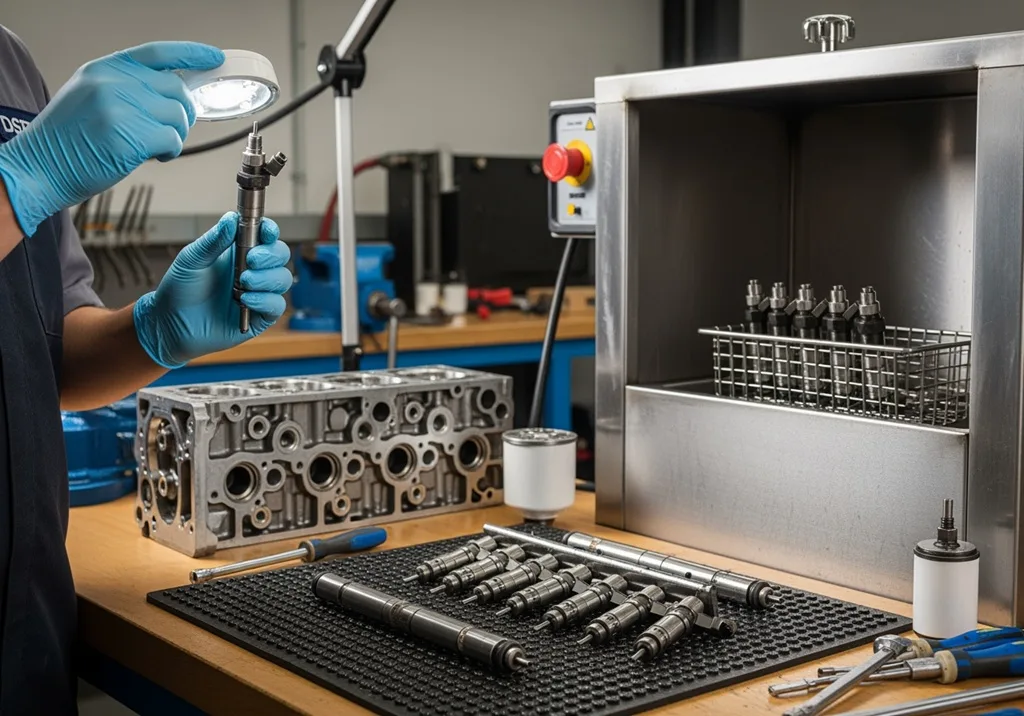
Heavy duty parts washers with adequate temperature and spray pressure dissolve carbon and varnish deposits without touching the machined surfaces mechanically. Heated water activates the biodegradable detergent to break down hydrocarbon deposits. Rotating spray arms reach internal passages that hands cannot access. The process delivers consistent diesel injector carbon removal results regardless of which technician operates the machine.
A complete injector set processed through an automated spray washer takes a fraction of the time required for manual cleaning. The technician loads the basket, starts the cycle, and returns to other work. The machine delivers the same result every cycle.
Time and Labour Savings for Marine Workshops
The time savings from automated cleaning compound across a pre-season service schedule. Hotwash Australia systems used in marine workshops free up technician time that was previously spent scrubbing. For a workshop servicing multiple vessels before the fishing season or recreational season opens, the recovered labour time across the batch represents significant additional capacity.
That capacity goes toward the diagnostic and repair work that requires skilled human judgement rather than the mechanical work that a machine can do more consistently and more quickly.
Selecting the Right Cleaning System for Marine Applications
Stainless Steel Construction for Saltwater Environments
Marine workshops operate in conditions that standard industrial cleaning equipment is not built to handle. Salt air, humidity, and proximity to saltwater accelerate corrosion on powder-coated steel surfaces. Stainless steel parts washers resist this corrosion indefinitely, maintaining their performance and appearance in coastal boatyard and shipyard environments where standard equipment would need replacement within years.
The investment in stainless construction pays back through a working life that extends well beyond what standard equipment delivers in marine conditions. This is a practical consideration for workshops where the cleaning equipment itself faces the same environmental challenges as the components being cleaned.
Chamber Size and Technical Specifications
Marine diesel injectors vary in size from compact sets in smaller recreational vessels to large injector banks in commercial fishing vessels and offshore workboats. The cleaning chamber must accommodate complete injector sets alongside fuel rails and high-pressure pumps for a full fuel system service.
Temperature and spray pressure specifications matter for industrial spray washer diesel cleaning effectiveness. Water temperature must reach the level needed to soften carbon deposits and activate detergent chemistry. Spray pressure must be sufficient to force cleaning solution through restricted nozzle passages. Extra heavy duty parts washers with larger chambers suit workshops handling the full range of marine diesel components including turbocharger housings and injection pump assemblies.
Pre-Season Maintenance Schedule
Timing Injector Cleaning Before Season Opens
The timing of pre-season injector service determines whether the first trips of the season deliver full performance or carry the penalty of fouled injectors while the workshop books fill up. Schedule injector cleaning two to four weeks before the season begins. Commercial fishing operators should align this with their known season openings. Charter operators should have engines running cleanly before booking commitments begin.
Starting the season with clean, properly functioning injectors means full fuel economy marine engine performance from trip one rather than degraded performance through the early weeks.
Complete Fuel System Service Alongside Injector Cleaning
Injector cleaning delivers its full benefit only when the contamination sources that would quickly re-foul clean injectors are also addressed. Replace fuel filters before the season. Drain and clean fuel tanks if there is any indication of bacterial growth or water contamination. Inspect fuel lines for cracks that allow moisture entry. This comprehensive marine fuel system maintenance ensures the clean injectors remain clean through the season.
Wet abrasive blasters used for surface preparation and rust removal on fuel tank fittings, brackets, and deck connections complement the injector and fuel system cleaning work during a full pre-season service.
Post-Cleaning Performance Verification
After reinstalling cleaned injectors, verify that the work has achieved the intended result. Modern marine diesels with electronic management support diagnostic testing that measures injector response time and fuel delivery volume. Mechanical engines require visual spray pattern testing to confirm proper atomisation. Discovering a faulty injector at the dock during pre-season preparation is always preferable to discovering it offshore during the season.
Fuel Quality and Storage Practices That Extend Cleaning Intervals
Sourcing and Treating Fuel Correctly
The quality and freshness of the fuel entering the engine affects how quickly injectors foul. High-volume marine fuel suppliers with faster stock turnover supply fuel with lower moisture content and less oxidation than low-volume outlets where fuel sits for extended periods. Adding fuel stabiliser when topping up between trips slows oxidation and varnish formation during the days the vessel sits between outings.
Filter Replacement and Storage Habits
Change fuel filters at manufacturer-recommended intervals. Heavy contamination in a removed filter indicates a problem upstream – in the tank or fuel lines – that needs attention before it defeats the investment in clean injectors. Filling fuel tanks completely between trips minimises the air space where condensation forms, reducing the moisture that promotes bacterial growth and injector corrosion. Running engines to operating temperature before shutdown burns off accumulated moisture and prevents the varnish deposits that form when unburned fuel cools on injector surfaces.
Why Australian-Made Equipment Suits Marine Workshops
Built for Australian Coastal Conditions
Australian coastal workshops face environmental conditions that equipment designed for climate-controlled factories does not handle well. Salt air, temperature extremes, and high humidity demand marine-grade materials and construction from the workshop equipment itself. Sealed electrical components that function reliably in boatyard and shipyard conditions, and materials that resist the salt exposure of coastal locations, are the baseline requirement.
Hotwash manufactures cleaning systems in Perth with input from Australian marine workshops, mining operations, and heavy industry. Features like removable baskets for injector sets, adjustable spray patterns for different component types, and rapid-drain systems for quick turnaround between cleaning cycles reflect operational feedback from workshops using the equipment under Australian conditions.
Local Service and Parts Support
When cleaning equipment fails during peak pre-season servicing, parts and service availability immediately affects the workshop’s ability to meet its commitments. Local service and parts support from Perth, Melbourne, Sydney, and Brisbane means issues are resolved quickly rather than waiting on international shipping or remote technical assistance.
Conclusion
Marine diesel injectors fouled with carbon and varnish deposits waste fuel and reduce power on every trip. Fuel injector cleaner using automated parts washers restores spray patterns and combustion efficiency in a fraction of the time that manual cleaning requires, delivering consistent results that hand cleaning cannot match. Industrial spray washer diesel cleaning before peak season ensures engines deliver full fuel economy marine engine performance from the first trip.
Marine diesel repair costs associated with injector neglect – excess fuel, accelerated engine wear, and unexpected breakdowns mid-season – far exceed the investment in pre-season cleaning. Fuel injector cleaner service completed before the season prevents the repair bills that follow from deferred maintenance. Australian-built stainless steel systems resist the coastal workshop conditions that destroy standard equipment, and local support keeps marine workshops operational through the seasons when every working day matters.
A marine diesel repair that could have been avoided through pre-season injector cleaning is one of the most frustrating calls a workshop receives mid-season. The parts washer investment pays back in avoided repairs, saved fuel, and engines that perform as designed from the first trip to the last.
For advice on parts washing systems suited to marine diesel injector service, talk to our workshop equipment experts or email us at sales@hotwash.com.au.

Leave A Comment