
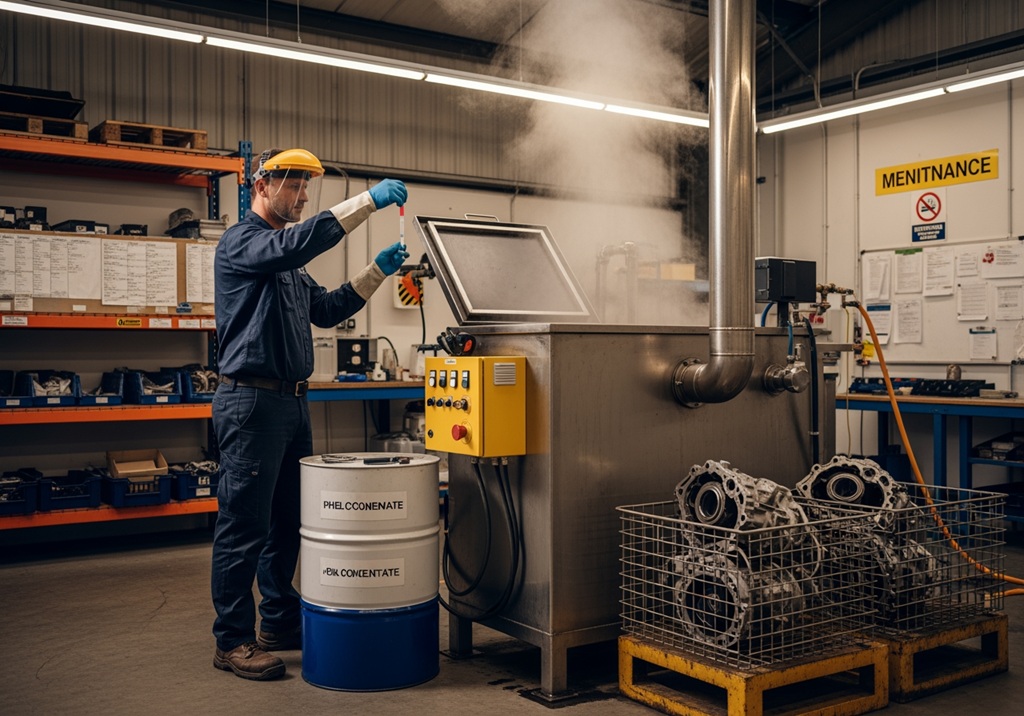
The cleaning equipment is only half the equation. The chemical solution inside your hot tank determines how well contamination is removed, how long your solution lasts, and how safely your team can operate the system. Choose the wrong chemistry, and even a well-built tank delivers inconsistent results.
For Australian workshops cleaning ferrous metal parts – steel engine components, cast iron housings, and iron-based fabrications – the selection of the right hot tank chemical solution makes a direct difference to cleaning quality and workshop productivity. This guide covers what you need to know before making that decision.
Understanding Ferrous Metal Cleaning Requirements
What Makes Ferrous Metals Different to Clean
Ferrous metals contain iron. This includes steel, cast iron, and wrought iron – the materials found in engine blocks, transmission housings, differential cases, and a wide range of industrial components. Ferrous metal cleaning is different from cleaning non-ferrous materials like aluminium or brass because iron-based metals generally tolerate stronger alkaline chemistry without surface damage.
This means ferrous metal parts can be cleaned with more aggressive solutions than you would use on a mixed-metal component. That tolerance makes it possible to use chemistry strong enough to cut through heavy contamination – an advantage for workshops handling heavily soiled industrial parts.
The tolerance for alkaline chemistry also means that ferrous-only components can be soaked for longer periods without risk of surface damage from the cleaning solution. This is useful when dealing with severe contamination that requires extended immersion to dissolve fully.
Common Contamination Types on Ferrous Parts
Steel and cast iron components accumulate contamination from the work they do. Engine oil and gear oil build up over operating cycles. Grease accumulates in joints, housings, and bearing surfaces. Carbon deposits from combustion bake onto ferrous surfaces at high temperatures. Coolant scale develops inside water jackets and passages.
An alkaline degreaser for steel parts works by breaking the molecular bonds between these contaminants and the metal surface. Heat accelerates this reaction. Cold degreasers work slowly on the same contamination. The combination of a properly selected hot tank chemical solution and adequate operating temperature is what makes hot tank cleaning effective where other methods fall short.
Understanding the specific contamination on your components helps you select a solution formulated to handle it. Light oil contamination from routine maintenance needs a different approach from heavy carbon deposits on components that have run for thousands of hours without servicing. Matching solution type and strength to the actual contamination on your parts avoids both under-cleaning and unnecessary chemical costs.
Types of Hot Tank Chemical Solutions
Caustic-Based Solutions
Caustic soda workshop cleaning uses sodium hydroxide dissolved in water to attack organic contamination. Caustic solutions work by saponifying oils – converting them into soap-like substances that rinse away from the metal surface. Carbon deposits also break down under alkaline attack.
Caustic-based formulations deliver strong cleaning performance for severely contaminated ferrous parts. Mining workshops and heavy industrial facilities sometimes use these solutions for components with extreme contamination levels. The trade-off is that caustic soda workshop cleaning demands careful handling and appropriate PPE. Skin contact with caustic solution causes chemical burns, and proper ventilation is required during operation.
Alkaline Degreasers for Steel
Purpose-formulated alkaline degreasers sit between caustic solutions and biodegradable detergents in terms of cleaning strength and safety profile. These products combine alkaline salts and surfactants to attack grease, oil, and carbon simultaneously. They deliver strong ferrous metal cleaning performance whilst reducing the handling risks associated with straight caustic chemistry.
Automotive workshops and general mechanical facilities typically use alkaline degreasers for steel components. These formulations handle engine blocks, gearbox housings, and axle components effectively. They are available in concentrate form and mixed to a working solution at the correct ratio for the contamination level being treated.
Biodegradable Hot Tank Detergents
Biodegradable hot tank detergent formulations use plant-based surfactants and safer alkaline compounds to achieve cleaning results without the hazards of caustic chemistry. These products have become more widely adopted as formulations have improved and as workplace safety requirements have increased.
Hotwash Australia specifies biodegradable detergents for its hot tank systems. This choice reflects the same approach the company applies across its parts washing equipment – effective cleaning without unnecessary chemical risk. Biodegradable hot tank detergent options are also simpler to dispose of under Australian trade waste regulations than caustic-based alternatives.
Selecting the Right Chemistry for Your Workshop
Matching Solution Strength to Contamination Level
The starting point for selecting your hot tank chemical solution is an honest assessment of the contamination your parts carry. Light oil and grease from regular maintenance responds to moderate alkaline chemistry. Heavy carbon buildup, baked-on grease, and extreme contamination from mining or earthmoving environments needs a stronger formulation.
Assess your worst-case parts, not your average ones. Your chemical selection needs to handle the most challenging contamination your workshop encounters. Using a solution too weak for your dirtiest components means multiple cleaning cycles, wasted time, and inconsistent results.
For workshops handling a mix of contamination levels, an alkaline degreaser for steel components offers the versatility to manage both moderate and heavy contamination without the full hazard profile of caustic chemistry.
It is also worth thinking about the frequency of your cleaning cycles. A workshop running the hot tank continuously throughout the day will deplete solution faster than one running occasional cycles. Higher-frequency operation requires a solution that maintains its effectiveness across more cleaning cycles before concentration needs topping up, which can make a higher-quality formulation more cost-effective than it first appears.
Material Compatibility Considerations
Ferrous metal cleaning becomes more complex when components include non-ferrous materials. Many engine and transmission components contain brass fittings, aluminium housings, or copper elements alongside steel and cast iron. Strong caustic solutions can damage aluminium surfaces through etching or discolouration.
If your workshop regularly cleans mixed-metal components, choose a hot tank chemical solution specifically formulated for multi-metal compatibility. These formulations clean ferrous metal effectively whilst protecting softer non-ferrous materials. Check the product data sheet before use on any component with non-ferrous parts.
Cast iron also has specific considerations worth noting. Some alkaline formulations can darken cast iron surfaces during cleaning. This is not structural damage, but it may be relevant for workshops doing restoration or inspection work where surface appearance matters for identifying wear patterns.
Operating Temperature and Local Conditions
The hot tank chemical solution you choose should be matched to your operating temperature range. Most formulations perform within a defined temperature window. Running below that window reduces cleaning effectiveness. Running above it accelerates solution breakdown and increases vapour production.
Australian workshops deal with a wide range of ambient conditions. A workshop in a warm inland location has different heat retention characteristics than a workshop in a cooler coastal area. These factors affect how quickly your tank reaches operating temperature and how well it maintains heat during use. Heavy duty parts washers and hot tanks with adequate insulation maintain temperature more consistently, which helps your chemical solution work reliably.
Maintaining Your Hot Tank Chemical Solution
Monitoring Chemical Concentration in the Hot Tank
Chemical concentration hot tank management is an ongoing task. The working solution weakens over time through three mechanisms. Parts carry solution out of the tank when removed (drag-out). Evaporation reduces total liquid volume. Chemical reactions consume the active alkaline compounds as they clean.
Regular testing with pH strips or a refractometer tells you when concentration has dropped below effective levels. When it does, adding chemical concentrate restores performance. Keeping records of when you add concentrate and how much helps you track solution life and predict replacement timing.
When to Replace vs Top Up the Solution
Topping up with concentrate restores alkalinity but does not remove accumulated contamination. Over time, dissolved oils, carbon residue, and fine metal particles build up in the solution. This accumulated contamination reduces cleaning effectiveness even when alkalinity appears adequate.
When contamination loading in the solution becomes excessive, a full drain and clean is the correct approach. Remove the old solution, clean out settled sludge from the tank base, rinse thoroughly, and refill with fresh chemical concentration hot tank mix. This restores full performance and prevents parts from being contaminated during cleaning. Workshops running manual parts washers alongside a hot tank should manage each system’s chemical solution separately, as formulation needs differ between the two.
Safety Considerations for Workshop Chemical Handling
PPE and Handling Requirements by Chemical Type
Different chemical types require different levels of personal protective equipment. Biodegradable hot tank detergent requires standard chemical-resistant gloves and eye protection as a minimum. Alkaline degreasers require the same, with attention to full eye coverage.
Caustic soda workshop cleaning demands a higher level of protection. Face shields rather than safety glasses, chemical-resistant aprons, and appropriate footwear are required. The consequences of caustic solution contact with skin are significantly more serious than contact with biodegradable formulations. PPE must match the hazard level of the specific chemical being used.
Ventilation and Emergency Response
Heated chemical solutions produce vapour. The level of ventilation required depends on the formulation. Caustic-based solutions require active extraction ventilation. Biodegradable formulations produce minimal vapour and typically require only normal workshop airflow.
Eyewash stations must be accessible within immediate reach of any hot tank system. For caustic chemistry, a safety shower is also required. Emergency flushing for chemical contact must begin immediately – delays increase the severity of any injury. Test emergency equipment regularly to confirm it is in working order.
For workshops running stainless steel parts washers or hot tanks for food-related applications, biodegradable formulations are the correct choice for hygiene compliance and safety.
Common Mistakes When Choosing Hot Tank Chemicals
Selecting on Price Alone
The purchase price per drum is not a reliable guide to operating cost. A cheaper formulation that requires higher concentration, breaks down faster, or needs more frequent replacement can cost more per cleaning cycle than a quality product at a higher upfront price.
Calculate the actual cost per cycle by factoring in concentrate price, required concentration ratio, and expected solution life. A well-formulated chemical solution that maintains performance over many cycles typically delivers better value than a budget option that degrades quickly.
Ignoring Compatibility and Switching Protocols
Mixing different chemical brands or types in the same tank creates unpredictable results. Different formulations may be incompatible – their surfactant systems can interact in ways that destroy cleaning effectiveness or create unwanted byproducts.
When switching chemical suppliers or formulations, drain the tank completely and rinse it out before adding new solution. This step prevents compatibility problems and gives the new formulation a clean start. It also gives you a baseline to evaluate whether the new product is performing as expected.
Choosing the Right Hot Tank System to Match Your Chemistry
Hot Tanks and Chemical Performance Together
The tank itself affects how well your chemical solution performs. Consistent temperature control keeps the chemistry active throughout the cleaning cycle. Insulation reduces heat loss and maintains the working temperature range your formulation needs. A pump or agitation system helps circulate solution around complex component geometries.
Hotwash hot tanks are designed to work with biodegradable detergent chemistry, with temperature control and construction suited to Australian workshop conditions. The right tank and the right chemistry together deliver results that neither achieves as effectively on its own. For workshops assessing their full cleaning equipment setup, the parts washer range covers automatic spray systems that complement hot tank immersion cleaning. Workshops that also need surface preparation or rust removal capability can add hot blasters to their equipment mix.
Getting Advice for Your Specific Application
Selecting the right hot tank chemical solution depends on your specific contamination types, component materials, workshop conditions, and safety requirements. What works well in a mining maintenance workshop running extra heavy duty parts washers may not be the right choice for an automotive rebuilder or a food processing facility.
For advice on hot tank systems and chemical solutions matched to your ferrous metal cleaning requirements, speak with our parts cleaning specialists or email us at sales@hotwash.com.au. Getting the chemistry right from the start prevents costly trial-and-error and keeps your hot tank performing consistently.

Leave A Comment