
Every wet winter season, Australian heavy vehicle workshops see the same pattern. Brake components that performed reliably through summer start causing problems when the rain arrives. Uneven braking, extended stopping distances, and in the worst cases, jackknifing incidents that put drivers and other road users at serious risk.
The connection between contaminated brake components and winter brake failure is direct. It is not about cold weather alone – it is about what happens when wet conditions activate the contamination that was never fully removed during servicing. This guide explains how contamination destroys brake performance, what needs to be cleaned, and how proper brake component wash procedures protect logistics safety across your fleet.
How Contamination Destroys Brake Performance
Three Failure Mechanisms from Dirty Brakes
Brake systems operate in hostile conditions. Every wheel rotation throws road grime, salt spray, and chemical residue onto components that depend on precise friction to function. When contamination builds between brake pads and rotors, three failure mechanisms accelerate together.
First, oil and grease residue acts as a lubricant in a system that depends on friction. Even a thin oil film can reduce braking force significantly – enough to extend stopping distance at highway speeds by a dangerous margin. Second, moisture trapped in contaminated brake assemblies accelerates corrosion. Corroded caliper pins stick. Corroded brake pad backing plates separate. Corroded wheel cylinders leak. Each failure creates uneven braking force, which is the primary mechanical cause of jackknifing in wet conditions. Third, brake dust mixed with oil forms an abrasive paste that scores rotor surfaces, reduces pad contact area, and generates hotspots that lead to thermal cracking.
What Contamination Does to Stopping Distance
A rotor that looks clean to the eye can still carry a contamination film that substantially reduces braking force for the first many brake applications after servicing. This contamination is invisible, but its effect on stopping distance is real. A B-double that should stop safely at an intersection may not if its rotors were reassembled without proper brake contamination removal.
The solution is not better brake pads or upgraded rotors. Heavy duty parts washers designed for brake components achieve thorough cleaning through high-pressure hot water spray that reaches every surface – including the recessed areas that hand-cleaning misses.
Winter Jackknifing – The Mechanical Reality
How Force Imbalance Causes Jackknifing
Jackknifing occurs when a trailer’s wheels lock whilst the prime mover continues forward motion. The trailer swings sideways, and the driver loses control – often in under two seconds. Physics textbooks describe this as a loss of directional stability. Workshop reality is simpler: contaminated brake components create uneven braking force between axles.
On a road train operating in winter conditions, if the rear trailer axle brakes apply with significantly more force than the middle axle due to uneven contamination, that force imbalance can overcome tyre friction on wet bitumen. The rear axle locks, the trailer pivots, and winter jackknife prevention becomes impossible once that sequence begins. Clean, consistently serviced brakes are the only reliable way to prevent it.
Why Contamination Creates Brake Force Variation
Brake force variation between axles comes from three sources: mechanical wear, adjustment errors, and contamination. Workshops cannot prevent wear and rarely have time for perfect adjustment at every service. But they can eliminate contamination as a variable entirely.
A brake component wash system removes this variable by delivering identical cleanliness across every component at every service. A mechanic scrubbing parts by hand achieves different results based on fatigue, time pressure, and visibility. An automated system delivers the same result whether it is washing the first brake calliper on Monday morning or the last one on Friday afternoon. That consistency is what logistics safety depends on.
What Actually Needs Washing
Callipers, Rotors, and Drums
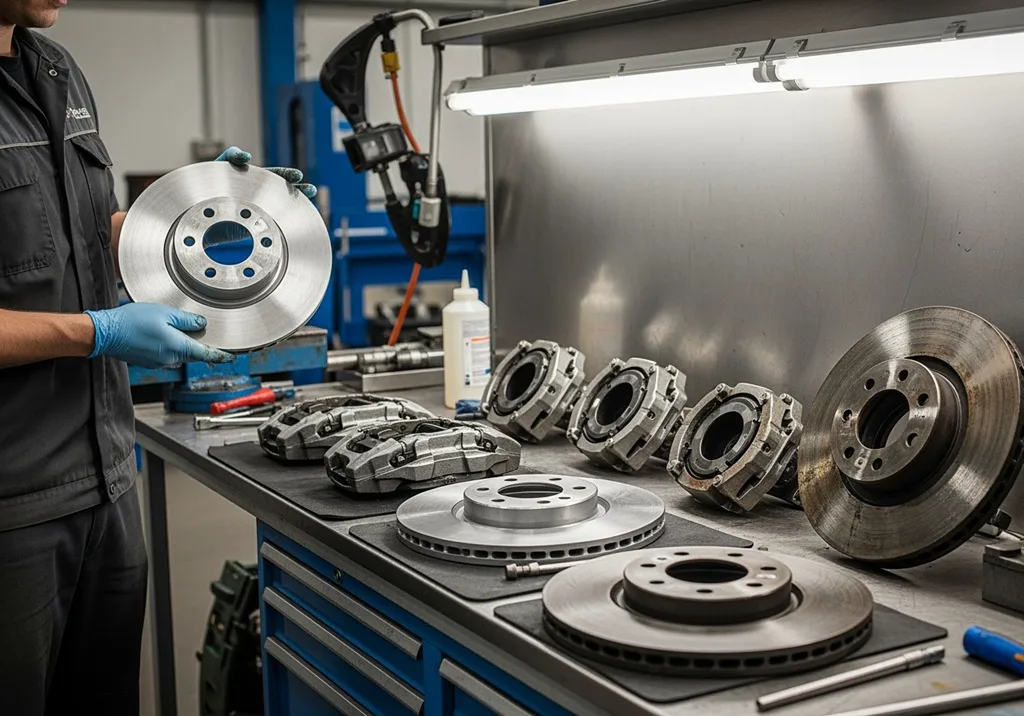
Brake callipers and mounting brackets accumulate road grime, salt spray, and brake dust mixed with wheel bearing grease. This combination hardens into a coating that prevents proper calliper movement. Sticking callipers apply uneven force, overheat brake pads, and create the imbalance that causes jackknifing. Stainless steel parts washers built for brake components direct high-temperature water into recessed areas around slide pins and mounting points where this contamination collects.
Brake rotors and drums require completely oil-free surfaces for proper pad contact. Rotors pulled from service often show oil contamination from leaking wheel seals, overfilled grease caps, or handling during reassembly. A rotor carrying this film will deliver reduced braking force until the contamination burns off through normal use – a period during which brake performance is compromised.
Hubs, Studs, and Air Brake Components
Wheel hubs and studs accumulate rust, old thread locker, and debris that creates inconsistent torque readings during reassembly. A wheel stud torqued against contaminated threads may not achieve the clamping force indicated on the torque wrench, creating a loose wheel risk that compounds brake system problems during heavy vehicle brake cleaning.
Air brake components including slack adjusters, pushrod assemblies, and brake chambers require particular attention in Australian conditions. Road salt accelerates corrosion in air system components. Moisture in contaminated assemblies can freeze in cold winter conditions, preventing proper brake application and creating exactly the force imbalance that leads to jackknifing.
The Chemistry of Effective Brake Cleaning
Why Heat and Pressure Outperform Manual Scrubbing
Brake contamination is not a single substance – it is a layered combination of materials that require different removal chemistry. The outer layer of loose road dirt and brake dust removes with water pressure alone. The middle layer of oil and grease that has bonded to metal through heat cycling requires detergent chemistry to break the bond. The deepest layer is corrosion, which must be prevented by removing the moisture and salt that cause it.
Biodegradable detergents formulated for brake component wash work through surfactant chemistry. Surfactants reduce the surface tension between water and oil, allowing water to penetrate and lift oil films that would normally repel it. At temperatures above 60°C, this process accelerates substantially – hot water breaks contamination bonds far faster than cold water, which is why heated parts washers outperform cold-water pressure washing for brake contamination removal.
Automated vs Manual Contamination Removal Rates
Manual cleaning with solvent and a brush applies chemical action only. An automated system applies chemical action, heat, and mechanical force from high-pressure spray – three removal mechanisms working simultaneously. The combination achieves a level of cleanliness that manual methods cannot match.
Industrial spray washer brakes cleaning systems operating in heavy vehicle workshops achieve this through controlled temperature, sustained pressure, and timed wash cycles calibrated for brake components. Hotwash Australia builds systems designed for Australian operating conditions, where contamination volumes and corrosion rates exceed what standard cleaning equipment was designed to handle.
The Real Cost of Contaminated Brakes
Component Life and Replacement Costs
Contamination shortens brake component life substantially. A rotor serviced without proper brake contamination removal wears faster than one reassembled clean. Multiply this across multiple axles and a full fleet, and the cost difference becomes significant. Brake pads operating on contaminated assemblies face the same accelerated wear pattern.
These figures assume contamination only shortens component life. They do not account for the service call when a driver reports brake vibration on a regional route. They do not include tow costs when a wheel bearing fails due to contamination-accelerated wear. They do not measure the insurance and compliance exposure following a jackknife incident. Logistics safety is not just an operational concern – it has direct financial consequences.
Labour Savings from Automated Washing
A mechanic spending several hours per week scrubbing brake components can redeploy that time to billable maintenance work when a parts washer handles cleaning. This time reallocation generates additional weekly revenue. That revenue increase contributes to justifying equipment investment well within a standard payback period.
Quality consistency improves in parallel. Extra heavy duty parts washers designed for high-volume brake servicing eliminate the quality variation that leads to callbacks, warranty claims, and customer dissatisfaction. Clean components reduce comebacks – and comeback jobs are the most expensive work a workshop does.
Australian Conditions and Brake Maintenance Standards
Coastal and Outback Contamination Profiles
Western Australia presents unique challenges for brake system maintenance. Coastal highways expose vehicles to salt spray year-round. A brake calliper operating on a coastal route accumulates corrosion at a much faster rate than the same calliper on an inland route. This accelerated corrosion creates the uneven brake force that increases winter jackknife prevention demands.
Red dust from Pilbara and Goldfields operations creates a different but equally serious problem. Fine dust penetrates sealed wheel bearings and brake assemblies. Once inside, it mixes with grease and moisture to form an abrasive paste that scores rotors and wears calliper pins. Standard cleaning removes surface dust but leaves the paste embedded in recessed areas where it continues destroying components. Heavy vehicle brake cleaning in these environments requires systems capable of reaching that embedded contamination.
Choosing Cleaning Equipment for Heavy Vehicle Workshops
Workshops serving fleets in these conditions need industrial spray washer brakes cleaning capability that matches the contamination severity their components actually carry. A parts washer adequate for light automotive work will not deliver the results a heavy vehicle workshop needs.
Super heavy duty parts washers provide the chamber size, heating capacity, and spray pressure needed for complete brake assemblies from road trains and heavy haulage vehicles. For workshops adding surface preparation capability alongside brake servicing, wet abrasive blasters handle rust removal and surface preparation work that spray washers are not designed for.
For advice on the right brake component wash system for your fleet, contact our heavy vehicle cleaning specialists or email us at sales@hotwash.com.au.

Leave A Comment