
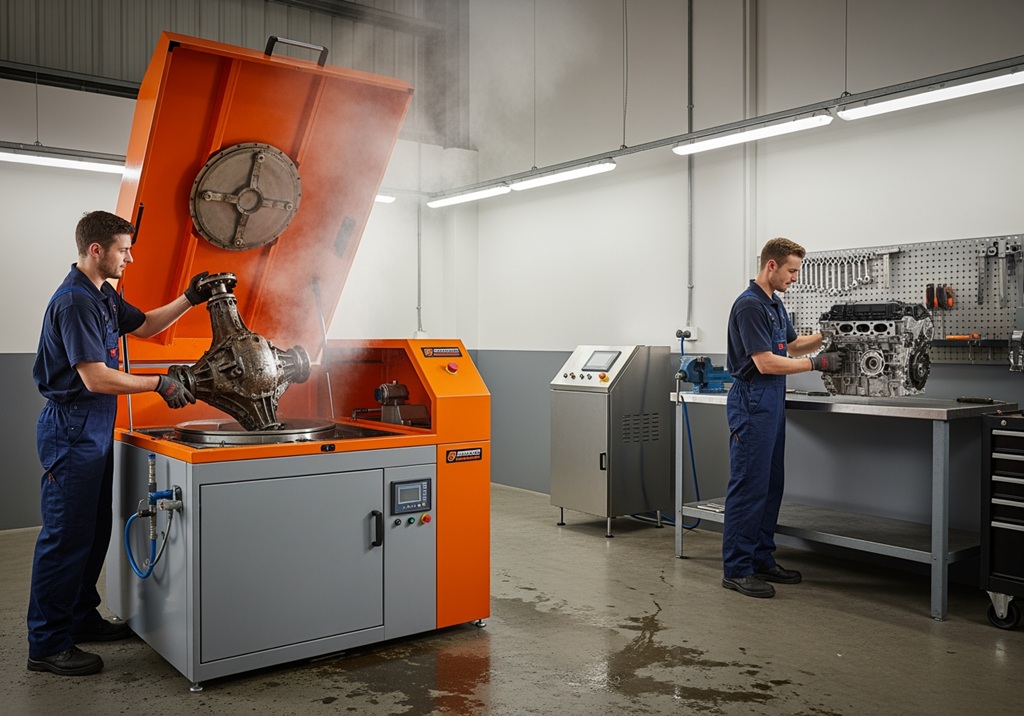
Manual parts cleaning occupies skilled technicians with work that a machine can do faster, more consistently, and with less physical risk. Every hour a mechanic spends scrubbing components is an hour not spent on the diagnostic, assembly, and repair work that actually generates revenue for the workshop.
Automated parts washers solve this problem with a combination of heated water and spray pressure that removes grease, oil, and contamination from workshop components without requiring operator involvement during the cleaning cycle. This guide explains how the technology works, what it replaces, and why parts washer Australia operations across every industry sector have adopted automated cleaning as a standard part of workshop operations.
The Manual Cleaning Problem Australian Workshops Face
What Manual Scrubbing Actually Costs
The direct cost of manual cleaning is technician time. Hotwash states on their website that their automatic machines can complete what takes a tradesperson or apprentice four hours of manual cleaning in just 15 minutes. When skilled staff spend significant portions of their working day scrubbing parts, the workshop is paying skilled-trade rates for work that does not require skilled-trade ability.
This is a labour allocation problem. The same technician who can clean a component manually is also capable of diagnosing faults, fitting parts, and completing billable repairs. When manual cleaning occupies that time, revenue-generating work either takes longer or does not happen.
What Automated Cleaning Changes
An automated parts washer workshop operates differently. The technician loads dirty parts, starts the cycle, and returns to other work while the machine runs. The cleaning happens alongside other tasks rather than replacing them. When the cycle completes, clean parts are ready for the next stage of the repair or rebuild.
Three things change when a workshop moves from manual to automated cleaning. Cleaning time becomes predictable and consistent. Results become consistent regardless of who loaded the machine. Technician time is freed for work that contributes directly to workshop output. Each of these changes has a compounding positive effect on workshop productivity.
How Hot Water Parts Cleaning Works
Why Temperature Is the Core Cleaning Variable
Hot water parts cleaning is more effective than cold water cleaning not because of the water itself, but because of what temperature does to cleaning chemistry. Elevated temperature accelerates the chemical reactions that break down grease and oil. At higher temperatures, detergent chemistry becomes more active and penetrates contamination faster.
Cold water with the same detergent performs poorly on workshop grease because the chemistry cannot work fast enough at low temperatures. The solution to slow cleaning is rarely more chemical – it is more heat. Hot water parts cleaning uses temperature to do the work that cold-water systems try to compensate for with stronger or more chemical.
Chemistry and Heat Working Together
Hotwash Australia uses biodegradable, water-based detergents in its automatic parts washing systems. This chemistry works with hot water to dissolve grease and oil from metal surfaces without the hazards associated with caustic or solvent-based alternatives. The detergent suspends contamination in the wash water so spray pressure can flush it away.
The hot water parts cleaning approach means the chemistry concentration needed is lower than in cold-water systems. Hot water does more of the cleaning work, reducing the amount of detergent required per cycle. This keeps operating costs down and simplifies the chemistry management that is part of running any parts washing system.
Spray Pressure Degreasing and Coverage
How Spray Pressure Removes Contamination
Spray pressure degreasing works by directing pressurised water at component surfaces with enough force to mechanically dislodge contamination whilst the detergent chemistry breaks it down. The spray jet impact helps lift contamination from surfaces and carry it into the wash water for flushing.
The appropriate spray pressure depends on the contamination type and the component material. Standard workshop oil and grease contamination responds well to moderate spray pressure. Heavier contamination from mining or earthmoving equipment may need higher pressure to achieve the same result. Components made from soft materials or with precision surfaces need lower pressure to avoid damage.
Heavy duty parts washers are designed for the spray pressure levels appropriate to industrial workshop contamination. The pump and spray arm system is built to maintain consistent pressure throughout the cleaning cycle, delivering the same cleaning action to the last component in a batch as to the first.
Spray Arm Design and Rotating Turntable Coverage
Spray pressure degreasing works best when the spray reaches every surface of the component. Fixed spray arms direct water at surfaces they can reach from their fixed positions. Rotating spray arms sweep across component surfaces from changing angles, improving coverage across complex geometries.
The turntable further improves coverage by rotating the component itself during the cycle. As the part turns slowly, surfaces that were previously facing away from a spray zone rotate into direct exposure. The combination of rotating spray arms and a rotating turntable provides coverage that fixed systems cannot match on irregular component shapes.
What an Automated Degreasing System Replaces
Manual Scrubbing: Time, Effort, and Inconsistency
Manual scrubbing requires a technician to apply physical effort to each component throughout the cleaning process. The quality of the result depends on how much time and effort is applied – which varies based on the operator, the time available, and the level of contamination. Components cleaned quickly under time pressure come out differently than those cleaned thoroughly when time allows.
An automated degreasing system delivers the same result every cycle regardless of who loaded the machine or how busy the workshop is. The cycle runs for a set time at set temperature and pressure. The result is consistent. This consistency has practical value: parts that come out of the washer reliably clean reduce re-work, re-cleaning, and the quality variability that manual cleaning introduces.
Caustic and Solvent-Based Methods
Before automated aqueous parts washers became the standard for Australian workshops, many operations used caustic soda tanks or solvent-based cleaning systems. These methods created ongoing workplace safety problems through chemical burn risk, vapour exposure, and difficult disposal requirements.
Automated degreasing system design using biodegradable, water-based detergents eliminates these hazards. The chemistry is enclosed in the machine during operation. Operators load and unload components but do not contact cleaning solution during the cycle. The biodegradable formulation simplifies disposal compared to caustic or solvent waste. This shift to safer chemistry is one reason parts washer Australia adoption has grown across industries that previously tolerated hazardous methods.
Workshop Cleaning Productivity Benefits
Labour Reallocation: What Automation Makes Possible
The primary productivity benefit of an automated parts washer workshop is the reallocation of technician time from cleaning to other work. A four-hour manual cleaning task that takes 15 minutes in an automated washer returns approximately three and three-quarter hours to the technician’s available working time per cleaning job. Across multiple cleaning jobs per day, this compounds into a meaningful shift in how technician time is allocated.
Workshop cleaning productivity improves not just through time saved on cleaning but through parallel processing. While the machine runs its cycle, the technician works on something else. This parallel operation – cleaning and repair work happening simultaneously – increases total workshop output without requiring additional staff.
Workshop Cleaning Productivity Across the Working Week
Consistency in cleaning time allows better scheduling. When manual cleaning takes a variable and unpredictable amount of time, scheduling work around it is difficult. When automated cleaning takes a known cycle time every time, repair job scheduling becomes more accurate and predictable.
Consistent results also reduce re-work. Parts that consistently come out of the washer clean reduce the frequency of sending components back for a second cycle or manual touch-up. Each re-wash avoided is a cycle’s worth of time and operating cost saved.
Safety Improvements From Automated Systems
Reduced Chemical Exposure
An automated parts washer contains cleaning chemistry within the machine during operation. The chamber door closes before the cycle starts. Spray, vapour, and heated solution remain inside the machine until the cycle completes and the door is opened. This containment means operators are not in contact with cleaning chemistry during the cleaning process.
Stainless steel parts washers and other models in the Hotwash range are built with this containment as a standard design feature. The combination of enclosed operation and biodegradable detergent chemistry means operator chemical exposure is minimal compared to manual cleaning methods using caustic or solvent chemistry.
Manual Handling and Repetitive Strain
Manual scrubbing of workshop components involves sustained physical effort over extended periods. Brushing heavy components, maintaining awkward positions to reach recessed areas, and lifting components in and out of cleaning tanks all contribute to physical strain over a working day.
Loading and unloading an automated parts washer involves placing components into baskets or onto turntables and removing them after the cycle. The physical effort is concentrated into loading and unloading rather than distributed across the entire cleaning process. For workshops where multiple components are cleaned each day, this reduction in sustained physical cleaning effort has meaningful long-term benefit for the team doing the work.
Parts Washer Australia: The Hotwash Range
Automatic Systems Across Capacity Tiers
The parts washer Australia range from Hotwash covers automatic systems from heavy duty through to super heavy duty, with stainless steel variants for corrosion-resistant applications. With over 40 years of experience in industrial cleaning equipment and more than 1,200 automatic parts washers deployed nationally, Hotwash supplies systems matched to Australian workshop conditions across every industry sector.
Extra heavy duty parts washers suit operations cleaning larger components with consistent volume. Super heavy duty parts washers suit major mining and industrial operations with the largest cleaning requirements. Trusted by operations including BHP, Rio Tinto, and Fortescue Metals Group, the Hotwash range serves the full spectrum of Australian industrial cleaning.
Specialised Systems for Specific Applications
Automated spray washing handles the majority of workshop parts cleaning requirements, but some applications need different methods. Hot tanks provide immersion cleaning for engine components with internal passages where spray washing cannot reach. Wet abrasive blasters address surface preparation, rust removal, and coating removal tasks that neither spray washing nor immersion handles effectively.
Manual parts washers from Hotwash suit professional workshops with lower cleaning volumes where full automation is not yet justified. As workshop volume grows, the transition to automatic systems is supported by the same supplier and service network.
Maintaining an Automated Parts Washer
Daily and Weekly Maintenance Tasks
Basic maintenance for an automated parts washer workshop keeps the system performing consistently. Daily checks include confirming solution level is adequate, verifying the heating system is reaching operating temperature, and inspecting spray nozzles for blockages that change spray pattern quality.
Weekly tasks include cleaning filtration systems that protect the pump and maintain solution quality. Contamination accumulates in filters during operation. Regular filter cleaning prevents the flow restriction that reduces spray pressure and extends cleaning cycle times.
When to Service and When to Replace
Solution maintenance – concentration testing and adjustment or full solution replacement – is a regular operational task rather than a scheduled service event. Tracking when concentration was last adjusted and when the last full change occurred helps maintain consistent cleaning performance over time.
Hotwash provides service support across its national network in Perth, Melbourne, Sydney, and Brisbane. Local service availability means that when scheduled maintenance or a repair is needed, response time is practical rather than dependent on interstate or international logistics.
Making the Transition From Manual to Automated Cleaning
Calculating Whether Automation Is Justified
The business case for an automated parts washer workshop strengthens with cleaning volume. The more time your team currently spends on manual cleaning, the more labour time automation returns to productive use. Track your current manual cleaning time for a representative period. The gap between that time and the time the same cleaning would take in an automated system is the productivity recovery the investment delivers.
Workshops with high cleaning volumes and multiple technicians spending time on manual cleaning typically find the business case straightforward. Smaller operations with occasional cleaning requirements need to weigh the volume against the investment. Rental options are available for workshops that want to confirm the benefit before committing to purchase.
Choosing the Right System for Your Operation
The right automated parts washer for your workshop depends on your component sizes, daily cleaning volume, contamination types, and available floor space. Approaching the selection with these requirements documented – rather than starting from specifications or price – leads to a better match between the system and the work it needs to do.
For advice on automated parts washers for your Australian workshop, contact our parts washer specialists or email us at sales@hotwash.com.au.

Leave A Comment