
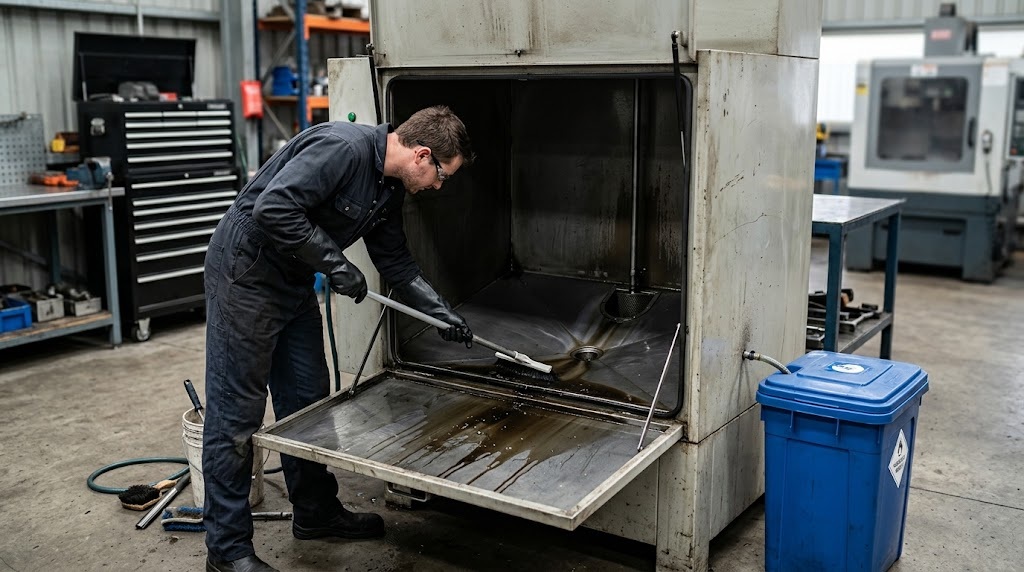
Tank clean-out is rarely the most productive part of a workshop shift. Sludge and used wash solution still need to be removed, but access and drainage can determine how disruptive the job becomes.
A quick-drain floor is designed to make that clean-out process more direct. Hotwash lists this feature on its Super Heavy Duty range as part of a broader service-friendly tank design.
Why Tank Geometry Matters During Clean-Out
Drainage Starts At The Lowest Part Of The Tank
Hotwash describes an improved quick-drain tank floor on the Super Heavy Duty range. The stated purpose is faster clean-out, reduced downtime, and improved cleanliness.
A quick-drain tank floor helps used liquid move toward the drain area instead of remaining spread across the tank base. That can make wash tank cleaning easier to organise after the machine is drained.
The feature does not remove the need to clean settled residue. It improves the path for liquid removal before that work begins.
Better Access Complements Better Drainage
The same range also lists a forward-positioned tank for waste water servicing. Access and drainage solve different problems, but they work well together.
Good access helps technicians reach the service area. A quick-drain tank floor helps reduce the amount of liquid left across the tank base.
This combination can make wash tank cleaning more straightforward without claiming that the tank becomes self-cleaning.
A More Controlled Tank Cleaning Sequence
Drain Before Disturbing Settled Material
Where the machine’s procedure allows, remove the used wash solution before disturbing sediment. This reduces the amount of suspended material moving around the tank.
Hotwash’s FAQ recommends pumping dirty water into an IBC or similar container for later collection. Workshop teams should still follow local disposal requirements.
Once liquid has been removed, the remaining residue can be handled according to the machine’s service instructions.
Keep The Service Area Ready Before Starting
Tank work becomes slower when hoses, containers, cleaning tools, or access equipment are not prepared. A short setup check can prevent unnecessary interruption after draining begins.
The quick-drain tank floor is most useful when the rest of the clean-out process is organised. Drainage design cannot compensate for a poor waste handling plan.
Comparing Different Service-Access Ideas
Quick Drain Floors And Removable Covers Solve Different Problems
Hotwash uses different service features across its ranges. For example, the SS1100 stainless steel washer lists a quick-removal waste water tank cover for direct tank access.
That is not the same feature as a drain-friendly tank floor. One improves access from above, whilst the other improves drainage from the tank base.
This distinction matters when comparing machines. Similar maintenance outcomes can be supported by different mechanical layouts.
Choose The Machine Around The Whole Service Process
A buyer should consider more than the wash cycle. Tank access, pump access, filter access, and wastewater handling all affect routine ownership.
The general parts washer range includes different constructions and cleaning systems. The most suitable service layout depends on how the workshop expects to use the machine.
A drain-friendly tank floor is especially relevant when tank clean-out is a regular operational concern.
Keeping Tank Cleaning Predictable
Do Not Wait For A Severe Build-Up
A service-friendly tank can still become difficult to clean if residue is allowed to build up excessively. Regular inspection keeps the condition visible.
Wash tank cleaning should follow the machine’s guidance and the workshop’s actual contamination level. There is no universal interval that suits every application.
Use The Clean-Out To Inspect Nearby Components
Tank servicing is also an opportunity to inspect accessible filters, hoses, pump connections, and seals. Any obvious change can then be addressed before the machine returns to service.
The drain-friendly tank floor supports the draining stage. The rest of the maintenance process still depends on inspection and correct servicing.
FAQs
What Is An Improved drain-friendly tank floor?
Hotwash lists it as a Super Heavy Duty feature designed to support faster tank clean-out, reduced downtime, and improved cleanliness.
Does A Quick-Drain Floor Make The Tank Self-Cleaning?
No. The feature supports drainage. Settled sludge and residue still need to be removed during wash tank cleaning.
Is The Feature Available On Every Hotwash Washer?
The current website specifically lists it on the Super Heavy Duty range. Other product pages describe different tank-access arrangements.
What Happens To The Dirty Wash Water?
Hotwash recommends pumping dirty water into an IBC or similar container for collection. Disposal should follow the requirements that apply to the workshop.
Why Consider Tank Access When Choosing A Washer?
Tank servicing is a recurring ownership task. Easier access and drainage can make routine clean-out more practical for the maintenance team.
Make Tank Servicing Part Of Machine Selection
A drain-friendly tank floor is not a cleaning shortcut. It is a design feature that helps the servicing process begin with more efficient liquid drainage.
To compare tank layouts for your cleaning workload, talk through wash-tank access with Hotwash or email sales@hotwash.com.au.

Leave A Comment