
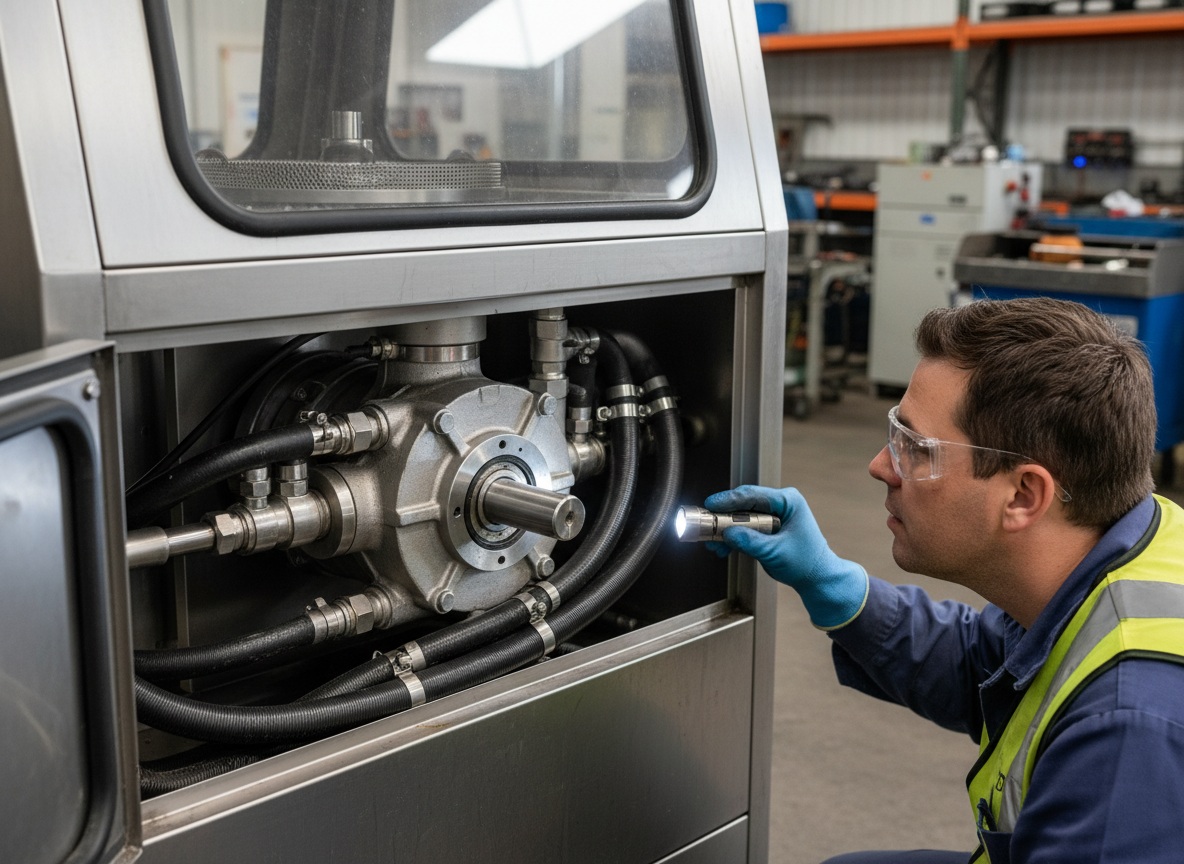
A spray washer depends on its pump to circulate cleaning solution through the spray system. If the pump cannot operate correctly, the cleaning process can be interrupted even when the rest of the machine is available.
A hard-face pump seal is one component used in selected Hotwash stainless steel automatic parts washers. Hotwash describes the seal as part of a large pump assembly and links it with reliability. This article takes a careful view: seal construction can support reliability, but no seal can guarantee that spray washer downtime will never occur.
Why Pump Seals Matter
The Seal’s Basic Role
A pump shaft must rotate whilst the pump casing contains liquid. The shaft seal helps control leakage where the rotating shaft passes through the pump assembly.
If a seal becomes damaged or worn, leakage may develop. The exact cause depends on the pump, fluid, operating conditions, contamination, and maintenance history.
Hotwash lists a durable hard-face pump seal on the SS1100-T and SS1100-HP product page. The feature appears alongside a stainless steel pump and impellor.
That is useful model-specific information. It does not prove that every Hotwash washer uses the same pump seal.
Spray washer downtime can have many causes. Pumps, heaters, controls, filters, spray systems, turntables, water level, and maintenance practices can all influence availability.
What a Hard-Face Seal Changes
A hard-face seal uses hard contact faces within the sealing assembly. The purpose is to provide a durable sealing interface under the conditions for which the seal is specified.
The Hotwash page calls its seal durable. It does not provide a universal wear life or a fixed replacement interval.
That means maintenance teams should avoid unsupported assumptions. A hard-face pump seal still operates within a complete pump system and can be affected by incorrect operation.
Chemical compatibility also matters. Cleaning solution should remain within the machine and detergent supplier’s stated requirements.
Where Hotwash Uses Hard-Face Pump Seals
Selected Stainless Steel Models
The SS1100 product page is not the only current Hotwash page that mentions this seal. The SS1350 stainless washer also lists a hard-face pump seal within its pump specifications.
Hotwash separately lists the same type of seal on its SS1600 sliding-door washer. These pages support a clear statement: selected stainless steel automatic washers use this pump-seal feature.
They do not support a claim that the seal eliminates all failures. Pump reliability depends on the complete installation and operating environment.
For maintenance planning, model identification matters. Record the exact washer model before ordering parts or setting a service plan.
Do Not Assume Every Washer Uses the Same Seal
Hotwash has several automatic washer categories. Their construction and pump arrangements can differ.
At the range level, Hotwash Australia presents stainless steel, Heavy Duty, Extra Heavy Duty, and Super Heavy Duty automatic washers. It also supplies specialised and manual cleaning equipment.
A seal listed on one stainless steel product page should not be transferred to another category without verification.
The broader stainless steel washers can help identify models in that product family. The individual model page should then be checked for the actual pump specification.
This is especially important when spray washer downtime has already occurred. Accurate model information avoids maintenance decisions based on a similar-looking machine.
Reducing Downtime Risk Around the Pump
Watch for Leakage and Operating Changes
Operators should know what normal operation looks and sounds like. Changes can provide an early reason to inspect the machine.
Possible warning signs include unexpected leakage around the pump, unusual noise, reduced circulation, or repeated need for attention. These signs do not identify a seal failure by themselves.
Stop and inspect the equipment according to site and manufacturer procedures if a pump condition appears abnormal. Do not continue operation simply to finish a batch.
A hard-face pump seal is a wear component within a rotating assembly. Early investigation can prevent a small problem from becoming a larger repair.
Protect the Pump Through Correct Use
Use the cleaning solution and detergent recommended for the application. Unknown chemistry can affect seals and other pump components.
Maintain suitable water level according to the machine instructions. Pumps should not be operated outside their intended conditions.
Keep filters and accessible tank areas serviced as required. Contamination and blocked flow paths can affect the washing system.
Do not use the pump as a reason to ignore the rest of the washer. Spray washer downtime can originate in many connected systems.
Maintenance Planning for Spray Washers
Include the Seal in Routine Checks
Routine maintenance should identify the pump as a specific inspection area. Check for leakage, loose fittings, visible damage, and changes from normal operation.
The Hotwash parts washer range includes different machine types, so service steps should follow the exact model documentation.
Record maintenance work instead of relying on memory. A history can show whether a leak is new, recurring, or linked to another change.
Keep the equipment clean enough for inspection. Heavy grime around the pump can hide small leaks and make diagnosis harder.
Plan Service Around the Complete Wash System
A reliability plan should include pumps, seals, filters, spray bars, heaters, tanks, controls, drainage, and moving mechanisms where applicable.
This systems view is more useful than assuming one robust component prevents all outages.
When a seal needs attention, confirm the correct replacement part and installation method. Incorrect assembly can create a new problem.
If the machine shows recurring pump issues, investigate the cause instead of replacing the seal repeatedly without diagnosis.
FAQs
Does a Hard-Face Pump Seal Prevent All Downtime?
No. A hard-face pump seal can be part of a durable pump design, but many other components can cause spray washer downtime.
Which Hotwash Machines List a Hard-Face Pump Seal?
Current Hotwash pages list a hard-face pump seal on selected stainless steel automatic washers, including SS1100, SS1350, and SS1600 product pages.
What Can Cause Pump-Seal Problems?
Possible causes can include wear, contamination, unsuitable operating conditions, incorrect chemistry, installation issues, or another pump problem. Diagnosis should be based on the actual machine.
What Should Operators Do if a Pump Starts Leaking?
Follow the machine and site procedures. Stop unsafe operation, identify the leak location, and arrange inspection before assuming the seal is the only cause.
Conclusion
A hard-face pump seal is a verified feature on selected Hotwash stainless steel automatic parts washers. It forms one part of the pump system that keeps wash solution circulating.
Reducing spray washer downtime requires attention to the whole machine. Correct chemistry, water level, filtration, inspection, and timely maintenance remain important.
For model-specific pump and washer questions, contact the parts washer team or email sales@hotwash.com.au.

Leave A Comment