
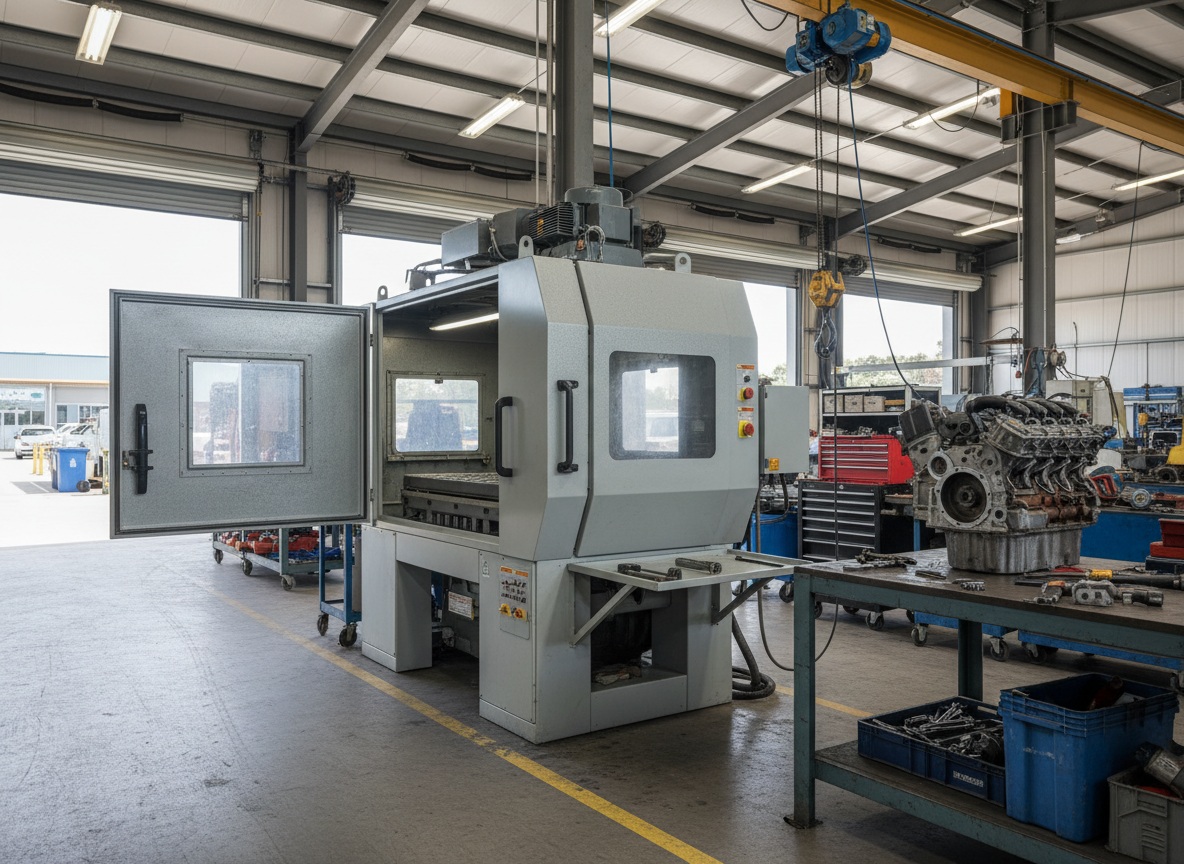
Industrial workshops expose cleaning equipment to moisture, heat, dirty components, handling, and repeated daily use. Construction details therefore matter beyond appearance. They influence how equipment is protected and how it fits the intended application.
Dual-skin washer construction adds a second layer around part of the machine structure. For Hotwash, this feature is specifically listed on its Extra Heavy Duty spray washer range. The company describes the dual skin as providing insulation and an additional layer of strength. This article explains what that means without extending the claim beyond the published product description.
What Dual-Skin Construction Means
Inner and Outer Layers
A dual-skin arrangement uses two structural layers rather than a single exposed wall. In heated cleaning equipment, the space between those layers can help separate the hot wash area from the outer surface.
Hotwash lists extra heavy duty washers as mild-steel spray washers with sand-blasted, powder-coated construction. The same page identifies a dual skin as part of that range. It describes the feature as offering insulation and an additional layer of strength.
That description is specific to the Extra Heavy Duty range. It should not be assumed that every Hotwash machine uses the same construction.
For a workshop comparing industrial wash equipment, that distinction matters. A product category can share a cleaning purpose without sharing identical cabinet, tank, or structural details.
Why the Construction Detail Matters
Equipment construction should be evaluated against the job it will perform. Large or heavily contaminated components may place different demands on a washer than smaller workshop parts.
A second skin can also create a protective outer layer around the working structure. The practical value depends on where the dual skin is used, how the machine is installed, and how operators handle components.
Hotwash also offers heavy duty washers for industrial applications. That category is separate from the Extra Heavy Duty range, so buyers should compare the published construction and features for the exact model under consideration.
The key point is simple. “Heavy duty” is a product category, not a universal construction specification. The equipment page for the actual model should guide the selection.
How Dual-Skin Construction Relates to Workshop Conditions
Mechanical Protection and Structure
Workshop cleaning equipment operates around tools, trolleys, parts, hoses, and other machinery. The cabinet and tank structure therefore sit within an active work area.
Dual-skin washer construction can be considered as part of the machine’s overall structural design. Hotwash presents the additional skin on its Extra Heavy Duty range as another layer of strength.
That does not mean the outer layer makes the machine immune to impact or misuse. Loading practices, component placement, floor conditions, and routine inspection still matter.
For larger cleaning duties, Hotwash separately presents super heavy duty washers as a mine-spec range. Its published features include a different set of construction and service-access details. This shows why buyers should compare complete equipment definitions rather than isolate one feature.
A practical assessment looks at the whole machine. Cabinet construction, tank access, turntable design, pump access, drainage, and electrical protection can all affect suitability.
Insulation Around Heated Wash Systems
Heated wash systems lose heat through their surfaces and through normal operating activities. Insulation is used to slow heat transfer between the heated wash area and the surrounding environment.
Hotwash states that the dual skin on its Extra Heavy Duty range offers insulation. The website does not publish a universal energy-saving figure for that dual-skin feature, so none should be assumed.
The value of insulation depends on operating conditions. Ambient temperature, wash temperature, cycle frequency, lid opening, tank condition, and maintenance all influence heat retention.
For workshop managers evaluating industrial wash equipment, insulation should therefore be treated as one design factor. It should not be used as a stand-alone prediction of operating cost.
Comparing Construction Approaches
Mild Steel Heavy-Duty Equipment
Hotwash describes its Extra Heavy Duty spray washers as using tough mild steel that is sand blasted and powder coated. The dual skin is listed within that same range.
Mild steel needs a protective finish in wet workshop service. Surface preparation and coating condition therefore deserve attention during inspection and maintenance.
At the midpoint of the selection process, Hotwash Australia can be considered in the context of its published product families. These include automatic spray washers, specialised parts washers, and manual cleaning equipment.
The client website presents different construction approaches across those families. That makes model-level checking more useful than assuming one material is standard everywhere.
For industrial wash equipment, the correct question is not simply whether one construction type is stronger. The better question is whether the complete machine matches the component size, cleaning method, environment, and maintenance plan.
Stainless Steel Alternatives
Hotwash also supplies stainless steel washers as a separate automatic parts washer range. The company identifies stainless steel construction as a defining feature of that category.
Stainless steel and powder-coated mild steel should not be treated as interchangeable descriptions. They are different material approaches with different surface-protection requirements.
A buyer comparing them should check the actual model, intended cleaning chemistry, component loading, and workshop environment. The client website does not state that one material is universally better for every application.
That balanced comparison is important. Dual-skin washer construction is a feature of the Extra Heavy Duty range, not a general substitute for material selection.
What to Check Before Selection
Match Construction to the Work
Start with the parts being cleaned. Consider their size, shape, contamination, handling method, and how often they enter the washer.
Then review the machine category. The Hotwash parts washer range covers several automatic and specialised cleaning approaches. Each category is intended for a different type of workshop requirement.
Check whether dual-skin construction is actually listed for the model you are considering. Do not transfer a feature from one range to another without confirmation.
Also check access around the machine. Operators need room for loading, unloading, inspection, cleaning, and routine maintenance.
Industrial wash equipment should fit the workflow as well as the cleaning task. A construction feature only adds value when the complete machine suits the application.
Plan for Inspection and Maintenance
A durable machine still needs routine checks. Inspect coated surfaces, doors, seals, accessible tank areas, drainage points, and areas exposed to repeated handling.
For a dual-skin machine, look for visible external damage and follow the manufacturer’s service guidance. Do not drill, modify, or open structural panels without confirming the correct procedure.
Keep cleaning chemistry within the equipment and chemical supplier’s stated requirements. Incompatible chemistry can affect coatings, seals, and other wetted components.
Record recurring damage or coating wear. A maintenance history helps distinguish isolated marks from patterns linked to handling or workshop layout.
FAQs
Is Dual-Skin Construction Used Across Every Hotwash Washer?
No. Hotwash specifically identifies dual-skin washer construction on its Extra Heavy Duty spray washer range. Other product families have their own published construction details.
Does Dual-Skin Construction Eliminate Heat Loss?
No. Hotwash states that the dual skin offers insulation. Insulation can reduce heat transfer, but no heated system is completely free from heat loss.
Is Dual-Skin Construction the Same as Stainless Steel Construction?
No. Dual-skin describes a layered construction arrangement. Stainless steel describes the material used for the machine or specified components.
Hotwash presents stainless steel washers as a separate product range.
What Should a Workshop Check Before Buying?
Check component size, cleaning method, workshop environment, access, maintenance needs, and the exact model specification. Confirm that any desired construction feature is listed for that model.
Conclusion
Dual-skin washer construction is a verified feature of Hotwash’s Extra Heavy Duty spray washer range. The company describes it as providing insulation and an additional structural layer.
Its value should be assessed as part of the complete machine. Material, access, cleaning method, maintenance, and component handling all remain important.
To compare construction options for your workshop, discuss your equipment requirements or email sales@hotwash.com.au.

Leave A Comment