
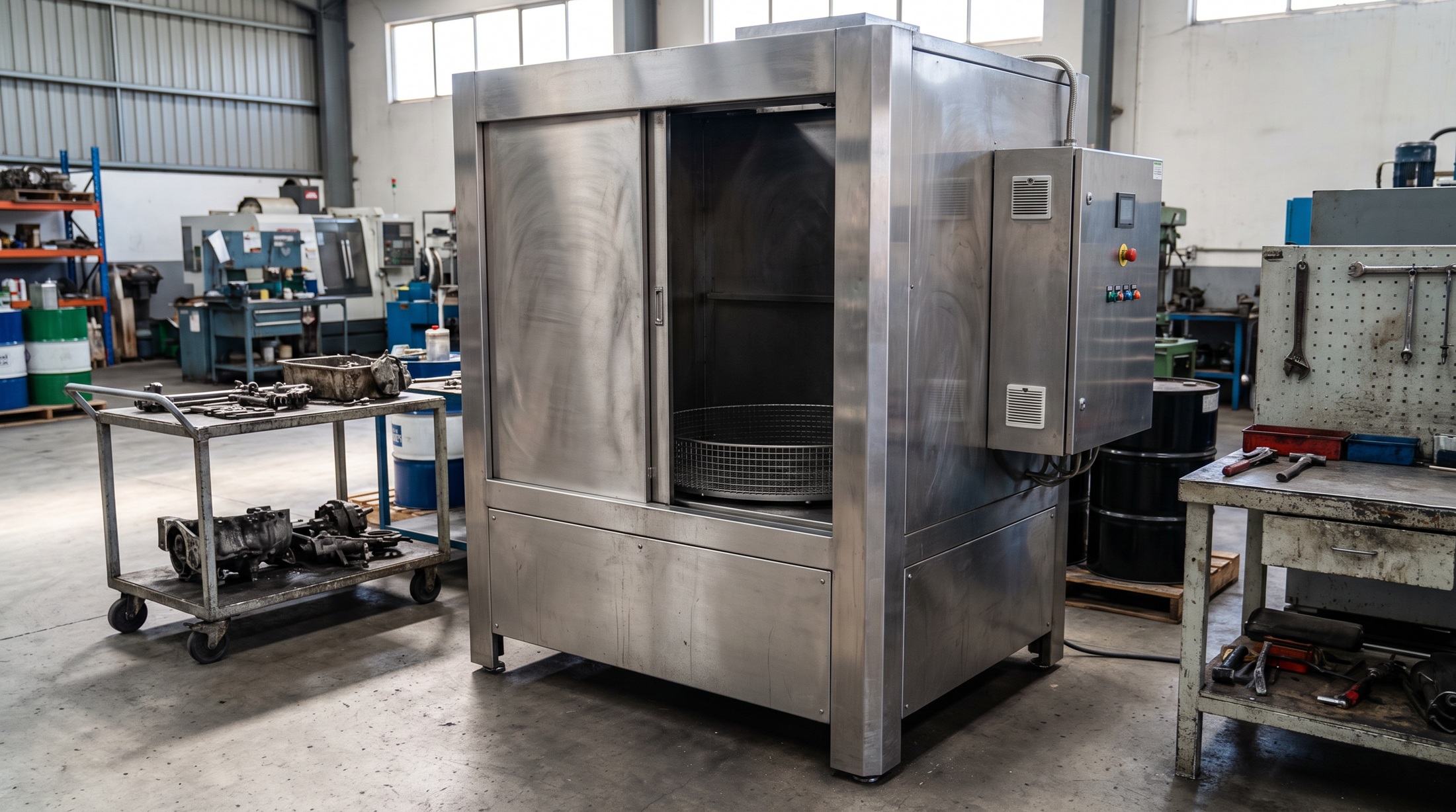
Limited wash bay floor space can make every equipment decision harder. Door movement, loading paths, trolleys and service access all compete for room.
A sliding door washer changes how access space is used around the machine. This guide explains what to measure before planning the layout.
Why Door Configuration Matters In A Wash Bay
Door Movement Affects Usable Clearance
A washer footprint is only one part of the layout. Operators also need room to open the machine and move parts safely.
A hinged lid or door needs a clear movement path. That space cannot be blocked by benches, trolleys or stored components.
A sliding configuration changes that movement pattern. The panel travels with the machine instead of swinging across a wider work zone.
That can make clearance planning simpler in a crowded wash bay. It does not automatically make the entire machine smaller.
Draw the opening path on the floor plan before installation. This simple check shows whether another work zone will become blocked.
Also check the space above and beside the machine. Sliding access still needs its specified travel area and safe operator reach.
The stainless steel washers range includes a model with pneumatic sliding access. This gives workshops a confirmed sliding option to assess.
When wash bay floor space is tight, compare the complete operating envelope. Include the machine, door travel, loading area and access route.
Loading Routes Need Permanent Space
Cleaning equipment must fit the way components actually move through the workshop. A clear loading path often matters more than spare floor area.
Consider how parts arrive at the washer. They may come from a bench, trolley, pallet or lifting device.
Then consider how cleaned parts leave the area. Dirty and clean movement should not force operators into unnecessary cross-traffic.
Frequent parts should guide the layout more than unusual one-off jobs. A bay should support the work performed every day.
Keep temporary storage out of the loading route. A clear path is easier to maintain when its purpose is obvious.
The SS1600 sliding door model is designed around front access and a pull-out turntable. Hotwash also lists a trolley drip tray.
That arrangement can support a defined loading point beside the cleaning area. The final layout still depends on your actual handling method.
A sliding door washer should therefore be evaluated as part of a workflow. It should not be selected from footprint dimensions alone.
How The SS1600 Sliding Door Configuration Works In Practice
Pneumatic Sliding Access Changes The Opening Zone
The SS1600 uses a pneumatic sliding door rather than a conventional outward-swinging panel. This changes where opening clearance is required.
For a constrained bay, that distinction can be useful. Space directly beside the access zone can stay easier to organise.
The machine is also built with a stainless steel body and lid. Its product page specifies 304 stainless steel construction.
Hotwash lists a 1600 mm diameter basket for the SS1600. The page also lists an 800 mm useful internal height.
Those dimensions help define the component envelope. They should be checked against the largest regular parts before installation.
Basket diameter is only one fit check. Component height, shape and safe placement on the turntable also matter.
Irregular fabrications may fit by diameter but still interfere with chamber clearance. Measure their complete operating envelope before selection.
The sliding access machine still needs safe operator access. It also needs enough room for loading equipment and maintenance tasks.
Pull-Out Turntable Supports Flexible Loading
The SS1600 product page lists a pull-out turntable. Hotwash states that parts can be loaded elsewhere and brought back.
That feature can help separate loading activity from the fixed washer position. It may be useful when large parts need staged handling.
A movable loading point can also change where lifting equipment is positioned. That may help keep the main aisle clearer.
However, the trolley path becomes part of the working area. It should remain free from hoses, stored items and other obstructions.
The trolley drip tray is intended to contain drips during movement. This supports cleaner handling between the loading point and washer.
The broader parts washer range includes different machine formats. Each format creates a different relationship between access, loading and floor use.
Do not assume a pull-out system eliminates the need for clearance. The turntable and its handling route still need usable space.
Plan the travel path before placing nearby benches or storage. This keeps the cleaning zone practical during normal work.
Planning Wash Bay Floor Space Around The Whole Workflow
Map The Dirty-To-Clean Movement
Start with the parts, not the machine. Identify where dirty components arrive, where they wait and where they go after cleaning.
Measure the largest regular component before selecting equipment. Include protrusions, lifting points and any fixture used during handling.
Next, map the operator route around the washer. Avoid creating a narrow pinch point between the machine and nearby equipment.
Mark the loading side, control position and normal standing area. These zones should remain usable when nearby bays are active.
If a trolley or lifting device is used, include its approach path. Turning and repositioning often need more room than expected.
At this stage, Hotwash Australia provides several automatic and specialised washer categories. The right format depends on the cleaning task and component size.
A good layout keeps loading movements predictable. It should also keep access to controls clear during normal operation.
For a sliding door washer, confirm the full door travel area. Then confirm the space needed for the basket, trolley or lifting device.
This approach protects the wash area from becoming cluttered after installation. It also makes future workflow changes easier to assess.
Preserve Service And Utility Access
A machine can fit physically and still be difficult to operate. Service access, drainage, power and surrounding work zones need consideration.
Exact installation requirements depend on the selected model. They should be confirmed before finalising the floor plan.
Utility locations can also affect placement. Power, drainage and service connections should not create trip hazards or blocked access.
Allow enough room to inspect the machine without moving permanent fixtures. Future servicing should not require dismantling the surrounding workspace.
Do not place fixed storage where routine access may be needed. Leave a sensible route for inspection and maintenance activities.
If component size is lower, a heavy duty washer may be worth comparing. The correct choice depends on actual workshop requirements.
For larger industrial workloads, extra heavy duty washers provide another category to review. Selection should follow part size, loading needs and contamination.
The goal is not to fill every available metre. The goal is to keep the cleaning area usable throughout the working day.
When Other Washer Formats May Suit The Job
Match The Washer To Component Size And Cleaning Method
Door style should not override the main cleaning requirement. First confirm that the machine suits the components and contamination being handled.
Automatic spray washing is intended for cleaning dirty and greasy parts with heated, water-based cleaning systems. Hotwash uses biodegradable, water-based detergents in its automatic range.
That makes spray washing relevant when oils, grease and general workshop contamination are the main cleaning problem.
It should not be treated as a universal surface-preparation process. Different contamination may require a different cleaning technology.
If the parts exceed the selected basket or loading limits, choose another capacity. Do not adapt the workflow around an undersized machine.
The SS1600 product page lists a loading capacity for that model. Workshop managers should verify current specifications before ordering or installing equipment.
This is especially important when lifting devices are involved. The washer, load and handling method need to work as one system.
This configuration can improve access planning, but only when its capacity also suits the job.
Consider Cabinet Cleaning For Smaller Targeted Work
Some workshops clean smaller, detailed components rather than large batches. In that case, a different enclosed format may suit the task.
Hotwash offers hot blasters for targeted component cleaning. The HB1100 range includes a sliding door configuration.
That cabinet format uses heat, water and compressed air. It is presented for controlled cleaning of mechanical parts.
This does not make it a substitute for the SS1600. The machines address different component sizes and cleaning workflows.
Compare the part envelope, handling method and required cleaning action. Then compare how each door configuration fits the available area.
A good comparison uses the same checklist for every option. That keeps the decision focused on measurable workshop requirements.
Record the largest part, regular batch size, handling method and available access. Those details make equipment discussions more useful.
That process keeps equipment selection tied to real operational needs instead of one design feature.
Frequently Asked Questions
Does A Sliding Door Configuration Always Use Less Floor Space?
Not necessarily. The machine footprint remains important, and loading or service areas still need clearance.
A sliding door can reduce the need for a wide door-swing arc. However, the complete operating envelope must still be measured.
The benefit is usually in how access space is organised. It should be assessed against your actual floor area and workflow.
What Should Be Measured Before Choosing A Sliding Door Configuration?
Measure the largest regular component, the proposed washer position and the loading route. Include any trolley, pallet or lifting equipment.
Also confirm door travel, operator standing space and service access. Utility requirements should be checked against the selected model.
If the machine uses a pull-out turntable, map that travel path too. Do not leave these checks until installation day.
Conclusion
Plan Around Real Parts And Real Movements
A compact-looking installation is not always an efficient one. The best layout supports loading, cleaning, unloading and servicing without unnecessary obstruction.
Sliding access can help organise a constrained wash area. It is most useful when matched with the correct machine capacity.
Measure the complete operating zone before committing to a position. That protects daily usability and keeps future adjustments easier.
Discuss Your Wash Bay Layout With The Equipment Team
Hotwash offers stainless steel, heavy duty and other washer formats for different industrial cleaning requirements across Australia.
For help assessing a suitable configuration, contact our parts washer specialists or email us at sales@hotwash.com.au.

Leave A Comment