
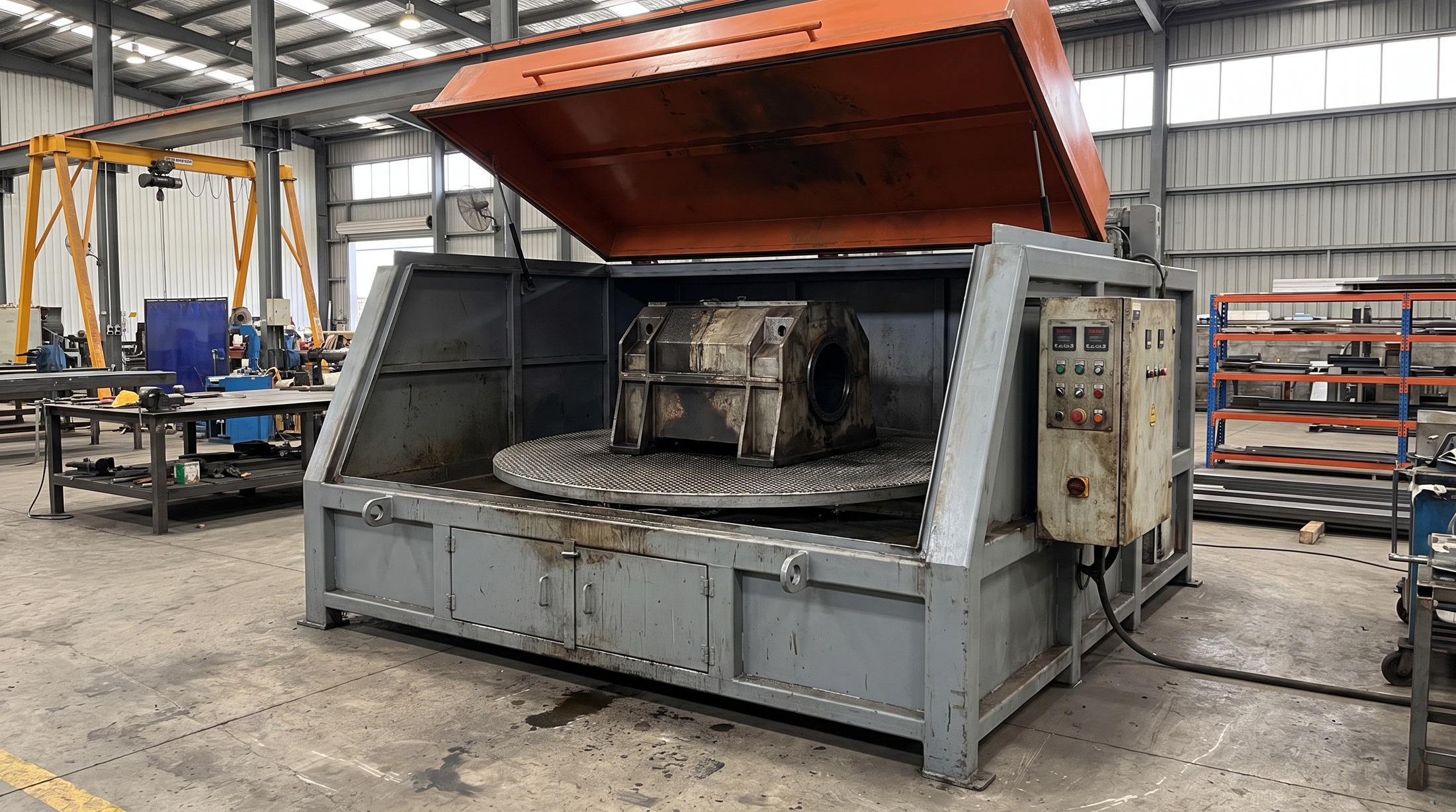
Large fabricated components can turn cleaning into a handling problem. Their size, weight and irregular shapes make manual washing awkward and inconsistent.
A 1600mm diameter basket creates more usable cleaning space for suitable oversized components. This guide explains how to plan large fabrication cleaning safely.
Why Basket Diameter Matters For Fabricated Components
Fit Depends On The Complete Part Envelope
A large basket gives more placement flexibility, but diameter alone does not confirm fit. Height, shape and protrusions also matter.
Measure the complete component before selecting a washer. Include brackets, flanges, lifting points and any temporary fixtures used during handling.
Check the part from more than one orientation. A fabrication may fit flat but become too tall when positioned for better spray access.
Also measure the regular batch, not just one component. Multiple parts need enough separation for loading, inspection and removal.
The extra heavy duty range includes the HW1600G-MS for demanding industrial cleaning work. Hotwash lists a 1600mm diameter basket for this model.
That size can suit fabricated parts that exceed smaller workshop washer baskets. Each component still needs safe clearance inside the machine.
For large fabrication cleaning, check the most common parts first. One unusual oversized item should not define every equipment decision.
Also consider how parts will be positioned on the turntable. Stable placement supports predictable spray access and safer handling.
Do not use the basket edge as a measurement shortcut. The complete part must remain within the usable internal space.
If a fixture is required, include that fixture in every fit check. Its height and width become part of the loaded envelope.
Weight And Handling Need Separate Checks
A part can fit by diameter and still be unsuitable for a selected machine. Weight and handling arrangements need their own checks.
The washer specification should be reviewed before loading heavy components. Do not rely on basket diameter as a load rating.
Plan how the part reaches the basket. Forklifts, cranes, trolleys or other lifting equipment may require dedicated approach space.
Think about the return movement as well. Clean parts need a safe route to inspection, assembly or the next production stage.
A handling plan should minimise unnecessary repositioning. Fewer moves can simplify the cleaning sequence and reduce congestion around the washer.
The loading route should remain clear during normal workshop activity. Avoid creating conflicts with vehicle bays or storage areas.
A large basket is most useful when the surrounding workflow can support the parts placed on it.
Before installation, record your regular component dimensions and handling method. This gives the equipment supplier useful information for model selection.
What The HW1600G-MS Offers For Large Cleaning Tasks
Extra Heavy Duty Automatic Spray Washing
The HW1600G-MS is listed by Hotwash within its extra heavy duty automatic washer range.
Hotwash describes the model for heavy-duty cleaning needs. Its current product information confirms basket capacity up to 1600mm diameter.
The official extra heavy duty information also describes hot-water-based cleaning. The range uses automatic spray washing rather than continuous hand cleaning.
This means the machine performs the wash cycle after loading and setup. Operators can then continue other workshop tasks where appropriate.
The actual cleaning result still depends on contamination, loading and process settings. Those factors should be matched to the application.
This format is relevant for oily, greasy and dirty industrial components that fit safely within the washer.
It can support oversized component clean-up where the main requirement is removing workshop contamination before inspection, repair or further work.
The machine should still be matched to the actual soil. Not every coating, scale or bonded contaminant is a spray-washing task.
Turntable And Filtration Support Industrial Use
Hotwash’s extra heavy duty information lists a gear-driven safety turntable across the mine-spec range. It also lists filtration features.
The brochure identifies primary and secondary filtration within the range. These features are intended to protect the cleaning system from larger debris.
Automatic water top-up and wastewater pump-out are also listed for the range. Exact site connections should be confirmed before installation.
The brochure also lists adjustable feet and an easy-access pump. These details support installation and service planning in industrial environments.
They do not remove the need for site preparation. Power, drainage and maintenance access should be checked before the machine arrives.
The 1600mm diameter basket provides the working platform for larger suitable parts. Good placement remains important for cleaning access.
Do not overload the basket with unrelated small items around a large fabrication. Crowding can make handling and inspection more difficult.
The wider parts washer range includes several capacity and construction options. Choose by component size and cleaning requirement.
Match The Cleaning Method To The Contamination
Spray Washing Suits Oils, Grease And Workshop Dirt
Large fabrications can carry machining oils, grease, workshop grime and loose contamination. These are common targets for automatic parts washing.
Heated, water-based cleaning combines temperature, detergent and spray action. Hotwash states that its automatic systems use biodegradable, water-based detergents.
At this stage, Hotwash Australia supplies automatic and specialised cleaning equipment for several industrial sectors across Australia.
For large fabrication cleaning, define the required end condition before choosing the process. “Clean” can mean different things between fabrication stages.
A part being inspected may only need oil and grime removed. A part being prepared for refinishing may require a different surface treatment.
Write the required condition into the work process. This helps operators choose the correct cleaning method for each fabrication stage.
For example, degreasing and surface preparation are related tasks, but they are not identical. One machine should not be expected to replace every process.
That distinction prevents the washer from being expected to perform a task outside its intended cleaning method.
Surface Preparation May Need Another Process
Spray washing should not be presented as a replacement for every preparation process. Rust, carbon or surface finishing may need specialised equipment.
Hotwash offers wet abrasive blasters for rust, carbon and surface preparation applications.
The company also offers hot tanks for immersion cleaning where soaking is the more suitable method.
These systems address different cleaning problems. They should be selected according to contamination, component geometry and required finish.
A wet abrasive process can be relevant when surface preparation is required. An immersion system can suit parts needing sustained soaking.
Automatic spray washing remains useful when accessible surfaces carry oils, grease and general industrial dirt.
Basket diameter is therefore one capacity feature within a broader cleaning decision. It does not define the cleaning chemistry or finish.
If bonded coatings or heavy surface oxidation are present, confirm the appropriate process first. Then use the suitable cleaning equipment.
Build A Practical Large Fabrication Cleaning Workflow
Stage Parts Before They Reach The Washer
A good process starts before the wash cycle. Create a staging point for dirty components that are ready for cleaning.
Remove items that should not enter the washer. Confirm that the component is safe to handle and positioned for the selected machine.
Keep lifting points accessible during staging. Operators should not need to reposition a heavy fabrication repeatedly before loading.
Use a consistent staging direction where practical. This can make lifting points easier to identify and reduce last-minute handling changes.
Separate components awaiting cleaning from those already completed. A clear status reduces unnecessary rehandling in a busy workshop.
When possible, group work by similar component size and contamination. This makes the cleaning area easier to organise.
Oversized component clean-up becomes more manageable when handling steps are predictable. The washer then becomes one defined stage in the workflow.
Document unusual components separately. They may need another machine, another cleaning method or a different handling plan.
Know When To Move To Another Capacity
A 1600mm basket is not a universal answer for every large component. Some fabrications will exceed the available envelope.
For much larger industrial parts, Hotwash also offers super heavy duty washers. That category is presented for demanding mining, oil and gas applications.
Selection should be based on verified current specifications. Component dimensions, weight, contamination and handling access all need review.
Compare the most frequent workload with the machine, not only the largest possible job. Regular utilisation should drive the capacity decision.
If several machines appear suitable, compare loading method and surrounding access. These details can affect everyday usability as much as basket size.
Do not force an oversized part into a washer because one dimension appears acceptable. Safe clearance must be maintained throughout the cleaning cycle.
If most work is smaller, a lower-capacity model may also be more appropriate. Equipment should reflect the normal workload.
The best choice is the machine that fits regular work reliably. Occasional exceptions can then be handled through a separate process.
Frequently Asked Questions
What Does A 1600mm Basket Tell You About Component Fit?
It confirms the basket diameter, not the complete usable envelope for every component. Height and shape must also be checked.
Irregular fabrications can extend beyond their base dimensions. Measure the full part before assuming it will fit.
The 1600mm diameter basket on the HW1600G-MS provides a useful starting point. Current model specifications should confirm the remaining limits.
Can A Large Spray Washer Handle Every Fabrication Cleaning Task?
No. Spray washers are suited to specific contamination and component types.
Oils, grease and general workshop dirt are common automatic washing tasks. Surface preparation or deep soaking may require another process.
Define the contamination and required finish first. Then match the washer or specialised system to that need.
Conclusion
Choose Capacity From Real Component Data
Large-part cleaning works best when equipment selection starts with measurements. Record the parts that create the most frequent cleaning workload.
Check diameter, height, weight and handling access separately. Then compare those requirements with current machine specifications.
The HW1600G-MS offers a confirmed large-basket option within Hotwash’s extra heavy duty range. Its suitability depends on the complete application.
Discuss The Cleaning Application Before Selection
Hotwash provides automatic and specialised parts cleaning equipment for industrial workshops across Australia.
For help reviewing your application, speak with our industrial cleaning experts. You can also email us at sales@hotwash.com.au.

Leave A Comment