
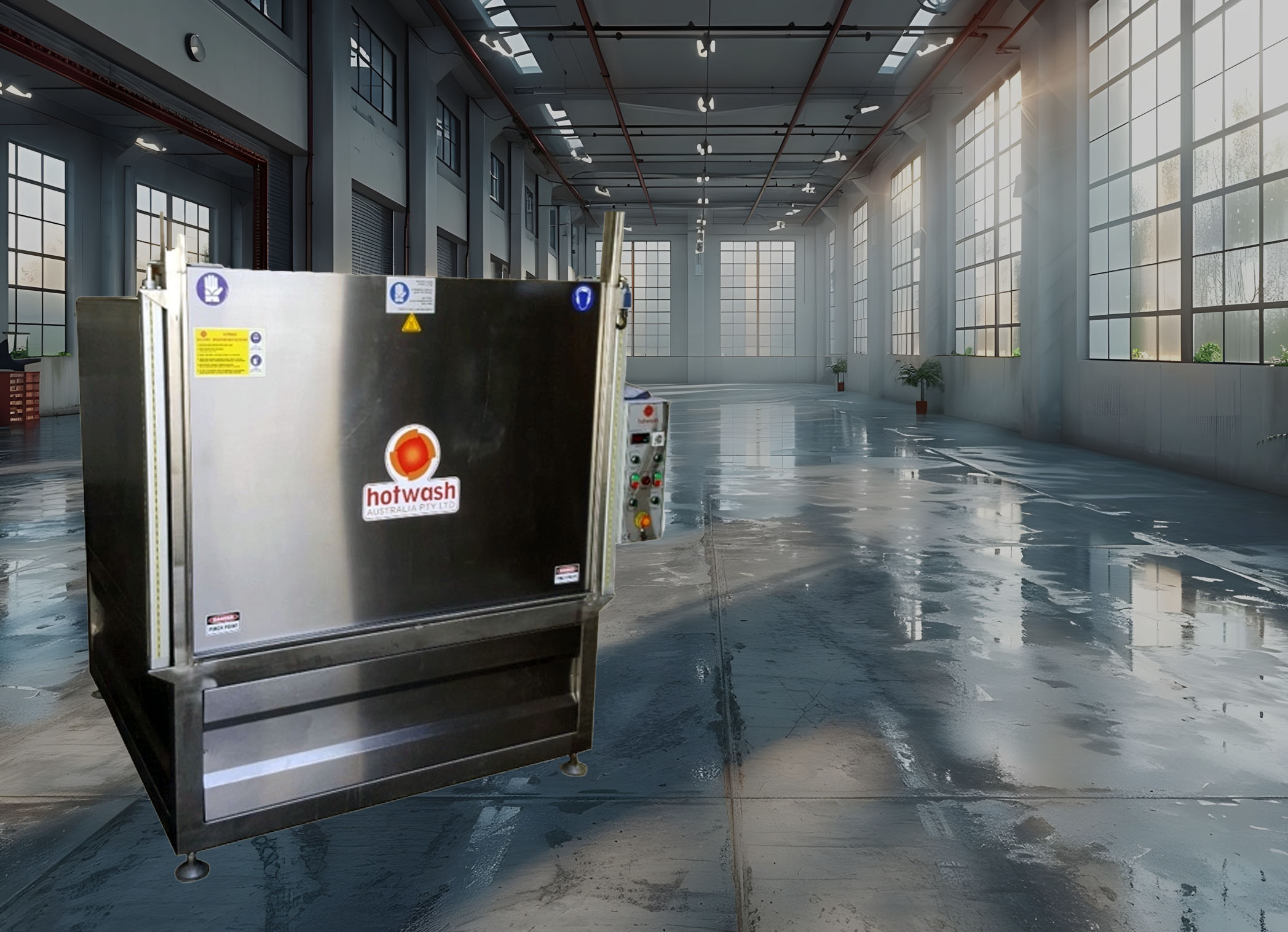
Large components can make parts washer access as important as the cleaning cycle itself. A pneumatic sliding door can simplify how operators reach the loading area.
This matters when heavy component loading requires careful positioning, clear access, and a machine matched to the component. This guide explains the practical factors to review.
Why Access Design Matters for Loading
Separate Door Access From Machine Capacity
A door creates access to the cleaning chamber. It does not determine how much weight the washer can carry.
Hotwash presents the SS1600 model as an automatic stainless steel washer with sliding-door access. The product page also lists a pull-out turntable.
That distinction is important for heavy component loading. The operator needs suitable access, but the machine must also support the component itself.
A sliding door parts washer can reduce the need to manage a large hinged lid during loading. However, loading limits still come from the machine specification.
Hotwash lists the SS1600 with a large circular basket and substantial loading capacity. Those figures describe the washer, not the door mechanism.
For procurement teams, this makes specification review more precise. Door design, loading capacity, internal clearance, and handling method should be checked separately.
Consider the Complete Loading Path
The loading process starts before a component reaches the chamber. Operators need a clear way to position the part and access the turntable.
Hotwash’s stainless steel range includes the SS1600 alongside smaller automatic spray washers. The SS1600 product page adds features specifically relevant to loading access.
Its pull-out turntable allows parts to be loaded away from the machine. The loaded turntable can then be returned to the washer.
The machine also includes a turntable jog button. Hotwash states that this brings parts to the front after cleaning.
These features matter because industrial parts washing often involves more than opening a chamber. Operators also need to position, retrieve, and move components through the work area.
A stainless steel parts washer may suit operations where component size makes chamber access a recurring consideration.
How the SS1600 Loading Features Work Together
Combine Door Movement With Turntable Access
The practical value comes from how several features work together. The pneumatic sliding door provides chamber access without acting as a lifting device.
The SS1600 parts washer also uses a pull-out turntable. Hotwash describes this as a way to load and unload parts elsewhere in the workshop.
That arrangement can support heavy component loading by separating loading position from the fixed machine location. The exact handling method still depends on the component.
For example, a workshop may need lifting equipment for a part that exceeds safe manual handling limits. The washer door does not change that requirement.
A sliding door parts washer should therefore be assessed as part of the whole loading system. Door access, turntable movement, floor space, and handling equipment all matter.
Hotwash also lists a trolley drip tray for the SS1600. Its stated purpose is to help keep the workplace floor cleaner during turntable movement.
Use Controls That Support Positioning and Cycle Checks
Heavy parts require more than physical access. Operators also need controls that help them position the load and check the setup.
The SS1600 includes a prestart function. Hotwash states that it lets operators test large loads with the lid closed before the wash cycle.
The turntable jog control can bring a component towards the front after cleaning. This can reduce the need to reach deeply into the chamber.
The SS1600 also has a quick-action emergency stop. Hotwash presents this as an operator safety feature on the product page.
Hotwash currently lists several loading-related specifications for this model. They help separate verified machine capability from assumptions about the door.
The current SS1600 product page lists the following loading-related details:
- Door configuration: pneumatically actuated sliding door.
- Body and lid material: 304 stainless steel.
- Basket diameter: 1600 mm.
- Loading capacity: 650 kg.
- Useful internal height: 800 mm.
- Loading platform: pull-out turntable.
- Positioning control: turntable jog button.
- Load check: prestart function for large loads.
- Loading-area feature: trolley drip tray.
These specifications apply to the SS1600 model. They should not be treated as specifications for every Hotwash washer.
The loading capacity is also not a door rating. It describes the machine’s stated loading capability.
The basket diameter and internal height describe usable space. The component still needs suitable clearance for safe placement and removal.
The prestart function adds a check before normal operation. Hotwash states that it helps identify possible interference from large loads.
These functions sit alongside the door and turntable system. They are relevant because loading, positioning, cleaning, and retrieval are connected tasks.
Hotwash Australia presents automatic parts washers for workshops and industrial applications across Australia. Machine selection should still follow the actual component and site requirements.
A pneumatic door should not be treated as proof that a machine suits every large part. The complete machine specification remains the deciding factor.
Matching Door Access to Equipment Selection
Choose the Product Range Before Focusing on the Door
Door design is only one selection point. The first question is whether the product family suits the cleaning application.
Hotwash’s parts washer range covers automatic and specialised cleaning equipment for different workshop requirements. Each category should be assessed on its own specifications.
The SS1600 belongs to the stainless steel category. Hotwash identifies this specific model as having the sliding-door configuration discussed in this article.
Hotwash also offers heavy duty washers for demanding workshop applications. These products are a separate range with different construction and configurations.
For larger industrial requirements, extra heavy duty washers form another category. Their suitability depends on the exact component and operating environment.
Hotwash’s super heavy duty range covers another level of industrial parts washing equipment. The range should not be assumed to share the SS1600 door design.
This separation prevents an important purchasing mistake. A useful door feature should not overshadow the washer category, component fit, or intended duty.
Access frequency is another practical consideration. A feature can be useful because it fits the way a workshop repeatedly loads parts.
That does not change the machine’s rated capacity. It only changes how the operator interacts with the loading area.
The same principle applies to turntable movement. A pull-out platform may improve access, but it does not redefine the washer’s stated limits.
Procurement teams should therefore compare access features and machine specifications as two related groups. Both groups need to suit the intended work.
This approach also improves documentation. The purchase record can identify the model, its verified limits, and the planned handling method.
If the application changes later, those details provide a clear reference point. They can show whether the original machine selection still suits the work.
Check the Component and Site Before Selection
Start with the largest component that will enter the machine. Confirm its weight, overall dimensions, and the way it will be handled.
Next, check how the component reaches the loading point. Consider the available approach path and the space needed around the washer.
For heavy component loading, confirm whether the site uses a crane, hoist, forklift, trolley, or another approved handling method. Hotwash does not present the door as lifting equipment.
Then review the washer’s loading capacity and internal dimensions. These values must suit the actual part, not an estimated average component.
A stainless steel parts washer may be appropriate when the product’s material and configuration match the application. Material choice should not replace capacity checks.
Finally, confirm utilities, installation requirements, and operating procedures with the supplier. Site conditions can change what is practical during loading and servicing.
A practical pre-purchase review should answer several questions. Each answer should come from the intended component, site, or current machine specification.
- What is the heaviest component expected to enter the washer?
- What are its widest, tallest, and longest dimensions?
- How will the component reach the turntable?
- Can the chosen handling method approach the loading area without obstruction?
- Does the washer’s stated loading capacity cover the real component weight?
- Is the internal space suitable for the component’s shape and orientation?
- Can the pull-out turntable move through the planned loading area?
- Are site utilities and operating procedures compatible with the selected model?
These questions are more useful than choosing equipment from a door feature alone. They keep the review centred on the actual loading task.
The same approach helps when comparing product families. A larger category is not automatically the right category for every heavy part.
Cleaning method still matters. Component size and weight must be considered alongside contamination, workflow, and the intended cleaning process.
This checklist keeps the decision focused on verified equipment details. It also prevents the door feature from carrying claims it was never designed to support.
Frequently Asked Questions
What Does a Pneumatic Door Change for the Operator?
A pneumatic sliding door uses pneumatic actuation to move the door rather than relying only on manual door movement. Its main relevance is chamber access.
On the Hotwash SS1600, the door sits within a wider loading arrangement. That arrangement includes the pull-out turntable and positioning controls.
Is the SS1600 Designed for Large Components?
Hotwash states that the SS1600 can manage large components. The product page lists a 1600 mm basket diameter and 650 kg loading capacity.
It also lists 800 mm of useful internal height. These are machine specifications and should be checked against the actual component.
The SS1600 parts washer should not be selected from capacity figures alone. Access, handling method, utilities, and cleaning requirements also need review.
Does the Door Replace Mechanical Lifting Equipment?
No. The door provides access to the chamber. It is not a crane, hoist, forklift, or other lifting system.
The product page does not claim that the door lifts, supports, or transfers the component. Those functions belong to other equipment or the washer structure.
If a component requires mechanical handling, the workshop still needs an appropriate method. The loading plan must suit the component and site.
The same distinction applies to the pull-out turntable. It supports loading workflow, but site handling arrangements remain a separate decision.
This is especially important when a sliding door parts washer is considered for large components. Easy access does not remove safe handling requirements.
Which Hotwash Range Should a Workshop Compare?
Start with the component, contamination, cleaning volume, and site conditions. Then compare the Hotwash product category that matches those needs.
The SS1600 is a stainless steel model with a pneumatic sliding door. Other Hotwash ranges have different constructions, capacities, and product configurations.
Ask for the current specification before treating any feature as standard across multiple models. This keeps equipment selection tied to verified product information.
A useful comparison should also distinguish between product category and individual model. Category pages describe the range, while product pages provide model-specific details.
For the SS1600, use the current product page for loading capacity, basket size, internal height, and listed controls.
Conclusion
Treat Loading as a Complete Workflow
The strongest operational benefit comes from combining access with the rest of the loading process. Door movement is only one part of that workflow.
The SS1600 parts washer combines sliding access with a pull-out turntable, jog control, prestart function, and other listed operating features.
For industrial parts washing, these details help buyers ask better questions. They can separate loading access from machine capacity and component handling.
Confirm the Application Before Ordering
Review the actual component dimensions, weight, cleaning requirements, and handling method before choosing a washer. Confirm current specifications for the intended model.
For application-specific guidance, contact the Hotwash team or email sales@hotwash.com.au.

Leave A Comment