
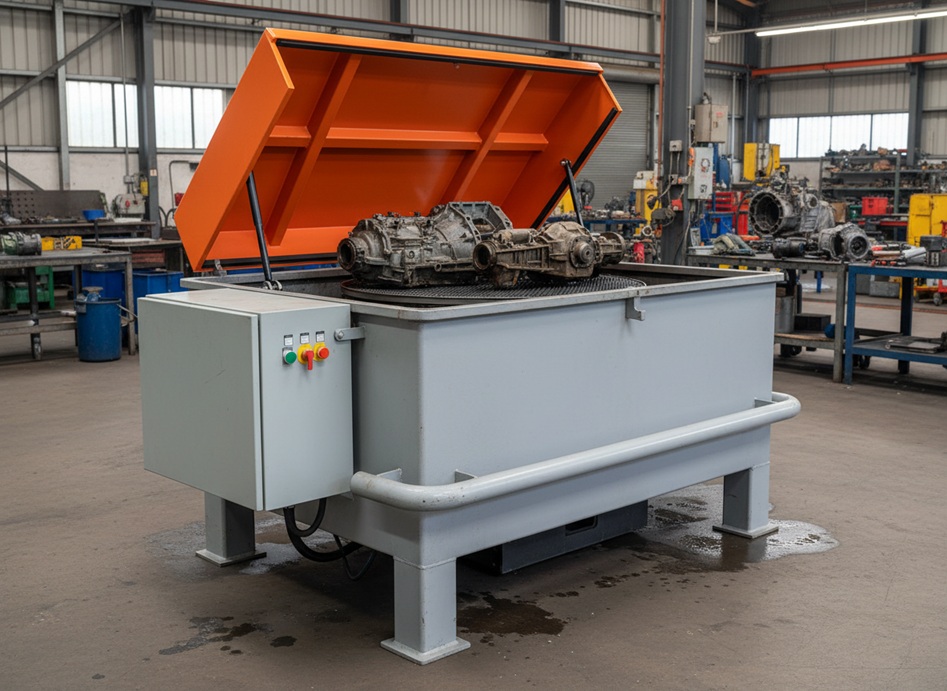
Water, dust, grease, and cleaning residue can surround electrical equipment in a busy workshop. These conditions make enclosure selection an important purchasing consideration.
The IP65 rating describes how a tested enclosure resists dust and water entry. It does not describe every safety feature of a complete machine.
This guide explains the code, its limits, and the questions to ask before selecting equipment.
What An IP65 Code Means
Reading The Two Digits
An IP code contains two numerals after the letters “IP”. Each numeral describes a different type of enclosure protection.
The first numeral covers solid objects and dust. A value of six means the enclosure is classified as dust-tight.
The second numeral covers water entry. A value of five means protection against water jets under specified test conditions.
Together, IP65 identifies an enclosure tested for dust-tight construction and protection against defined water jets.
A parts washer range may include different cabinet designs, controls, seals, and installation requirements. Buyers should therefore check the stated rating for the chosen model.
The code applies to the enclosure identified by the manufacturer. It should not be extended automatically to unrelated machine parts.
Relating IP65 To Australian Standards
AS 60529:2025 addresses degrees of protection provided by enclosures in Australia. It is based on the international IP classification system.
The standard gives a common way to describe resistance against solid and liquid ingress. It also defines testing conditions for each code.
An IP65 rating is useful because it replaces vague terms with a recognised classification. However, the code still needs correct interpretation.
Procurement teams should ask which enclosure was assessed. They should also request the applicable model documentation.
Current project requirements may also reference electrical installation, machinery safety, or site-specific standards. Those requirements sit beside the enclosure code.
A competent electrician or engineer should review the installation when local conditions create uncertainty.
The code does not replace site electrical rules or equipment installation instructions. Each requirement addresses a different part of risk control.
Documentation should identify the applicable standard, equipment model, and rated enclosure. It should also match the supplied configuration.
Buyers should avoid relying only on catalogue wording. A technical schedule gives a clearer basis for comparison and approval.
Why Electrical Enclosures Matter
Moisture, Dust, And Workshop Residue
Parts washing areas often combine water-based cleaning, airborne dust, metal particles, oils, and changing temperatures.
These conditions can reach switches, terminals, contactors, timers, and wiring when an enclosure is unsuitable or damaged.
Ingress may contribute to corrosion, contamination, electrical faults, or unplanned shutdowns. The actual risk depends on exposure and equipment design.
Heavy duty parts washers are used for demanding workshop cleaning tasks. Their exact electrical protection should still be confirmed by model.
Industrial parts washing can create splash and vapour near the machine. It may also involve routine floor and equipment cleaning.
Cabinet position matters. A protected enclosure can still face avoidable exposure when installed beside direct spray paths.
Drainage also matters. Standing water around cable entries or cabinet bases can create conditions beyond normal operation.
Warm wash solution can also create vapour. Vapour may condense on cooler cabinet surfaces during changing workshop temperatures.
Cleaning chemicals can leave residue around hinges, seals, and cable entries. Compatibility should be checked with the equipment supplier.
Dust mixed with moisture can form conductive or corrosive deposits. Regular cleaning and inspection help control this build-up.
Matching Protection To The Work Area
The correct enclosure rating depends on the installation environment. More protection is not always the only consideration.
Start by identifying dust levels, splash direction, cleaning pressure, hose use, condensation, temperature, and chemical exposure.
Then review how operators clean the surrounding area. Routine wash-down practices can differ greatly between workshops.
Extra heavy duty washers may serve larger components and demanding operations. Buyers should compare enclosure details with their site conditions.
The location of the control cabinet should also be reviewed. Distance from spray zones can reduce direct exposure.
Cable glands, conduits, plugs, isolators, and connectors need suitable protection. One weak entry point can undermine the enclosure system.
Industrial parts washing environments also differ across automotive, mining, transport, engineering, and manufacturing operations.
A dry workshop corner does not create the same exposure as a frequent wash-down area. The same enclosure code may therefore perform differently.
A simple exposure map can support selection. Mark direct spray zones, splash zones, dry areas, drains, and operator access routes.
The map helps identify cabinet placement and cable routing concerns. It also supports discussions with electricians and equipment suppliers.
Review foreseeable misuse as well. Operators may hose areas differently from the original design assumptions.
What IP65 Does Not Guarantee
No Automatic Protection Against Immersion
IP65 does not mean an enclosure can be submerged. Immersion protection uses different water-ingress classifications.
It also does not automatically cover close-range, high-pressure, or high-temperature cleaning. Those conditions require separate confirmation.
Operators should never direct aggressive spray at an electrical cabinet without documented approval.
An enclosure may resist specified water jets during testing. That does not make unrestricted pressure washing acceptable.
Hotwash Australia provides several equipment categories for Australian workshops. Its company website presents model and range information for initial comparison.
That information should support discussion, not replace a site assessment. Final suitability depends on the equipment configuration and installation.
Super heavy duty washers are described by Hotwash with mine-spec, moisture, and dust-proof electrics rated IP65 and above.
That statement applies to the range information presented by Hotwash. It should not be treated as a claim about every product category.
The safest approach is simple. Confirm the exact model, enclosure, test classification, and permitted cleaning method.
The water test represents controlled laboratory conditions. Daily operation can introduce pressure, heat, chemicals, ageing, and repeated exposure.
Cabinet doors must remain closed and correctly latched during exposure. Open doors remove the barrier that the code describes.
No Blanket Rating For The Entire Machine
An enclosure code normally applies to a defined casing or cabinet. It does not certify the complete machine against every hazard.
Mechanical guards, emergency controls, heated liquid, moving parts, and electrical isolation require separate assessment.
The enclosure may also contain components with their own limitations. Temperature, corrosion, vibration, and chemicals can affect service life.
Door seals must remain correctly seated. Fasteners must also provide the compression expected by the enclosure design.
Cable entries deserve close attention. Incorrect glands, loose fittings, or added holes can reduce the original protection.
Stainless steel washers may support corrosion-sensitive applications. Stainless construction alone does not establish an IP code.
Material choice and ingress classification describe different characteristics. Both can matter, but neither replaces the other.
Later workshop modifications may also change enclosure performance. Added switches, conduits, cables, or openings need proper design.
External operator devices may carry their own codes. Emergency stops, displays, plugs, and isolators should be checked individually.
The final installation is a system. Its protection depends on every enclosure, connection, entry point, and maintenance condition.
Checking Equipment Before Purchase
Questions For The Supplier
Begin with the complete model number. Similar machines can have different cabinets, options, and electrical configurations.
Ask which enclosure carries the stated IP65 rating. Confirm whether the rating applies as standard or through an option.
Request the relevant technical sheet, electrical drawing, or product documentation. The document should match the offered configuration.
The HW1400G-MS spray washer is described with an IP65 sealed steel electrical cabinet.
Hotwash states that the cabinet helps keep out moisture and dirt in tough environments. This is a model-specific description.
Ask whether external controls, plugs, isolators, and connectors have separate ratings. Their placement may affect installation suitability.
Confirm the intended cleaning process around the machine. State whether operators use hoses, pressure cleaners, or chemical wash-down.
Also discuss dust type, temperature, humidity, and outdoor exposure. These factors may require additional design measures.
An IP code should form one part of equipment selection. Capacity, loading, cleaning method, access, and servicing remain important.
Use a written supplier checklist during review:
- Identify the exact machine and electrical cabinet model.
- Confirm the stated code and applicable test standard.
- Ask whether the rating is standard or optional.
- Check all external controls and electrical connection points.
- Describe hoses, wash-down pressure, temperature, and cleaning chemicals.
- Request installation, inspection, and maintenance instructions.
Written answers reduce ambiguity during procurement. They also support handover, maintenance planning, and later site audits.
During commissioning, compare the delivered machine with the approved specification. Check cabinet labels, electrical drawings, and installed options.
Photograph labels and connection points before operation. Store those images with the maintenance records for later reference.
The handover should identify permitted cleaning methods. It should also explain isolation, cabinet access, inspection points, and reporting procedures.
Train operators to recognise damaged seals, loose glands, open doors, and unusual condensation. Early reporting can prevent further exposure.
Place clear cleaning instructions near the machine when wash-down practices create uncertainty. Instructions should reflect supplier guidance and site controls.
Site teams should review these records whenever operating conditions or procedures change.
Inspection And Maintenance
Enclosure performance depends on continued condition. A damaged seal cannot provide the protection expected from its original classification.
Include the cabinet in routine visual inspections. Check doors, hinges, latches, seals, cable glands, and visible corrosion.
Remove residue using the manufacturer’s approved method. Avoid tools or chemicals that may damage seals or cabinet coatings.
Industrial parts washing can leave deposits around equipment. Good housekeeping helps staff identify damage before it becomes hidden.
Record any electrical modifications. Unauthorised drilling or poorly sealed cable entries can compromise enclosure integrity.
Hot tanks use a different cleaning process from spray washers. Their electrical and installation details should be reviewed separately.
After maintenance, confirm that doors close fully. Check that latches apply even pressure across the seal.
Electrical work should be completed by authorised personnel. Site procedures should also control access to electrical cabinets.
Inspection frequency should reflect exposure and operating conditions. A heavily washed area may need more frequent checks than a dry workshop.
After electrical servicing, verify every gland, fastener, and seal. Replacement parts should match the enclosure design and manufacturer guidance.
Keep inspection records with the machine documents. These records can show when damage appeared and what corrective work followed.
Frequently Asked Questions
Rating And Wash-Down Questions
Is IP65 suitable for a wash bay?
It can be suitable for some wash bay conditions. Suitability depends on spray pressure, direction, frequency, and equipment placement.
The rating covers dust-tight construction and specified water jets. It does not cover every wash-down method.
A site review should compare actual exposure with the manufacturer’s documentation and installation instructions.
Can an IP65 cabinet be pressure washed?
Do not assume so. Pressure washing can exceed the water exposure covered by the stated classification.
Nozzle distance, pressure, temperature, and spray angle all matter. Confirm the permitted cleaning method with the equipment supplier.
Materials And Model Differences
Does stainless steel automatically mean IP65?
No. Stainless steel describes the enclosure material, not its tested ingress protection.
A stainless enclosure still needs suitable seals, joints, cable entries, and construction to receive an IP classification.
Do all parts washers have the same rating?
No. Ratings can vary between product ranges, individual models, options, and electrical components.
Always check the specific equipment documentation. Do not apply one product’s rating to another machine.
Conclusion
Key Selection Takeaway
The IP65 rating gives useful information about a defined electrical enclosure. It indicates dust-tight construction and protection against specified water jets.
It does not mean immersion protection, unrestricted pressure washing, or complete machine certification.
A sound equipment review considers the code alongside cabinet placement, connections, maintenance, and actual workshop exposure.
Before approving a purchase, compare the equipment specification with the actual cleaning area.
Include electrical staff, maintenance supervisors, operators, and procurement staff in that review.
Each group may identify a different exposure, access issue, or documentation need.
Record accepted limitations in the equipment handover. Clear records help future teams avoid unsuitable cleaning practices.
Repeat the review whenever the machine is relocated, modified, or used under different conditions.
Discuss The Installation
Share your cleaning process, site conditions, and electrical requirements before choosing equipment.
For model-specific information, contact our equipment specialists or email sales@hotwash.com.au.

Leave A Comment