
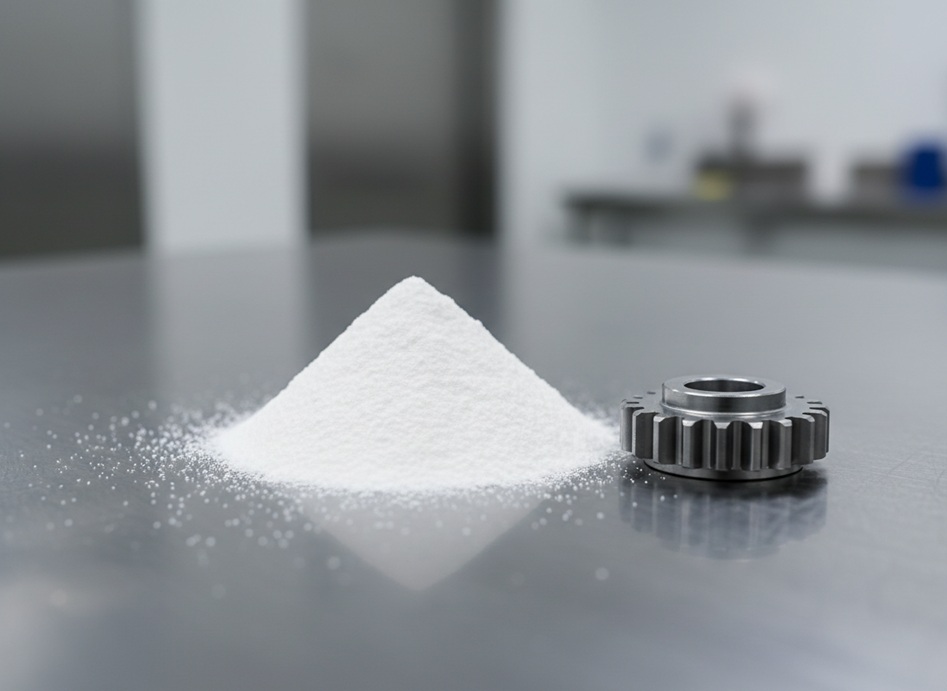
Parts washing is a chemistry problem as much as a mechanical one. The right cleaning chemistry dissolves contamination that mechanical action alone cannot shift. The wrong chemistry – or the right chemistry used incorrectly – leaves residue, shortens solution life, and drives up operating costs without improving cleaning results.
Spray wash powder is the cleaning chemistry designed specifically for automated hot water parts washing systems. Understanding how it works helps workshop managers get better results from their equipment, extend solution life, and protect clean components from flash rust before assembly.
How Industrial Parts Washing Chemistry Differs From Manual Degreasers
Industrial Formulation vs General Workshop Products
This cleaning product is not a concentrated version of general workshop degreaser. It is a formulation specifically designed for heated, recirculating automated cleaning systems. The ingredients – alkaline salts, surfactants, emulsifiers, and rust inhibitors – are selected and balanced for the operating conditions of an automatic parts washer rather than for direct manual application.
Standard workshop degreasers are formulated for manual application: spray on, wait, scrub, rinse. They work at ambient temperature and do not need to remain stable through hundreds of cleaning cycles in a heated recirculating system. Applying a general degreaser to an automated parts washer produces poor results, excessive foaming, and rapid solution degradation.
Hotwash Australia sells a range of cleaning chemicals alongside its parts washing equipment, formulated to work with the specific operating conditions of its automatic systems. Using chemistry matched to the machine is part of getting consistent cleaning performance.
Why Automated Systems Need Purpose-Formulated Chemistry
An automatic parts washer delivers cleaning chemistry in a specific way: heated water circulated through a pump, distributed through rotating spray arms, at operating temperature throughout the cycle. The parts washer detergent must perform reliably under these conditions – activated by heat, stable in a recirculating system, and effective across many cleaning cycles before the solution needs replacement.
The heat activation requirement is fundamental. Most cleaning chemistry of this type is significantly less effective at low temperatures. At the elevated temperatures that automatic spray washers operate, the chemical reactions that break down grease and oil accelerate substantially. Hotwash confirms on their website that their automatic machines complete what takes a tradesperson four hours of manual work in just 15 minutes – and the heated chemistry is a central reason for that difference.
How Alkaline Chemistry Removes Oil and Grease
The Three Mechanisms: Saponification, Emulsification, and Dispersion
Alkaline cleaning chemistry removes oil and grease through three simultaneous mechanisms. Understanding them explains why heated alkaline spray wash powder outperforms scrubbing with cold solvent for many types of contamination.
Saponification is a chemical reaction between the alkaline solution and oils or fats. The high-pH chemistry converts these materials into water-soluble compounds that rinse away from metal surfaces. This is the same principle that soap-making has used for centuries – combining fats with alkaline compounds to produce water-soluble soap. In a parts washer, the contamination itself becomes the soap.
Emulsification breaks oil into microscopic droplets suspended in the wash water. Surfactants in the cleaning solution reduce the surface tension between oil and water, allowing them to mix temporarily. These suspended oil droplets are then carried away by the recirculating solution rather than redepositing on cleaned surfaces.
Dispersion prevents removed contamination from settling back onto components during the wash cycle. Dispersing agents in the parts washer detergent keep contamination particles separated in the solution, holding them in suspension until filtration removes them.
How Heat Activates the Cleaning Process
Temperature is the multiplier for alkaline cleaning chemistry. At low temperatures, the chemical reactions described above occur slowly. As temperature rises, reaction rates increase substantially. This is why automated spray washers are heated systems – the temperature is not incidental but essential to the cleaning mechanism.
At the operating temperatures that heavy duty parts washers and other automatic systems maintain, oils become less viscous, the alkaline cleaning chemistry becomes more reactive, and surfactants work more effectively. The combined effect is cleaning performance that cold-water manual scrubbing cannot match, regardless of how much chemical is used.
This also explains why correct operating temperature matters more than adding extra chemical concentrate. Inadequate temperature means chemistry is not fully activated. Adding more concentrate to a cold or under-temperature system produces diminishing returns.
What the pH Range Means in Practice
The pH of an alkaline parts cleaner solution indicates its cleaning strength and its safety profile. Industrial cleaning powder formulations produce solutions in a moderately alkaline range suitable for automated spray application – strong enough to attack oil and grease effectively, but lower in pH than the caustic soda solutions used in traditional hot tank systems.
Biodegradable formulations typically operate at lower pH than traditional caustic-based products while still delivering effective cleaning through more sophisticated surfactant chemistry. This makes them safer to handle, easier to dispose of, and less aggressive on equipment components, without sacrificing cleaning effectiveness on the oil and grease contamination that most workshops encounter.
Preventing Flash Rust After Water-Based Cleaning
Why Freshly Cleaned Steel Rusts Quickly
Water-based parts washing creates a specific problem that solvent cleaning does not: bare steel in contact with water and oxygen rusts rapidly. When spray wash powder removes the oil film that incidentally protected a steel surface from atmospheric moisture, that surface becomes vulnerable to flash rust – the orange surface corrosion that can appear within minutes of a water-based cleaning cycle.
Flash rust is particularly problematic for engine rebuild components and precision machined surfaces where surface condition matters. A cleaned engine block developing rust on machined surfaces before reassembly requires additional preparation work that defeats the purpose of thorough cleaning. Where surface preparation and rust removal are needed before or after cleaning, wet abrasive blasters address what spray washing alone cannot.
How the Inhibitor Forms a Protective Layer
Quality parts washing formulations include rust inhibitors – compounds that adsorb onto clean metal surfaces and form a molecular barrier that prevents oxygen and moisture from contacting the steel directly. This invisible film does not affect the appearance of the component and does not interfere with painting, welding, machining, or assembly – it simply prevents the atmospheric moisture contact that causes flash rust.
Rust inhibitor protection buys workshops the time they need between cleaning and assembly or further processing. Components cleaned at the end of a shift retain their clean condition through storage and are ready for immediate assembly the following morning without additional surface preparation.
How Long Protection Lasts
How long rust inhibitor protection remains effective depends on storage conditions, ambient humidity, and how the component is handled after cleaning. Components stored in a dry workshop environment retain protection longer than those left near open doorways or in humid conditions. Prompt drying after the cleaning cycle – either through a drying stage or compressed air – extends protection duration by removing residual moisture from the surface.
For workshops where components will sit before assembly, understanding the rust inhibitor protection limits of their specific chemical formulation helps plan workflows to avoid the problem entirely.
Selecting the Right Concentration for Your Cleaning Task
Matching Concentration to Contamination Level
Cleaning powder concentration should match the contamination level being addressed. Light contamination – fresh oil from recently serviced components, light grease – responds to lower concentrations. Heavy contamination – baked-on grease, carbon buildup, mud and oil combined from mining or earthmoving components – requires stronger concentration to achieve the same results in a reasonable cycle time.
Starting at the manufacturer’s recommended concentration for the contamination type and adjusting based on results is the practical approach. If components are consistently clean within the normal cycle time, the concentration is appropriate. If cleaning takes longer than expected or components need multiple cycles, increasing concentration is the first adjustment to make before increasing temperature or cycle time.
Biodegradable Formulations vs Traditional Alkaline Products
The parts washing industry has moved significantly toward biodegradable spray wash powder formulations that replace traditional high-caustic products. Modern biodegradable formulations use plant-based surfactants and milder alkaline chemistry to achieve cleaning results comparable to traditional products, with substantially better safety and environmental profiles.
Hotwash Australia specifies biodegradable, water-based cleaning chemistry for its automatic parts washing systems. This approach delivers effective cleaning without the workplace hazards associated with caustic-based chemistry and simplifies waste disposal compared to traditional alkaline cleaning products.
An alkaline parts cleaner based on biodegradable chemistry is also typically more compatible with the non-ferrous metals – aluminium, brass, and copper – found in modern engine components. Traditional high-caustic alkaline chemistry can attack these materials. Formulations designed for multi-metal applications protect both ferrous and non-ferrous components.
Calculating the Right Chemical Volume for Your Tank
Consistent concentration requires knowing how much cleaning concentrate your system needs for a given tank volume. The parts washer chemical solution concentration is expressed as a percentage of total tank volume – a known concentration of cleaning compound in the water fill. Tracking this parts washer chemical solution concentration through regular pH testing is the practical ongoing maintenance task – a known concentration of powder dissolved in the water fill.
Most automatic spray washer tanks hold a defined volume of solution. Knowing the tank volume and the required concentration means you can calculate the exact amount of chemical needed for a full fill and for top-ups as the solution is consumed during operation.
Maintaining Solution Effectiveness Over Time
How Solution Strength Degrades During Operation
The cleaning solution degrades through three mechanisms during normal operation. Chemical consumption occurs as the alkaline compounds react with contamination during cleaning – each cleaning cycle uses some of the active chemistry. Drag-out removes solution from the tank as it clings to cleaned components when they are removed. Contamination loading degrades solution effectiveness as dissolved oils and particles accumulate in the solution.
The practical indicator of solution strength is pH. Testing solution pH regularly with indicator strips tells you whether the solution remains within its effective operating range. When pH drops below the target range for your formulation, topping up with additional powder restores alkalinity. When contamination loading becomes excessive, a full solution change is required.
When to Top Up vs Replace the Solution
Topping up with additional concentrate restores alkalinity but does not remove accumulated contamination. A solution that has been topped up repeatedly eventually carries enough dissolved oil, carbon particles, and reaction byproducts that cleaning effectiveness declines even when pH remains adequate. At this point, a full drain, tank clean, and fresh fill is necessary.
How frequently a solution requires full replacement depends on cleaning volume and contamination severity. High-volume operations cleaning heavily contaminated components exhaust solution faster than light-use workshops. Tracking cleaning performance over time – noting when cycle times start extending or when parts need additional passes – indicates when full replacement is approaching. Manual parts washers use fresh solution for each cleaning session, which simplifies concentration management compared to recirculating automatic systems.
Filtration and Solution Life
Filtration plays a significant role in extending parts washer detergent solution life. Filters remove solid particles – metal swarf, carbon fragments, and coarse contamination – from the recirculating solution, preventing them from redepositing on clean components and slowing the rate of solution degradation.
Extra heavy duty parts washers and other larger systems designed for high-contamination applications typically incorporate more robust filtration than standard workshop machines, reflecting the greater contamination loading these systems handle. Maintaining filtration – cleaning or replacing filters at appropriate intervals – is part of chemical solution maintenance, not just machine maintenance.
Safety Considerations for Alkaline Chemical Handling
Basic PPE for Alkaline Chemical Handling
Alkaline cleaning powder requires basic precautionary protective equipment during handling. Eye protection – safety glasses or face shield – prevents powder dust from contacting eyes. Chemical-resistant gloves protect hands from powder contact, which can cause skin irritation from sustained exposure. Closed footwear and long sleeves are appropriate when handling dry powder or concentrated liquid.
Biodegradable formulations at the lower end of the alkaline pH range carry less hazard than traditional high-caustic products. Operator exposure during normal operation of an automatic parts washer is minimal – the cleaning chemistry remains inside the closed chamber during the cycle. Powder handling occurs during solution preparation and top-up, which are brief tasks with straightforward precautions.
Safe Mixing and Storage Practices
When mixing cleaning powder into water, always add powder to water rather than water to powder. Adding water to concentrated powder can cause splashing that exposes skin and eyes to concentrated alkaline material. Adding powder to a partially filled tank and allowing it to dissolve before topping up with water prevents this risk.
Store the cleaning powder in sealed containers in a dry location, away from moisture that degrades the powder before use. Keep material safety data sheets accessible for all chemical products in the workshop. An eyewash station within easy reach of the chemical mixing and storage area is appropriate for any facility handling alkaline cleaning products.
Choosing the Right Parts Washer and Chemical Combination
Matching Chemistry to Your Machine and Application
The cleaning chemistry and the machine work as a system. An alkaline parts cleaner formulated for the operating temperature of your machine performs better than generic chemistry not matched to those conditions. The right cleaning powder formulated for the operating temperature range, spray pressure, and filtration characteristics of your specific machine delivers better results than generic chemistry applied to whatever system you have. This is why Hotwash supplies cleaning chemicals alongside its parts washing equipment – the chemical recommendation accounts for the machine’s operating parameters.
Different applications also need different chemistry. Stainless steel parts washers used in food processing need food-compatible chemistry. Hot tanks use immersion chemistry formulated for extended soak times rather than spray application. Super heavy duty parts washers handling mining contamination need chemistry that handles abrasive mineral particles alongside heavy grease. Getting the right match is part of what Hotwash specialist advice covers.
Getting Expert Advice on Parts Washer Chemicals
Hotwash sells a large range of cleaning chemicals and can advise on the right cleaning chemistry for your specific application, machine type, and contamination levels. The FAQ on their website confirms chemical sales as part of the Hotwash offer.
For advice on the right cleaning chemistry and parts washing detergent for your system, contact our parts washing specialists or email us at sales@hotwash.com.au.

Leave A Comment