
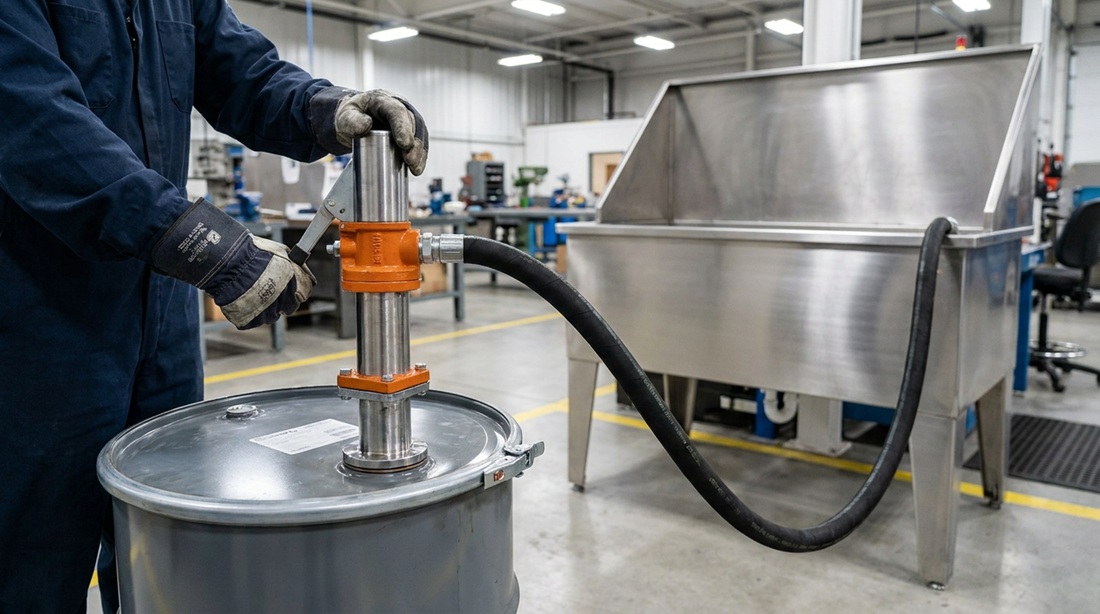
Regular solution changes are part of keeping an automatic parts washer performing at its best. As contamination accumulates in the cleaning solution, cleaning effectiveness declines – cycle times extend, parts need additional passes, and machine components experience increased wear from contaminated fluid. The challenge is that changing the solution in a large industrial parts washer tank is a significant task when done manually.
A parts washer drum pump transforms this maintenance task from a time-consuming manual process into a quick, contained operation that keeps machines on schedule and workers away from direct contact with contaminated fluid.
Why Efficient Tank Drainage Matters
The Tank Drainage Challenge
Parts washer cleaning solution accumulates contamination during normal operation. Every cleaning cycle introduces oil, grease, metal particles, and chemical byproducts into the solution. Filtration removes some of this contamination, but over time the solution’s effectiveness degrades regardless of how well the filtration system functions. Stainless steel parts washers used in food processing applications require particularly regular solution changes to maintain the hygiene standards food safety compliance demands.
Regular parts washer tank drainage and solution replacement is the maintenance task that restores cleaning performance. When drainage is inconvenient or slow, maintenance tends to be deferred. Deferred solution changes mean extended periods of degraded cleaning performance, which creates a cycle of longer cycle times, repeat cleaning, and gradual machine wear from contaminated fluid in contact with pumps and heating elements.
What Manual Drainage Actually Involves
Draining a large industrial parts washer tank manually involves repeated bucket transfers from the machine to a disposal container. Each bucket must be filled from the tank, carried to the disposal container, poured in, and the process repeated until the tank is empty. The Hotwash FAQ recommends pumping dirty water into an IBC (intermediate bulk container) for later collection by a licensed contractor – a process that bucket transfer makes slow and labour-intensive.
Manual transfer also involves direct contact with contaminated fluid through splashing and dripping during each transfer. Hot tank waste water adds elevated temperature risk to chemical contamination risk. The cumulative exposure over a complete tank drainage is significant, even with appropriate protective equipment.
How a Drum Pump Works for Parts Washer Applications
The Basic Mechanism
A parts washer drum pump uses a vertical tube that reaches from the surface of the cleaning solution to the bottom of the tank. An electric motor drives an impeller or progressive cavity mechanism that draws contaminated fluid up through the tube and out through a discharge hose directed into the disposal container.
The operator positions the discharge hose over the IBC or other disposal container, activates the pump, and allows it to run until the tank is empty. The pump handles the fluid transfer continuously without requiring repeated manual intervention. Contaminated fluid flows in a controlled path from the tank to the disposal container through the closed hose system.
Industrial Pump Parts Washer Configurations
An industrial pump parts washer integration involves dropping the pump tube into the tank through the machine’s access port, drain opening, or over the tank edge, depending on the machine design. Most automatic parts washers provide enough access for a drum pump tube without modification. The discharge hose runs from the pump to wherever the disposal container is positioned.
Secure mounting prevents the pump from shifting during operation, which could allow the tube to come out of the tank or the discharge hose to move away from the container. A simple clamp or bracket at the tank edge keeps the pump positioned throughout the drainage cycle.
Closed-System Transfer: The Safety Advantage
The fundamental safety advantage of a drum pump over manual bucket transfer is the closed-system nature of the transfer. Contaminated fluid moves from tank to disposal container through the pump tube and discharge hose without being exposed to the workshop environment. There are no open buckets carried across the workshop floor, no pouring operations that create splashing, and no repeated cycles of lifting and transporting heavy containers.
This containment means less contaminated fluid on workshop floors, less chemical exposure for the operator, and less risk of spills during the transfer process. The operator’s role during the pumping cycle is primarily supervisory rather than physically engaged with the contaminated fluid.
Time Comparison: Drum Pump vs Manual Removal
The Manual Process Timeline
Manually draining a large industrial parts washer involves multiple distinct time-consuming steps. Equipment must be gathered and positioned before starting. The transfer itself requires many repeated cycles of filling, carrying, and pouring. Cleanup of spills and equipment after completion adds further time. The total time for a complete tank change by manual method is substantial, and that time involves sustained physical effort and chemical exposure throughout.
Drum Pump Process Timeline
A drum pump simplifies the process to three steps: position the pump and direct the discharge hose, activate the pump and allow it to run, remove and store the pump after the tank empties. The pumping cycle itself requires minimal operator involvement – the pump runs unattended while the operator attends to other tasks. Total active operator time is a fraction of the manual process.
Recovered Productive Time
The time difference between manual and pump-assisted waste water removal represents productive time recovered for other workshop tasks. Across a maintenance schedule that includes regular solution changes on multiple machines, this recovered time accumulates into a meaningful contribution to workshop productivity.
The Hotwash FAQ addresses waste water management by recommending that dirty water be pumped into an IBC container for licensed contractor collection. A drum pump is the practical tool that makes this approach efficient – turning a multi-hour manual task into a brief setup and supervised pumping cycle. The full parts washer range from Hotwash includes automatic spray systems, hot tanks, and specialist equipment including wet abrasive blasters – all of which produce contaminated waste water requiring regular managed disposal.
Safety Benefits of Automated Waste Water Transfer
Eliminating Manual Handling Risks
Carrying full containers of contaminated fluid across a workshop creates manual handling risks that persist throughout a complete tank drainage. Heavy containers, awkward postures, wet floors from drips and spills, and the repeated motion of filling and carrying all contribute to musculoskeletal strain and slip hazard.
A parts washer drum pump removes manual handling from the tank drainage process. The fluid moves through the pump and hose rather than through repeated container lifting. The operator does not handle the contaminated fluid directly during the pumping cycle.
Reducing Chemical Exposure
Parts washer waste water contains the contamination removed from cleaned components – oil, grease, metal particles, chemical byproducts, and cleaning chemistry residues. Direct contact with this fluid during manual transfer creates skin and eye exposure risk that appropriate PPE mitigates but does not eliminate.
Hot tanks drain waste water that may carry elevated temperature in addition to chemical contamination. Contact with hot contaminated fluid creates both thermal and chemical exposure risks simultaneously. A drum pump keeps this fluid inside a closed transfer system throughout drainage.
Spill Prevention
Spills during manual bucket transfer create immediate slip hazards and potential environmental compliance issues. Contaminated fluid on workshop floors requires cleanup that adds further time and exposure. A controlled discharge through a pump hose directed into the disposal container prevents these spills from occurring.
The environmental risk from spills of contaminated industrial fluid – particularly near drains or in areas where contamination could reach soil or waterways – makes spill prevention a compliance consideration as well as a safety one. Closed-system transfer through a drum pump is a straightforward spill prevention measure.
Contaminated Water Disposal and Environmental Compliance
Disposal Requirements in Australian Workshops
Waste water from industrial parts washers classifies as industrial liquid waste requiring appropriate disposal through licensed waste management contractors. The contamination it carries – oils, greases, chemical residues, and metal particles – prevents direct discharge to standard drainage in most jurisdictions.
Hotwash’s own FAQ recommends pumping dirty water into an IBC container for collection by a contractor, noting that costs vary by state and area. This approach – sealed container storage pending licensed collection – is the practical compliance pathway for most Australian workshop operations, and a drum pump is the efficient tool for filling those containers.
How Drum Pumps Support Compliant Disposal
Transferring contaminated waste water to sealed IBCs through a drum pump supports the documentation and containment requirements for industrial liquid waste. Contaminated water disposal through sealed containers is the approach Hotwash recommends in their FAQ – pumping to an IBC for licensed contractor collection. A sealed IBC with known contents is straightforward for licensed waste contractors to collect and process. This contaminated water disposal pathway – drum pump to IBC to licensed collection – is the most compliant approach for Australian workshops. Open containers or mixed waste streams create complications for contractors and potential compliance problems for the workshop.
Regular drainage on a defined schedule also produces predictable waste volumes that simplify contractor scheduling and waste management planning. Irregular, infrequent tank changes produce larger waste volumes that may require more contractor visits or larger collection containers.
Drainage Scheduling and Solution Change Frequency
When parts washer tank drainage is fast and straightforward, maintaining a regular solution change schedule is practical. Efficient parts washer tank drainage removes the main barrier to consistent maintenance. When it is slow and labour-intensive, changes get deferred until cleaning performance deteriorates enough that the problem becomes unavoidable. The maintenance equipment that makes regular maintenance convenient is the maintenance that actually gets done.
Choosing the Right Drum Pump for Your Application
Key Technical Specifications for Parts Washer Drum Pumps
Flow Rate and Tank Volume
Flow rate determines how quickly the pump empties a given tank volume. A higher flow rate means less time the machine is offline during maintenance and faster completion of the waste water removal task. The appropriate flow rate depends on your typical tank volume and how much time you can afford to have the machine out of service during maintenance.
For large hot tank systems or extra heavy duty parts washers with substantial tank volumes, a higher flow rate pump reduces maintenance downtime meaningfully. For smaller systems with modest tank volumes, a moderate flow rate is adequate.
Tube Length and Diameter
The pump tube must reach the tank bottom to evacuate all the contaminated fluid rather than leaving a residue in the tank. Tube length must be matched to the depth of the deepest tank in your facility. A tube that does not reach the bottom leaves contaminated fluid and sludge that degrades cleaning performance in the next solution cycle.
Tube diameter affects the pump’s ability to handle contaminated fluid containing suspended particles – metal swarf, carbon fragments, and sludge. Narrow tubes clog more readily when handling heavily contaminated fluid. A larger diameter tube handles contamination loading more reliably, particularly for hot tank systems where contamination accumulation tends to be higher than in spray washers.
Material Construction
Polypropylene tube construction provides adequate chemical resistance for most parts washer waste water applications. Stainless steel construction offers greater durability and suits applications where the contaminated fluid carries particularly aggressive chemistry or where elevated temperatures from hot tank systems are involved.
Sealed motor construction protects the pump drive unit from the contaminated, humid environment of waste water handling. Motor seal integrity is the primary maintenance consideration for drum pump service life – contamination ingress to the motor through degraded seals leads to premature failure.
Industrial Pump Parts Washer Selection by Application Type
Different parts washer types create different waste water characteristics that affect pump selection. Spray cabinet parts washers produce contaminated water with suspended oil and grease but typically lower solids content than hot tank systems. Super heavy duty parts washers handling mining contamination produce waste water with significant abrasive particle content that places greater demands on pump materials and impeller design.
Hot tank systems produce waste water with dissolved carbon, heavy grease accumulation, and potentially elevated temperature. The pump must be rated for the temperature of the fluid being handled if draining a hot tank that has not fully cooled.
Ongoing Pump Maintenance for Long Service Life
Routine Flushing After Use
After completing the drainage cycle, flushing the pump tube with clean water prevents residual contaminated fluid from drying inside the tube and motor assembly. This is a brief task – run the pump with the tube in a small amount of clean water for a minute – that prevents the buildup that gradually reduces flow rate and eventually causes blockage.
Parts washer maintenance equipment that receives routine post-use flushing remains ready for immediate use at the next scheduled maintenance. Equipment that is stored with contaminated fluid residue inside may be blocked or degraded at the next use.
Periodic Inspection and Seal Maintenance
The motor seals are the component most subject to degradation in contaminated fluid applications. Periodic inspection for signs of seal wear or contamination ingress – typically visible as contaminated fluid appearing around the motor housing – catches developing problems before they damage the motor.
Replacing worn seals as a scheduled maintenance task costs a fraction of replacing a pump unit that has suffered motor failure from seal ingress. The appropriate inspection interval depends on usage frequency and the contamination level of the fluid being handled. More frequent use and heavier contamination both warrant more frequent seal inspection.
Storage Practices
Drain all residual fluid from the pump before storage to prevent internal corrosion during idle periods. Store the pump in a clean, dry location. Manual parts washers and other equipment stored near the pump should not create moisture around the stored pump during the storage period.
Integration With Different Parts Washer Types
Spray Cabinet Parts Washers
Standard spray cabinet systems typically provide access for drum pump integration through the cabinet access door or over the cabinet edge. Position the pump so the tube reaches the lowest point of the tank, direct the discharge hose to the IBC, and allow the pump to run until flow stops.
Heavy duty parts washers and other automatic spray systems in this category have tank geometries that allow straightforward drum pump integration in most cases. The main consideration is ensuring tube length is adequate for the tank depth and that mounting prevents the pump from shifting during operation.
Hot Tank Systems
Hot tank systems present the additional consideration of elevated fluid temperature. Confirm that the pump is rated for the temperature of the fluid at the time of drainage. Allowing the tank to cool before drainage, or using a pump rated for elevated temperatures, addresses this consideration.
Hot tank fluid also tends to carry heavier contamination loading – dissolved and suspended grease, carbon, and chemical reaction products – than spray washer waste water. A pump suited to this contamination level, with adequate tube diameter and appropriate impeller design, handles hot tank drainage reliably.
Making the Investment Decision
Assessing Your Current Drainage Practice
Assessing whether a drum pump investment makes sense starts with understanding the current process: how much time tank drainage currently takes, what physical effort it involves, whether maintenance schedules are being met, and what exposure risks the current process creates.
If solution changes are being deferred because the process is inconvenient, if manual handling injuries or chemical exposure incidents have occurred during tank drainage, or if waste water removal consistently takes more than brief operator time, a drum pump addresses real operational problems.
Getting Equipment Advice
Hotwash provides advice on parts washer maintenance equipment including pump-assisted drainage solutions. The team can recommend appropriate pump specifications for your machine types and waste water characteristics.
For advice on drum pump selection and waste water removal for your parts washer systems, contact our parts washer maintenance specialists or email us at sales@hotwash.com.au.

Leave A Comment