
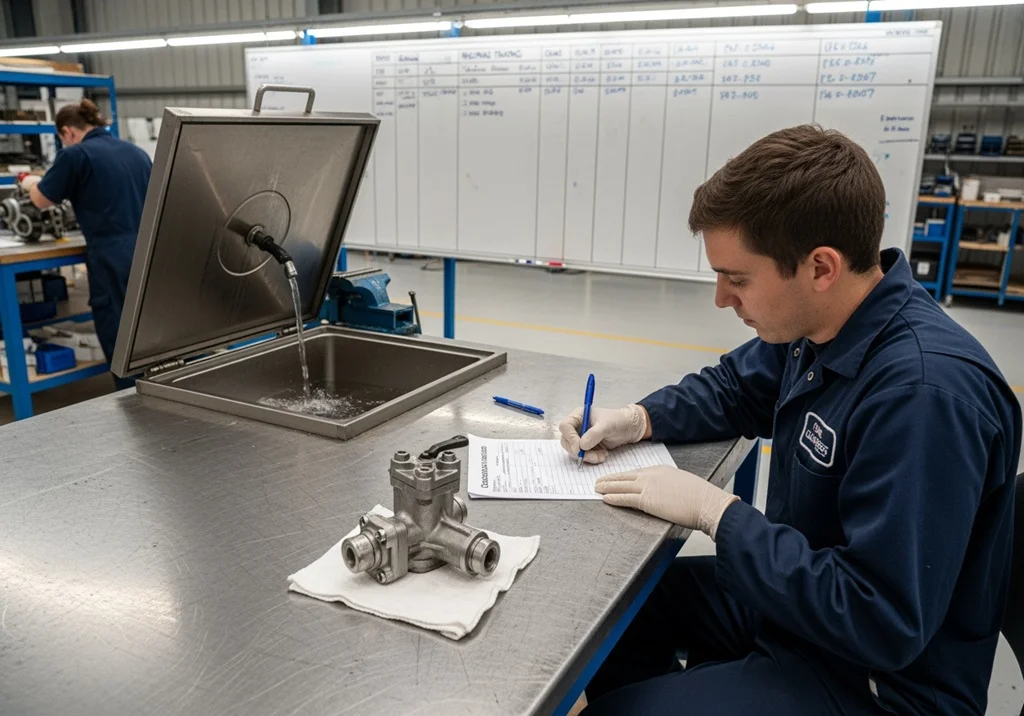
Aircraft maintenance organisations operating under CASA regulations know that Q2 inspections demand thorough documentation of component cleanliness. A single undocumented cleaning step can ground an aircraft, delay operations, and trigger costly compliance reviews. The difference between passing and failing often comes down to how thoroughly you can prove your parts washing processes meet the required standards.
This article covers what CASA auditors look for in cleaning documentation, how to build procedures that satisfy Q2 requirements, and why automated systems make compliance easier to maintain every day – not just before an audit.
Why CASA Treats Cleanliness as a Safety Factor
The Link Between Contamination and Airworthiness
Contamination is not a cosmetic issue in aviation. A particle of metal in a hydraulic system can cause catastrophic failure at altitude. Residual oils on electrical components create fire risks. Carbon buildup on fuel system parts disrupts combustion efficiency. This is why CASA regulates cleaning as a maintenance activity, not a housekeeping task.
CASA Part 145 Maintenance Organisation regulations require documented procedures for all maintenance activities, including parts cleaning. Auditors verify that your cleaning processes are controlled, repeatable, and traceable. They want evidence that every component leaving your facility has been cleaned to a verified standard – not just wiped down before installation.
CASA Part 145 compliance is not optional, and it covers far more than the cleaning method itself. It covers who performed the work, what equipment was used, what chemicals were applied, and how cleanliness was confirmed before the component returned to service. Meeting aerospace standards at this level requires process discipline that is built into your daily workflow, not assembled in the week before an audit.
What Q2 Auditors Expect to See
Q2 auditors arrive with specific expectations. They are not interested in vague statements like “parts cleaned thoroughly.” They want objective evidence answering five questions for every cleaned component.
What cleaning method was used? What cleaning agents were applied, including product names and concentration ratios? How long was the cleaning cycle? Who performed the cleaning? And how was cleanliness verified before the component returned to service?
Aviation maintenance facilities that use an aviation parts washer with automated controls gain an advantage here. Automated systems generate time-stamped cycle logs that prove every cleaning parameter was met. Manual washing requires technicians to record each step individually, which creates opportunities for documentation gaps under audit pressure. Your parts washer range selection directly affects how easily you can satisfy these five documentation requirements.
Building a CASA-Compliant Procedure Manual
Parts Categorisation and Cleaning Protocols
Your procedure manual is the foundation of Q2 compliance. Start with a parts categorisation matrix that groups components by material type – aluminium, steel, composites, and electronics – contamination level, and criticality. Flight-critical components need more detailed protocols than general maintenance parts.
For each category, your procedure must specify the pre-cleaning inspection requirements, the cleaning sequence in numbered steps, chemical specifications with product names and dilution ratios, equipment settings, post-cleaning verification criteria, and drying and preservation procedures.
CASA Part 145 compliance requires that this document is detailed enough for any qualified technician to replicate the process exactly. Ambiguous procedures are audit findings waiting to happen. Heavy contamination loads – carbon-heavy engine parts, for example – may warrant a dedicated protocol that routes components through heavy duty parts washers before standard inspection cycles begin.
Equipment Settings and Chemical Specifications
For automated washer operations, your procedure must list spray pressure, water temperature, cycle duration, and detergent injection rate. For manual tanks, specify solution temperature and agitation method. This level of detail is not excessive – it is what separates a controlled process from an uncontrolled one under aerospace standards.
Parts washer documentation must also cover your chemical records. Every cleaning agent needs its product name, manufacturer, safety data sheet reference, dilution ratio, temperature range, and pH limits documented. If you mix chemicals on-site, batch testing records are required. Generic descriptions like “degreaser used” are not sufficient and will be flagged during Q2 review.
Creating Traceability Records That Survive Audits
Linking Components to Aircraft and Work Orders
CASA auditors follow a paper trail from aircraft logbook entries back through your component cleaning records. Any break in that chain triggers questions and potential non-conformances.
Every cleaned component needs a traceable record linking it to the aircraft and work order – including registration number and task card number – the cleaning batch or cycle, the technician who performed the work, and the inspector who verified cleanliness before release. Q2 inspection cleaning records must capture all of these elements without exception.
If you wash multiple components simultaneously, assign a batch number to the cycle. This connects every part in that wash to the same documented process, which makes traceability straightforward when auditors work backwards from an aircraft logbook. Stainless steel parts washers with integrated batch logging make this process particularly clean for facilities processing fuel system and hydraulic components.
Digital vs Paper-Based Record Systems
Digital record systems excel in Q2 audits. A barcode-scanned component linked to an automated washer’s cycle log creates instant traceability without manual data entry. The system records operator ID, logs cycle parameters, and time-stamps completion automatically.
Manual record-keeping requires disciplined form completion every time. A typical cleaning record includes part number, serial number, aircraft registration, work order reference, contamination assessment, cleaning method, chemicals used, cycle parameters, post-cleaning inspection results, and both technician and inspector signatures.
Store records for the component’s service life plus seven years – CASA’s minimum retention requirement. Many facilities keep digital records indefinitely because retrieval during an incident investigation is far faster than searching physical files.
How Automated Systems Support Documentation
Cycle Logs as Objective Evidence
Automated cleaning cycle logs are the most powerful documentation tool available to aviation maintenance facilities. When an auditor questions whether a fuel pump housing was cleaned properly, you produce the cycle log showing exact temperature, spray pressure, cycle duration, and detergent concentration – precisely what your procedure manual specifies.
An aviation parts washer with programmable controls records cycle start time, water temperature throughout the wash, detergent injection timing and volume, spray pressure readings, and cycle completion confirmation. The machine cannot release the door before the full sequence finishes, which prevents premature part removal and the documentation problems that follow.
Automated cleaning cycle logs eliminate the single biggest documentation vulnerability in aviation maintenance: the gap between what was done and what was written down. For facilities using extra heavy duty parts washers for larger engine components, these logs become critical evidence that every surface received adequate cleaning time and pressure.
Eliminating Human Documentation Errors
Manual parts washing creates documentation vulnerabilities. A technician under pressure might abbreviate a cleaning cycle or omit an exact soak time from the record. The part gets cleaned adequately, but the documentation shows gaps that an auditor will flag.
Parts washer documentation from automated systems is generated by the machine, not the operator. Once you programme a cleaning cycle, the machine executes that exact sequence every time and records it automatically. This means your cleaning records are as consistent as your cleaning outcomes – and both can be demonstrated to an auditor without hesitation.
Hotwash Australia has supported aviation maintenance facilities across Australia in building documentation systems that hold up under CASA scrutiny. Automated cycle logging closes the gap between compliant cleaning and compliant records.
Chemical Compatibility and Material Safety
Building a Compatibility Matrix
Aircraft components use a range of materials – titanium fasteners, composite structures, magnesium castings, and cadmium-plated hardware. Your cleaning documentation must prove you are not damaging these materials with incompatible chemicals.
Build a chemical compatibility matrix listing every cleaning agent against every material type you encounter. Mark each combination as approved, conditional, or prohibited, with supporting notes on time limits, temperature limits, and pH thresholds. This matrix must be referenced in your procedure manual and version-controlled so auditors know which revision was active at the time of any given cleaning cycle.
Meeting aerospace standards for material safety means your technicians verify compatibility before selecting chemicals – and document that verification in the cleaning record. A simple checkbox confirming “material compatibility verified per matrix revision” satisfies the requirement without adding significant time to the process. Some facilities handling heavily corroded components also use wet abrasive blasters for surface preparation before the chemical cleaning stage, which adds an additional step that must be captured in the procedure and record.
Temperature Limits and Washer Logs
Many aerospace alloys are sensitive to temperature. Some lose strength or dimensional stability above certain thresholds. Your cleaning procedure must specify maximum wash temperatures for each material type.
Washer logs from an aviation parts washer prove you stayed within those limits. Temperature sensor data captured throughout the cycle provides objective evidence that no component was exposed to conditions outside its specification. This is something manual hot tank records can rarely demonstrate with the same precision. If your facility also uses hot tanks for immersion cleaning of heavily contaminated components, temperature documentation becomes even more critical – immersion processes carry higher risk of exceeding material limits if thermal controls are not actively monitored and logged.
Verification Testing and Inspection Criteria
Objective Cleanliness Standards
CASA expects objective cleanliness standards, not subjective judgements. “Looks clean” is not acceptable to Q2 auditors – you need defined acceptance criteria documented in your procedure.
For most components, visual inspection provides adequate verification when criteria are specific. Surface appearance records should describe the exact condition required: uniform metal finish, no visible oil film, clean threaded roots, and unobstructed internal passages. Include photo examples showing acceptable versus unacceptable results so the standard is consistent across different inspectors and shifts.
These criteria are part of your aerospace standards obligations under Part 145. Vague acceptance criteria produce inconsistent inspection results and inconsistent audit outcomes across your team.
Testing Methods for Critical Components
Some critical components require more than visual inspection. Hydraulic system parts may need solvent rinse testing – flush the cleaned component with clean solvent, evaporate a sample on a white filter paper, and examine for residue. Document the test method, acceptance criteria, and results for each component tested.
Fuel system components at some facilities use UV fluorescence testing, where contaminants fluoresce under UV light whilst clean metal does not. Document the UV wavelength used, the inspection technique, and the acceptance criteria. Q2 inspection cleaning records for these components must include the test results alongside the cleaning cycle data.
Preparing for Q2 Inspection Day
Internal Pre-Audit Review
Q2 auditors typically spend two to three days on-site examining your quality system. Before the audit, conduct an internal traceability review. Pull a selection of random component cleaning records from the past six months. Trace each one from the aircraft work order through the cleaning process to reinstallation. Check that all required signatures are present and that automated cleaning cycle logs match documented cycle times.
Review your procedure manual against actual practice. Auditors observe technicians working – if they see deviations from documented procedures, that is a finding regardless of the outcome quality.
Verify equipment calibration. An aviation parts washer requires periodic verification that temperature sensors, pressure gauges, and timers are accurate. Document these calibration checks in your quality records so auditors can confirm the measurement system is trustworthy.
Maintaining Documentation Standards Year-Round
The facilities that pass Q2 inspections with minimal findings maintain documentation discipline every day, not just during audit preparation. Implement weekly spot checks of cleaning records. A quality manager randomly selects a small number of component cleaning records and verifies completeness – all required fields filled, signatures present, automated cleaning cycle logs attached, and traceability confirmed.
Monthly trend analysis reveals emerging problems before they become audit findings. Track metrics like cleaning cycle completion rates, non-conformance frequency by component type, and chemical consumption patterns. Unexplained changes signal process drift that needs investigation and corrective action.
Quarterly procedure reviews ensure your documentation matches current practice. When you optimise cleaning processes or adopt new equipment, update procedures immediately. Operating under outdated procedures creates audit findings even when your actual work is excellent. Aviation parts cleaning documentation protects more than CASA compliance – it protects aircraft safety. Build systems that make thorough documentation the easy default, and your next Q2 inspection becomes a routine verification.
For advice on automated parts washing systems that generate compliance documentation automatically, contact our parts washer specialists or email us at sales@hotwash.com.au.

Leave A Comment