
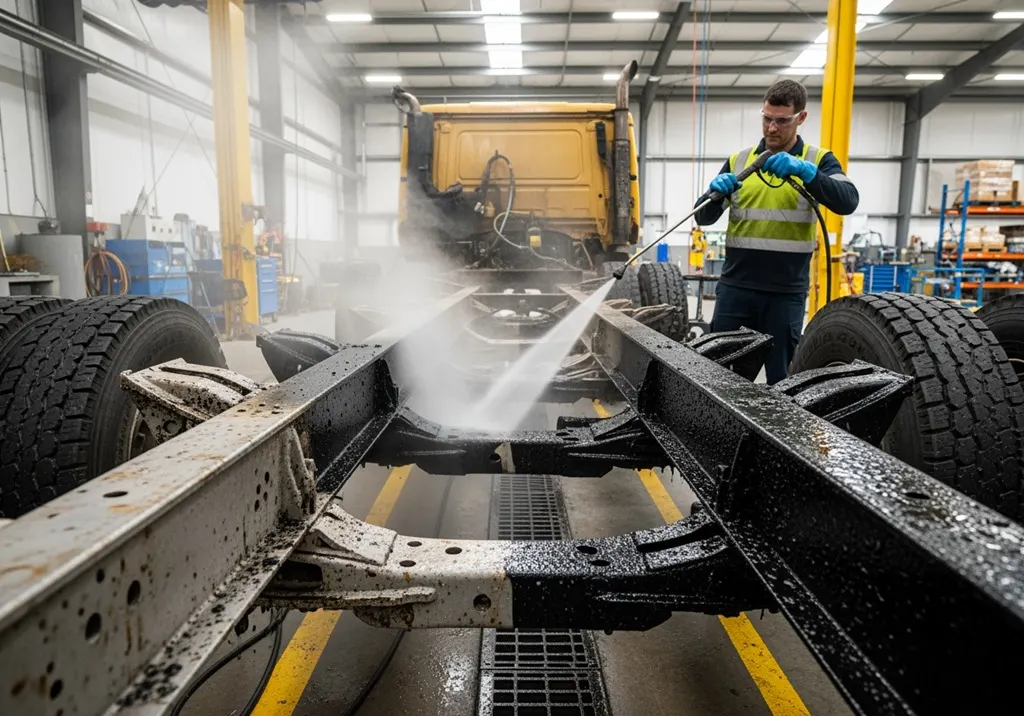
Chassis corrosion is a quiet threat that workshop managers cannot ignore. Road grime, salt, and moisture work together to break down heavy vehicle chassis steel from the inside out. Left unmanaged, this contamination causes severe structural failures that stop transport fleets and mining operations. These failures are extremely expensive to repair and dangerous for your operators.
Chassis degreasing is a critical maintenance discipline, not just a cosmetic cleaning task. It protects the structural integrity of fleet equipment worth hundreds of thousands of dollars. This guide explains how contamination damages heavy chassis components in wet Australian conditions. It covers what it costs to ignore the problem and how to protect your fleet.
Why Road Grime and Salt Destroy Chassis Components
The Chemistry of Road Contamination
Road grime is much more than standard dirt. It is a thick mixture of engine oil, diesel residue, and hydraulic fluid. It also contains brake dust and road salt. This aggressive mixture bonds tightly to metal surfaces through operating heat and pressure. In Western Australia’s coastal regions, this contamination becomes particularly corrosive. The same applies at mining sites where saline bore water is used to suppress dust on haul roads.
Salt acts as an electrolyte that dramatically speeds up electrochemical corrosion. Road grime traps moisture directly against chassis steel. As the water evaporates, the salt concentration rises significantly. This creates an increasingly aggressive environment that attacks the metal continuously. This chemical reaction continues overnight, even when the vehicles are parked. Removing this grime must happen before contamination has time to cause permanent structural damage.
Where Damage Starts on Heavy Vehicle Chassis
Corrosion follows a highly predictable pattern on heavy vehicle chassis. It starts in crevices, joints, and critical structural mounting points. These exact locations carry the highest physical operating loads and stress. Box sections fill with contaminated sludge during wet conditions. This sludge holds highly corrosive moisture against the steel for months at a time.
Suspension mounting points often corrode rapidly from the inside out. Chassis rails develop surface pitting that quickly progresses to structural weakness if left unaddressed. By the time corrosion is visible on the outside, major internal damage has already occurred. Effective parts cleaning is essential to halt this cycle before suspension components fail. A consistent parts cleaning schedule prevents abrasive wear on critical chassis joints.
How Contamination Accumulates in Wet Operating Conditions
The Wet/Dry Contamination Cycle
Wet operating conditions completely change how contamination behaves on a chassis. Dry road grime sits harmlessly on outer surfaces. Wet road grime penetrates deeply into every gap, joint, and crevice. Heavy vehicles spray contaminated water into wheel arches and suspension components. This high-velocity spray drives moisture and salt deep into the underside structure.
Each wet and dry cycle concentrates the problem further. Rain water mobilises surface grime and carries it into hidden structural areas. As the water evaporates, it leaves behind concentrated salt deposits. The next rain event dissolves these deposits and pushes them deeper still. Without regular parts washers processing, this contamination layer thickens. It eventually becomes thick enough to trap permanent moisture against the steel. Parts washers remove this build-up before it hardens.
Mining and Transport-Specific Contamination Challenges
Fleet maintenance in mining requires equipment that handles extreme contamination. Mining dust suppression systems use bore water with high salt concentrations. This water mixes heavily with diesel, hydraulic oil, and track grease. It creates a thick contamination layer that standard manual pressure wands simply cannot fully remove. Effective parts cleaning requires dedicated industrial equipment designed for heavy grease. Regular parts cleaning prevents this saline sludge from destroying expensive suspension setups.
Transport operators in coastal areas face an equally persistent corrosion challenge. Winter rain mobilises summer dust and heavy traffic film. This highly corrosive film has been accumulating for months. The result is chassis contamination that never fully dries out during winter. Choosing the right parts washer is vital for workshops managing these wet-season conditions. A dedicated parts washer provides the temperature and pressure needed to strip this film. Heavy Parts Washer systems handle these transport-specific challenges effectively.
The Real Cost of Chassis Corrosion
Structural Repairs and Downtime
The financial consequences of poor chassis maintenance extend well beyond the cleaning budget. Corroded chassis sections require highly expensive repair or complete replacement. Suspension mounting point repairs involve major structural welding and engineering certification. Major earthmoving equipment can need substantial chassis repairs early in its service life.
These repairs take vehicles off the road for days or weeks. A mining haul truck off-site for a chassis repair loses massive operational revenue. Transport operators lose lucrative contracts when vehicles fail roadworthiness inspections due to structural corrosion. Resale value also takes a significant hit. Buyers inspect chassis condition closely, and visible corrosion reduces auction prices sharply. Routine parts washers maintenance preserves the capital value of your heavy fleet. Modern parts washers protect your investment by preventing deep structural pitting.
Safety and Compliance Consequences
Corroded chassis components create genuine workplace safety hazards for your operators. Suspension mounting failures can cause a sudden, catastrophic loss of vehicle control. Towbar mounting corrosion leads directly to dangerous trailer separation incidents. These failures trigger immediate workplace safety investigations. They also expose operators to potential prosecution under strict Australian safety regulations.
The cost comparison strongly favours proactive maintenance. A regular degreasing cycle costs a fraction of a major structural repair. Preventing just one suspension mounting repair justifies hundreds of automated cleaning cycles. Most heavy equipment will need multiple structural repairs if chassis maintenance is neglected.
Effective Chassis Degreasing Methods
Hot Water and High-Pressure Spray Systems
Effective chassis degreasing relies on three elements working together perfectly. You need heated water, high-pressure spray, and biodegradable detergent. Heated water breaks down thick oil and grease films that cold water ignores entirely. High-pressure spray delivers the mechanical energy to flush loosened contamination from tight crevices. Biodegradable detergent penetrates the grime layer and breaks its chemical bond with the metal.
Sometimes rust removal requires aggressive surface preparation before repairs can begin. Dry abrasive blasting Perth workshops use creates significant dust hazards. A modern wet abrasive blaster machine strips rust safely without airborne dust. Professional abrasive blasting Perth services often use wet blasting for heavily corroded chassis sections. A dedicated wet abrasive blaster machine prepares the surface perfectly for structural welding.
Why Automated Chassis Cleaning Outperforms Manual Methods
Automated cleaning removes stubborn contamination that manual pressure washing consistently leaves behind. A high-pressure wand operated by hand provides highly inconsistent coverage across complex chassis parts. An automated system delivers precise temperature and pressure every single cycle without fail. It ensures the exact same detergent concentration and wash duration for every single component.
Many forward-thinking workshops upgrade from basic manual cleaning to improve their daily throughput. By partnering with experts like Hotwash Australia, workshops access proven technology with over 1,200 automatic systems successfully deployed across the country. Mining and transport operations consistently report a measurable improvement in contamination removal after upgrading. A mechanic who once spent 90 minutes pressure washing can now load components automatically.
They start the Parts Washers and return immediately to highly productive workshop tasks. A reliable automated system eliminates the severe manual fatigue associated with heavy chassis degreasing.
Protecting Chassis Integrity Through Regular Degreasing
Recommended Cleaning Frequencies by Industry
Cleaning frequency depends heavily on your operating conditions and contamination exposure. Mining and earthmoving equipment operating in saline environments needs regular, thorough degreasing. This should occur frequently during active operation to prevent rapid salt corrosion. Equipment working in coastal areas with high humidity needs comprehensive cleaning at least fortnightly.
Heavy transport vehicles on metropolitan routes benefit from monthly scheduled chassis degreasing. Vehicles on coastal routes should increase their cleaning frequency to combat salt spray. Seasonal maintenance cycles matter too. Equipment needs thorough chassis degreasing before and after wet seasons. This removes accumulated contamination before it traps moisture during storage.
Integrating Degreasing with Protective Coatings
Industrial washers play a dual role in heavy fleet maintenance. They clean components thoroughly and prepare surfaces for long-term protective coatings. Lanolin-based coatings and heavy corrosion inhibitors can only bond properly to clean metal. If you apply them over contamination, the grime layer traps moisture underneath. This accelerates the exact corrosion the product is meant to prevent.
Thorough degreasing followed by a corrosion inhibitor provides months of essential protection. This combination is particularly valuable for expensive equipment stored over winter. The right stainless steel parts washers ensure components are perfectly clean before coating. A quality Parts Washer prepares the surface properly for rust preventative application. Using an automated Parts Washer ensures consistent coating adhesion across the entire fleet.
Choosing the Right Chassis Cleaning System
Matching System Specifications to Equipment Size
Fleet cleaning systems must be properly sized to the specific components they handle. Chassis components range from small suspension parts to massive heavy axle assemblies. Super heavy duty parts washers easily accommodate complete axle assemblies. They can handle large suspension bogies and heavy chassis sections in a single load.
Effective degreasing requires water heated above a specific thermal breakdown temperature. It also needs pressure sufficient to flush thick contamination from hidden chassis areas. An industrial parts washer provides this consistent temperature and pressure. Systems that compromise on either specification deliver incomplete cleaning. Poor filtration allows contamination to redeposit onto the next component. A quality parts washer filters the solution effectively to prevent this.
Construction Quality and Long-Term Durability
Chassis degreasing is exceptionally harsh work for industrial cleaning equipment. Salt, abrasive road grime, and continuous high temperatures demand incredibly robust construction. Stainless steel extra heavy duty parts washers hold up to these extreme conditions. Lesser equipment degrades quickly when exposed to highly saline mining sludge.
Workshops handling massive cleaning volumes need reliable, continuous-operation equipment. Heavy duty parts washers deliver the required heating capacity and thermal recovery. They ensure the solution stays at the optimal temperature cycle after cycle.
Conclusion
Road grime and salt will destroy your heavy fleet’s chassis if left unmanaged. Automated cleaning systems remove this highly corrosive contamination quickly and efficiently. Investing in the right chassis degreasing equipment protects your vehicles and reduces extremely expensive structural downtime.
For expert advice on selecting the perfect machine for your workshop, contact our parts washer specialists or email us at sales@hotwash.com.au.

Leave A Comment