
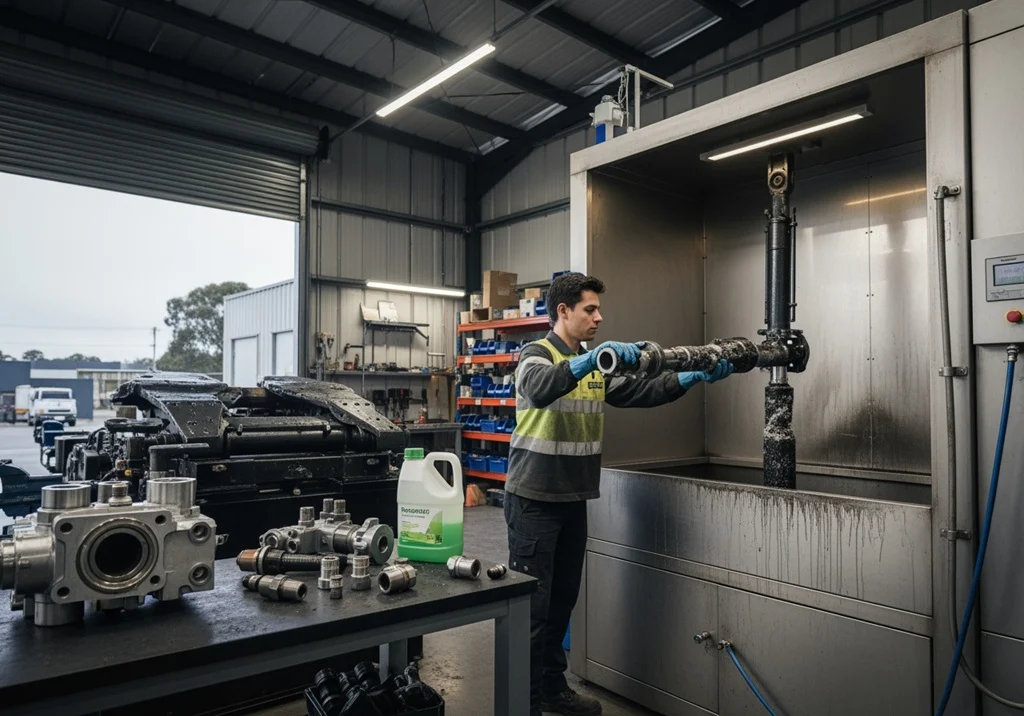
Hydraulic tail-lifts fail when operators need them most. Early morning deliveries in winter, when temperatures are at their lowest, are when contaminated hydraulic systems choose to stop working. A seized tail-lift disrupts delivery schedules and triggers emergency callout costs that could have been avoided with systematic maintenance.
The cause is rarely the cold alone. It is the combination of low temperatures and contaminated hydraulic components that creates the conditions for failure. This guide explains why tail-lifts seize in winter, where contamination comes from, and how proper hydraulic component cleaning prevents seizures before they happen.
Why Hydraulic Tail-Lifts Seize in Cold Weather
The Cold-Temperature Contamination Combination
Hydraulic fluid thickens as temperature drops. Standard hydraulic oil used in most tail-lift systems increases in viscosity as temperature falls from warm summer operating conditions to a cold winter morning. This thicker fluid struggles to flow through contaminated valves, cylinders, and hoses. Add dirt, road grime, and oxidised oil to the equation, and the system faces a double problem: fluid that cannot flow freely, moving through components that create resistance at every turn.
Contaminated components create resistance points where thick, cold fluid cannot generate enough pressure to move pistons smoothly. The result is jerky operation, slow response times, or complete tail-lift seizure prevention failures. Tail-lifts that work without issue during summer can seize during winter operations simply because cold weather reveals the contamination that was always there.
Where the Problem Is Worst in Australia
Transport operators running FIFO routes to mining sites face particularly challenging conditions. Tail-lifts operating in remote regions experience significant temperature swings between day and night. This thermal cycling accelerates oil oxidation and increases water contamination through condensation. Water does not mix with hydraulic oil – it settles at the bottom of the reservoir and gets pumped through the system during cold starts, where it causes the most damage.
Any hydraulic lift repair needed in a remote location carries costs well beyond the repair itself. Getting a technician to site, sourcing parts, and recovering lost productivity time all compound the expense. Tail-lift seizure prevention through systematic cleaning is a far more cost-effective strategy than managing reactive repairs in the field.
Contamination Sources in Tail-Lift Systems
External Contamination Entering Through Cylinder Seals
Road spray is the primary external contamination source for tail-lift hydraulic systems. Tail-lifts mounted under truck bodies collect mud, salt, diesel residue, and industrial dust during every delivery run. This contamination enters the system through cylinder rod seals – the weakest point in any hydraulic system exposed to road conditions.
Each time a cylinder extends, the rod passes through the seal and collects external contamination. When the rod retracts, it carries this contamination into the hydraulic fluid. Over a full year of operation, a single tail-lift cylinder can introduce a meaningful quantity of abrasive particles into the hydraulic system – particles that accelerate wear on every component they pass through and eventually trigger hydraulic lift repair requirements.
Internal Contamination from Oxidised Oil
Oxidised hydraulic oil creates internal contamination independently of what enters from outside. Oil exposed to heat, moisture, and air forms varnish deposits on valve surfaces, cylinder walls, and pump components. These deposits are often invisible during summer operations because warm, thin fluid flows around them with relative ease. When cold temperatures increase fluid viscosity, the same deposits cause significant restriction.
Coastal transport operations also contend with salt-laden air that introduces moisture into hydraulic reservoirs through breather caps. The combination of external dirt, internal varnish, and water contamination creates a three-part failure mechanism. Cold weather does not cause the failure – it simply triggers the failure that contamination made inevitable.
How Parts Washers Prevent Hydraulic Seizures
What Automated Cleaning Removes That Manual Methods Miss
Effective hydraulic component cleaning targets three contamination layers. Surface dirt – the mud, road spray, and diesel residue visible on cylinder rods and valve bodies – washes away with hot water and biodegradable detergent. Embedded grime pressed into seal grooves and valve seats requires high-pressure spray jets to dislodge. Varnish deposits – the oxidised oil film bonded to metal surfaces – need sustained heat and chemical action to dissolve.
Manual cleaning with degreaser spray and cloths removes surface dirt but misses embedded contamination and varnish. Tail-lift seizure prevention requires reaching those deeper contamination layers, and manual methods simply do not have the heat, pressure, or coverage angle consistency to do it reliably.
The Cleaning Process for Hydraulic Components
Extra heavy duty parts washers designed for large cylinder assemblies provide the chamber capacity and spray coverage that tail-lift components require. Hot water heated to the temperature needed to dissolve varnish, combined with high-pressure spray reaching into seal grooves, valve ports, and cylinder bores, delivers hydraulic component cleaning results that manual scrubbing cannot match.
The automated cycle also produces consistent results regardless of the operator. A mechanic spending time manually scrubbing a cylinder assembly may achieve thorough cleaning on some components and incomplete cleaning on others depending on fatigue and time pressure. The automated system applies the same temperature, pressure, and cycle duration to every component it processes.
Critical Components Requiring Regular Cleaning
Cylinder Assemblies and Control Valves
Cylinder assemblies are the first priority in any tail-lift maintenance programme. The cylinder rod, piston seal, and rod seal all require contamination-free surfaces to function correctly in cold conditions. Parts washer hydraulic systems designed for cylinder work remove road grime from the rod surface and dissolve varnish from the piston seal groove. Clean seals maintain proper clearances and prevent external contamination from entering the hydraulic fluid.
Control valves are equally critical. These precision components have internal clearances measured in fractions of a millimetre. Varnish deposits in these clearances restrict valve movement and slow system response. In cold weather, a sluggish valve combined with thickened fluid creates exactly the conditions for complete hydraulic component cleaning failures. Regular cleaning of valve assemblies is a fundamental part of winter hydraulic maintenance.
Reservoir Components and Pump Assemblies
Reservoir components – the filter housing, breather cap, and return line fittings – all benefit from thorough cleaning during oil changes. A clean reservoir prevents recontamination of fresh hydraulic oil, which means the investment in new oil is not immediately undermined by carryover contamination from dirty reservoir walls and fittings.
Stainless steel parts washers provide corrosion-resistant cleaning capability for hydraulic components that will be returned to service in salt-affected environments. The chamber construction resists the salt and moisture that tail-lift components carry into the wash cycle, extending equipment service life in coastal and marine transport applications.
The Temperature-Viscosity Relationship
How Cold Weather Amplifies Contamination Problems
Standard hydraulic oil viscosity increases substantially as temperature drops from typical operating conditions to a cold winter morning. This relationship is predictable and consistent – and it explains why tail-lifts that perform well in warm conditions seize during cold weather. When fluid viscosity increases in cold conditions and a valve seat carries varnish buildup that restricts flow area, the combined effect can prevent the pump from generating sufficient pressure to operate the cylinder.
The answer to this problem is not changing to cold weather lubricants with lower viscosity. Thin oil does not maintain adequate film strength at normal operating temperatures, which causes accelerated wear across the entire system. The correct approach is removing contamination so that standard-specification oil can flow freely even when cold.
Why Switching to Cold Weather Lubricants Alone Is Not the Answer
Cold weather lubricants address the viscosity issue but leave the contamination problem intact. A thin oil flowing through varnish-coated valves and worn, grime-filled cylinder rods still faces restriction and carries abrasive particles. The contamination continues to cause wear and will eventually produce failure regardless of the oil specification used.
Clean hydraulic components operate reliably at temperatures well below what contaminated components can handle, using the same standard-specification oil that the manufacturer designed the system for. This is why parts washer hydraulic systems produce better outcomes than oil specification changes alone. Hotwash Australia builds cleaning systems that address contamination at the source rather than working around it.
Cleaning Frequency for Cold Climate Operations
Scheduling by Operating Environment
Transport fleets operating year-round in temperate Australian climates benefit from cleaning cycles aligned with standard hydraulic oil change intervals. This timing prevents contamination buildup before winter and ensures components are clean when cold weather conditions arrive. FIFO operations serving remote mining sites need more frequent cleaning cycles. The extreme temperature variations and dusty conditions in remote regions accelerate contamination rates significantly.
Coastal transport operators should inspect tail-lift components regularly and clean when salt corrosion appears on cylinder rods or valve bodies. Salt accelerates seal wear and introduces moisture into hydraulic systems, so the inspection trigger should be visual evidence of salt attack rather than a fixed calendar date. The cleaning schedule should match actual operating conditions.
Winter Hydraulic Maintenance Planning
Late summer and early autumn is the optimal window for winter hydraulic maintenance. Servicing tail-lift hydraulic systems before the cold weather arrives ensures components are clean and properly serviced before temperature drops trigger seizure conditions. Hot tanks provide immersion cleaning capability for components with heavy varnish deposits that spray washing alone cannot fully address.
Visual inspection provides early warning of components needing immediate attention. Cylinder rods showing pitting, valve bodies with visible varnish deposits, or hoses with surface cracking all indicate that cleaning and inspection should not wait for the scheduled service date. Operators tracking usage cycles can also schedule cleaning based on actual operational intensity rather than calendar time alone.
Choosing Parts Washer Specifications for Hydraulic Work
Matching Chamber Capacity to Cylinder Assembly Size
Hydraulic tail-lift cylinders are long components. The parts washer chamber must accommodate full cylinder length whilst allowing spray jets to reach all surfaces. A washer that cannot accommodate full cylinder assemblies forces mechanics to clean components in sections, reducing effectiveness and extending the labour time that automated cleaning is meant to reduce.
Parts washer hydraulic systems designed for this work feature rotating spray arms that ensure complete coverage of long cylindrical components. Biodegradable detergent specifically formulated for hydraulic components dissolves varnish without damaging aluminium valve bodies or rubber seals. Using caustic cleaners in hydraulic component cleaning creates new problems whilst attempting to solve contamination issues.
Preventing Water Contamination During Cleaning
Parts washers use water-based cleaning, which raises reasonable concerns about introducing moisture into hydraulic systems. Proper drying procedures eliminate this risk. The cleaning cycle should include a final rinse with clean hot water to remove all detergent residue. Compressed air drying removes water from seal grooves, valve ports, and cylinder bores immediately after the wash cycle whilst surfaces remain warm. Components should then air dry in a warm workshop environment before reassembly.
Understanding the relative risk is important. Residual moisture from a properly executed cleaning and drying process is far less damaging than the contamination buildup that results from avoiding cleaning altogether. For advice on parts washer specifications matched to your tail-lift maintenance requirements, contact our hydraulic equipment specialists or email us at sales@hotwash.com.au.

Leave A Comment